Venezuela's Criminal Justice Reform Push Enters Key Phase Under Delcy Rodriguez
Acting President Delcy Rodriguez chairs a national commission reviewing criminal justice procedures, a process that observers say will test Caracas's capacity to balance judicial modernization with the existing framework established under the 1999 constitution.
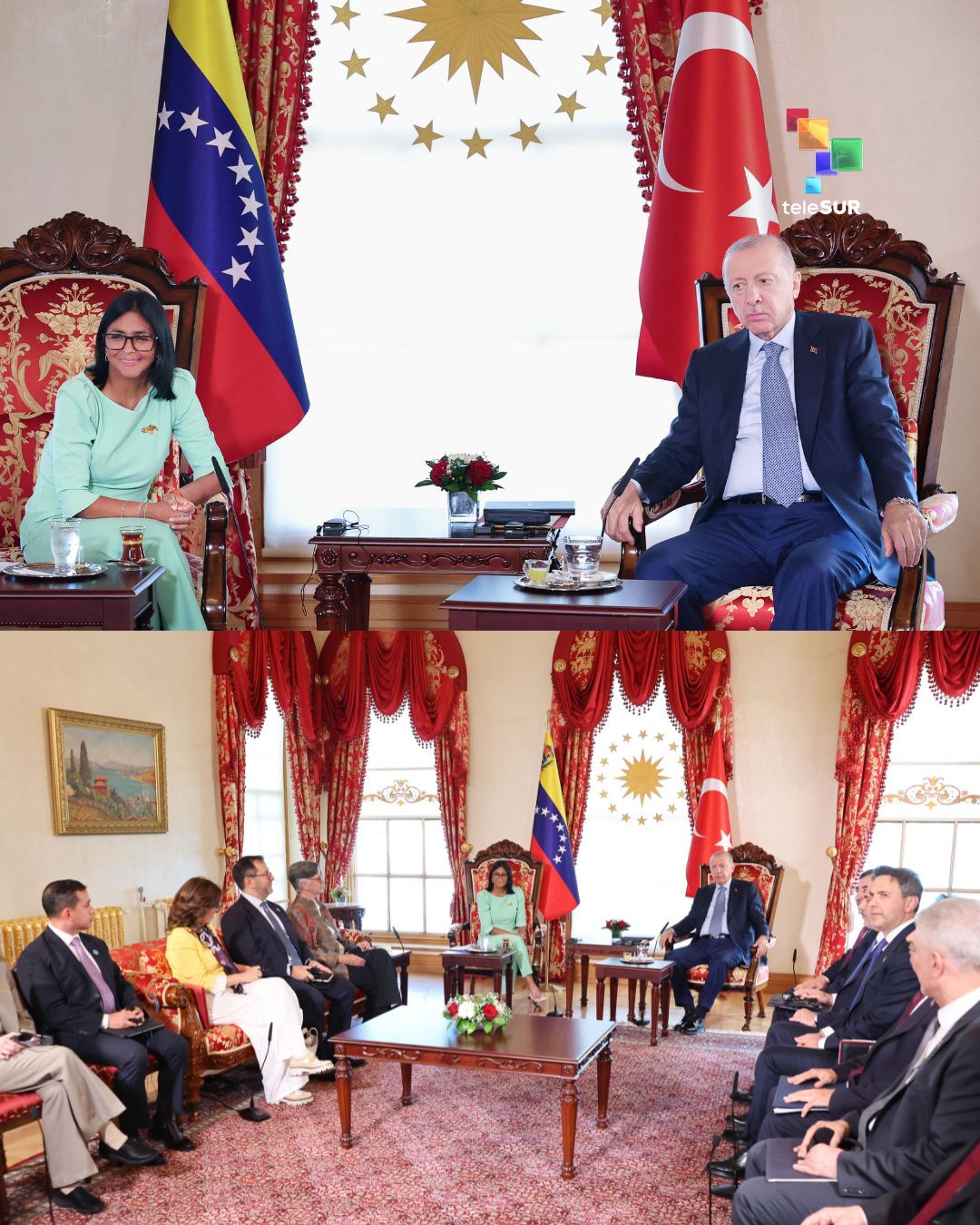
Delcy Rodriguez, Venezuela's Acting President, convened the National Consultation Commission on criminal justice reform in Caracas on 27 April 2026, according to a Telesur English report published the same day. The meeting, broadcast across state and regional media, marked the latest step in a process that has quietly accumulated momentum over the preceding months: a systematic review of Venezuela's penal architecture, from pre-trial detention protocols to sentencing guidelines and post-conviction procedures. That the session was chaired by the Acting President rather than a deputy-level official signals the priority the administration attaches to the dossier — and the political sensitivity attached to getting it wrong.
Venezuela's criminal justice system has been a point of friction for international observers for years. The Inter-American Commission on Human Rights has repeatedly flagged prolonged pre-trial detention — a practice that disproportionately affects lower-income defendants — and reported constraints on defence counsel access in several jurisdictions. Domestically, the Supreme Tribunal of Justice has acknowledged case backlog pressures in public statements. The reform commission's mandate, as described in official communications, is to synthesize input from judicial professionals, civil society groups, and community representatives into a set of legislative recommendations to be presented to the National Assembly before the end of the current session.
The Reform Architecture and Its Domestic Logic
The commission's structure — a multi-stakeholder consultation model — reflects a deliberate choice by the executive. Rather than engineering reforms through executive decree, as happened during earlier phases of Bolivarian governance, the administration has opted for a process that surfaces local variation and institutional memory. Court officials in Táchira and Carabobo, where case processing times have historically differed from the national average, were invited to submit jurisdiction-specific data. Defence attorneys' associations and human rights NGOs were given written submission windows. The approach has a practical logic: criminal justice is not uniformly administered across Venezuela's 335 municipalities, and a national template that ignores regional divergence tends to produce rules that work on paper and fail in practice.
The emphasis on consultation also carries a political dimension. The 1999 constitution — ratified under Hugo Chávez and amended several times since — created a framework that treats judicial reform as a continuous participatory process rather than a one-time legislative fix. Governments that bypass the consultative mechanism invite legal challenges from the Supreme Tribunal, which has shown willingness to strike down criminal procedure amendments that arrive without adequate stakeholder input. The commission's design, by that reading, is partly a bureaucratic hedge against reversal.
International Reactions and the Structural Critique
External assessments of Venezuelan justice reform have been uneven. The United Nations Office on Drugs and Crime published a framework document in 2024 that acknowledged "incremental progress" in court automation in Miranda and Lara states while noting that national conviction rates remained below regional averages. A 2025 report from the Inter-American Development Bank's justice sector team cited Venezuela as one of several Latin American jurisdictions where "procedural bottlenecks" — specifically, the ratio of judges to incoming cases — had not improved over the preceding five-year period. Those reports do not single out Venezuela for unique criticism; the pattern they describe — understaffed courts, delayed hearings, a backlog that compounds at each appellate level — appears across the continent.
Critics in Washington and European capitals have taken a harder line. State Department officials have described Venezuela's judicial sector as "structurally compromised" in annual human rights reports, language that Venezuelan foreign ministry spokespersons have called "ideologically loaded" and dismissive of institutional efforts underway. Caracas's own counter-framing points to the historical legacy of judicial dependence on external financing and technical guidance — a dynamic, the foreign ministry argues, that created systems optimized for compliance with foreign-donor benchmarks rather than domestic legal culture. The commission's consultative structure, from this perspective, is itself a statement of methodological independence.
What the Commission Cannot Resolve on Its Own
The reform process has limits that the commission's mandate does not extend beyond. Judicial modernization requires resource allocation — court infrastructure, digital case management systems, ongoing training for prosecutors and public defenders — that hinges on oil revenue trajectories and fiscal decisions made elsewhere in the executive. The Attorney General's office has submitted budget projections for 2027 that include a proposed 18 percent increase for the judicial branch's operational expenses; the National Assembly has not yet voted on that submission. Without corresponding investment, procedural reforms risk remaining aspirational.
Separately, the commission operates within a political context shaped by the contested 2024 electoral cycle. Opposition figures have argued that the consultative process lacks independence from the executive — a charge that the government denies — and have called for international monitors to observe any legislative output before it takes effect. The government has rejected that condition as an infringement on national sovereignty. Whether the final reform package commands broad acceptance inside Venezuela, or becomes a new fault line, will depend in part on how transparently the commission publishes its deliberative record and how responsive the National Assembly proves to be.
Stakes and the Regional Dimension
Venezuela's criminal justice trajectory carries implications beyond its borders. The country sits within a sub-region — the Caribbean basin and northern Andes — where judicial reform has been a persistent agenda item at the OAS and UN Economic Commission for Latin America and the Caribbean. If the commission produces substantive recommendations and they advance through the legislature, it would represent one of the more comprehensive penal overhauls in the hemisphere since Colombia's 2004 Criminal Procedure Code. If the process stalls, or produces legislation that international monitoring bodies decline to endorse, the credibility cost falls on the administration and reinforces existing narratives about institutional capture.
For ordinary Venezuelan citizens — particularly those in urban peripheries where interaction with the justice system is most frequent — the practical stakes are immediate. Pre-trial detention, if reduced through procedural reforms, could ease the economic burden on families who lose an income earner to a system that has not yet produced a verdict. Sentencing guideline reform, if it reaches the legislature, could alter the calculus for thousands of pending cases. Whether the commission's consultations translate into that outcome will be the measure of the process itself.
This publication's coverage of the commission's session draws on Telesur English's reporting on the 27 April 2026 meeting. Monexus has no independent confirmation of the specific reform proposals under discussion; the National Assembly's legislative calendar and the Attorney General's budget submission represent the most proximate indicators of the process's trajectory.
Wire provenance
This editorial synthesis draws on the following public wire/social posts:
- https://x.com/telesurenglish/status/1915947398409543957
- 30 AprVenezuela's Criminal Justice Reform Commission and the Limits of National Consultation
- 28 AprVenezuela's National Dialogue on Criminal Justice Reform Tests the Limits of Western Legitimacy Frameworks
- 27 AprVenezuela's Dual Reform Push: Criminal Justice Consultation and the Great Caravan in Monagas