Virginia Pension Fund's $500M Weapons Holdings Under Fire as Gaza Death Toll Mounts
The Virginia Retirement System holds roughly $500 million in defense contractors supplying Israel's Gaza campaign — and its investment committee voted in February 2026 to keep it that way.
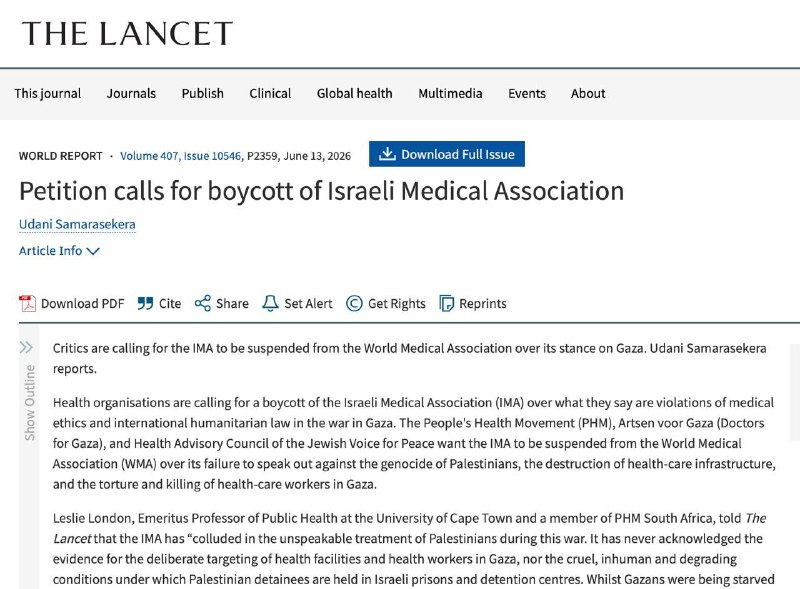
On 27 April 2026, The Cradle Media reported that the Virginia Retirement System holds approximately $500 million in securities issued by the world's largest weapons manufacturers — including firms whose products are actively deployed in Israel's military campaign in Gaza. The system's investment committee voted in February 2026 to reject shareholder proposals demanding divestment from the nine defense contractors currently supplying Israel's armed forces.
The funds manage retirement savings for approximately 800,000 current and former Virginia state employees, including teachers, healthcare workers, and corrections officers. The securities in question span firms that produce the F-35 Joint Strike Fighter, Apache attack helicopters, Hellfire missiles, and precision-guided munitions — platforms that Western and Israeli officials say have been used extensively in strikes across the Gaza Strip since October 2023. The campaign has produced a casualty toll that UN agencies have repeatedly described as catastrophic. As the conflict enters its nineteenth month, the question of who bears financial responsibility for its conduct has moved from activist shareholder resolutions into state legislatures and pension boardrooms.
The Virginia Retirement System's administrators have said they are legally prohibited from considering political criteria when making investment decisions — a framing that treats fiduciary duty and geopolitical accountability as mutually exclusive categories. The investment committee's February vote was consistent with that position. What the official rationale obscures is the degree to which the pension fund has been结构性地 enrolled in the architecture of US military support for Israel, regardless of what any individual board member believes about the campaign in Gaza.
The Divestment Pressure
The shareholder proposals rejected by the Virginia board were not outliers. Similar resolutions have landed on the annual meeting agendas of major US pension funds, public university endowments, and faith-based institutional investors since mid-2024, drawing support from beneficiaries who object to their retirement savings financing what multiple international legal bodies have characterized as potential violations of the laws of armed conflict. The International Court of Justice issued provisional measures in January 2024 and again in May 2024 requiring Israel to take all possible steps to prevent genocide — an order that has not altered the flow of US-origin weapons to the Israeli military.
Virginia's refusal is, in one sense, simply the application of a well-established legal doctrine: pension fund managers who stray from the pursuit of maximum financial return expose themselves to fiduciary breach lawsuits from beneficiaries. That doctrine has governed US institutional investment for decades. But it also conveniently immunizes fund managers from having to answer the prior question — whether a pension fund that knowingly holds $500 million in weapons manufacturers has already made a political choice, one that merely happens to align with the preferences of the US government and its defense sector clients.
The Fiduciary Veil
The framing that pension funds must remain "purely financial" actors is itself a political construction. US federal law has historically encouraged — and in some cases required — state pension funds to maintain exposure to defense industry equities, treating domestic weapons production as a matter of national security. The $500 million Virginia holds across nine contractors is not accidental. It reflects decades of regulatory and legislative architecture designed to ensure that institutional capital remains available to the defense sector, even as the specific uses of that sector's output become the subject of international legal scrutiny.
The conflict's duration — now approaching two years — has forced a reckoning inside institutions that manage collective savings on behalf of millions of Americans. Workers who paid into the Virginia system throughout careers in public schools and hospitals are confronting, for the first time, the composition of the portfolios their contributions fund. The uncomfortable arithmetic runs as follows: every dollar of pension income generated by these holdings is, in a narrow but real sense, a return on investment in weapons deployed over Gaza.
Washington's Response
Congress has begun responding to the divestment movement in its characteristic manner: not by examining the legal and moral questions at stake, but by attempting to legislate the answers. Multiple bills introduced in the current session would restrict the ability of state pension funds to divest from defense contractors on political grounds, framing such restrictions as necessary to protect national security and domestic industrial capacity. The legislation treats the question as settled — that pension fund capital is, and should remain, part of the national security apparatus — without acknowledging the premise.
The structural irony is that Washington simultaneously insists it has no direct role in determining how Israeli forces use US-origin weapons while also ensuring that American public-sector workers cannot opt out of financing their production. The arms flow is treated as a sovereign act of the Israeli government when questions of accountability arise; it is treated as a matter of national economic interest when questions of investment arise.
Who Wins, Who Pays
The Virginia decision resolves the immediate question for approximately 800,000 beneficiaries: their retirement savings remain invested in the nine contractors. For Israeli military planners, the continued availability of US-origin precision munitions is, at minimum, a logistical reassurance. For the contractors — Lockheed Martin, Raytheon, Northrop Grumman, and their peers — the institutional lock-in provided by pension fund mandates represents a form of political risk management that no shareholder resolution can replicate.
For Gaza's civilian population, the calculation runs differently. UN aid agencies have warned since late 2023 that the destruction of civilian infrastructure, repeated displacement of the population, and the near-complete collapse of the healthcare system have created a humanitarian catastrophe of a scale not seen in decades. Whether individual pension beneficiaries in Richmond or Norfolk regard this outcome as their financial responsibility is a question US policy has deliberately foreclosed — by ensuring they cannot divest without legal consequence, while simultaneously exempting the defense contractors themselves from any requirement to account for how their products are used.
The Virginia board's February vote will not be the last. As long as the conflict continues and the death toll rises, pension funds, university endowments, and faith-based investors will face the same pressure — and the same legalimmunities that allow them to pass the pressure upward without resolution. The structural arrangement remains intact: American workers fund the weapons; Washington ensures the supply remains uninterrupted; and the question of what the weapons do in Gaza is classified as someone else's decision.
This publication's framing prioritises the fiduciary mechanism — how institutional capital is enrolled in military supply chains without beneficiary consent — over the diplomatic debate on whether the weapons should flow. The wire's framing of the story as a straightforward investment controversy understates the degree to which the pension architecture was designed to make exactly this outcome inevitable.
Wire provenance
This editorial synthesis draws on the following public wire/social posts:
- https://t.me/thecradlemedia/10432
- https://t.me/TheCradleMedia/10431