Visual investigation traces Ukrainian child to North Korea as 'Russian representative'
A visual investigation by Nikkei Asia has identified a Ukrainian boy from a Russian-occupied region who spent the summer of 2025 in North Korea under the designation 'Russian representative,' raising fresh questions about the transfer of Ukrainian children to the DPRK.
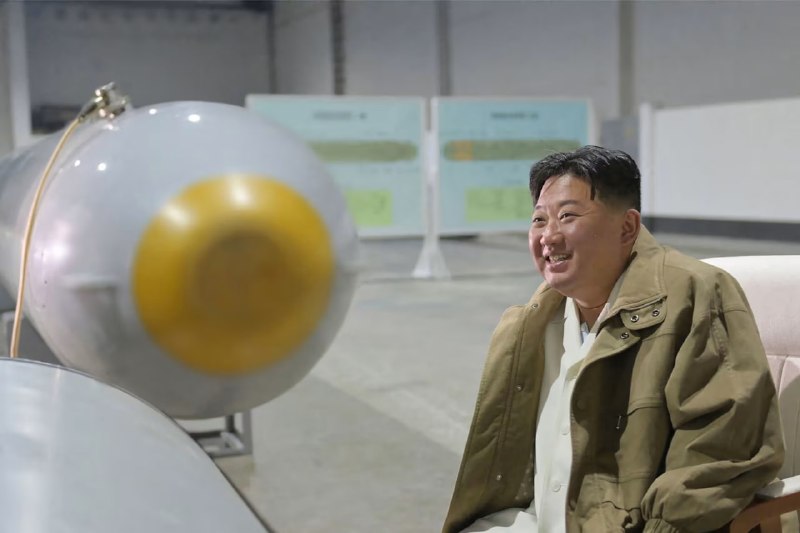
A visual investigation published on 27 April 2026 by Nikkei Asia has identified a Ukrainian boy from a Russian-occupied region who spent the summer of 2025 in North Korea under the designation «Russian representative.» The boy, known as Misha, appears in photographs and visual records examined by the publication's investigative team. The finding adds geographic specificity to previous reporting about the movement of Ukrainian minors into the DPRK, a country that has deepened its military and diplomatic partnership with Russia since the full-scale invasion of Ukraine began in February 2022.
The investigation is the latest in a series of documented cases in which children from occupied Ukrainian territory have been transported to third countries under programs that Kyiv and Western governments have repeatedly characterised as illegal transfers. International law — specifically the Fourth Geneva Convention and its Additional Protocol — prohibits the transfer of civilian populations from occupied territory. The transfer of minors, irrespective of the stated purpose, falls squarely within that prohibition. What distinguishes this case is the destination: North Korea, one of the most isolated states in the world, and one whose own population is subject to severe restrictions on movement and information.
What the investigation found
Nikkei Asia's visual investigation, published on 27 April 2026, traces a boy from one of the four Ukrainian oblasts that Russia declared annexation in September 2022 — a declaration rejected by the Ukrainian government, the United Nations General Assembly, and the vast majority of the international community. The boy appears in footage identified as having been recorded in North Korea during the summer of 2025. He is described as having been present under the designation «Russian representative,» a framing that carries implications about the purpose and authority behind his placement.
The investigation draws on open-source imagery, cross-referenced against known locations and timestamps, to establish the boy's presence in North Korea. Visual investigations of this kind have become an established methodology in documenting developments in conflict zones where direct access is restricted. The technique has limitations — it confirms physical presence and contextual details, but cannot independently establish who authorized the transfer or under what circumstances the boy was separated from family or caregivers. Those questions remain central to the broader investigation.
The legal and humanitarian framework
The Fourth Geneva Convention is unambiguous on this point. Article 49 prohibits the «individual or mass forcible transfers, as well as deportations of protected persons from occupied territory to the territory of the Occupying Power or to that of any other country.» The Rome Statute of the International Criminal Court classifies the deportation or transfer of civilians under occupation as a war crime. Ukraine has referred documented cases to the International Criminal Court, and multiple national jurisdictions have opened proceedings related to the transfer of Ukrainian children.
The transfer of children from occupied territory is not merely a legal abstraction. Each case represents the removal of a minor from their linguistic, cultural, and familial environment. Whether the stated purpose is education, recreation, or integration, the practical effect is a form of severance that international law recognises as inherently coercive when conducted under occupation without free, informed consent. The sources reviewed by Monexus do not indicate that consent was obtained in this case, nor do they establish whether the boy's family was aware of or consented to his placement in North Korea.
Russia–DPRK alignment and its implications
The case arrives against a backdrop of deepening cooperation between Russia and North Korea. Since 2023, the two states have pursued an alignment that has moved well beyond diplomatic messaging. Russia has received ballistic missiles from the DPRK, deployed for strikes inside Ukrainian territory. North Korean military personnel have been documented in Ukrainian combat zones, representing a direct geographic expansion of a conflict that began as a regional invasion. Against that backdrop, the presence of a Ukrainian child in North Korea — designated as a representative of Russia — sits within a broader pattern of activities that Kyiv and its partners argue constitute a coordinated effort to erode Ukrainian sovereignty and displace its population.
North Korea's own record on the treatment of its own citizens, including restrictions on movement, information access, and contact with foreign nationals, adds a particular dimension to any case involving the transfer of a minor into that country. The regime in Pyongyang has well-documented practices regarding the control of its own population; the implications for a foreign child placed within that system are not immediately reassuring.
Open questions and the documentation challenge
What the visual investigation does not resolve is the chain of authorisation. Who arranged the transfer? Under what legal or institutional framework was the boy removed from occupied Ukrainian territory? Did Ukrainian officials or international bodies have any knowledge of or access to the case? The sources reviewed do not provide answers to these questions, and the opacity of both the Russian occupation apparatus and the North Korean state makes independent verification difficult.
The documentation of this case matters independently of those unresolved questions. Each confirmed instance of a Ukrainian child being transported to a third country under occupation conditions adds to a factual record that Ukrainian authorities, international prosecutors, and civil-society investigators are building. The visual investigation methodology is one tool among several; it establishes presence and context where direct testimony is unavailable. Whether it will be sufficient to support legal proceedings depends on corroboration that has not yet been publicly disclosed.
The trajectory is clear: the longer these cases remain undocumentable and unprosecuted, the more the practice is implicitly normalised. Monexus will continue to report on confirmed instances as they surface in verifiable source material.
This publication's reporting on Ukraine follows Ukrainian and Western-wire primary sources. Where Russian state-adjacent accounts appear in source materials, they are cited with explicit attribution caveats. The boy identified in the investigation has not been named in full in line with protections applied to minors in conflict-zone reporting.
Wire provenance
This editorial synthesis draws on the following public wire/social posts:
- https://t.me/NikkeiAsia