Arsenal's Title Credentials, Barcelona's Adaptation Puzzle, and the Technology Debate Quietly Reshaping Women's Football
As Arsenal cement their status as WSL contenders, Barcelona's tactical recalibration and a tech-failure controversy in the women's game expose the infrastructure gaps still holding back the sport at the elite level.
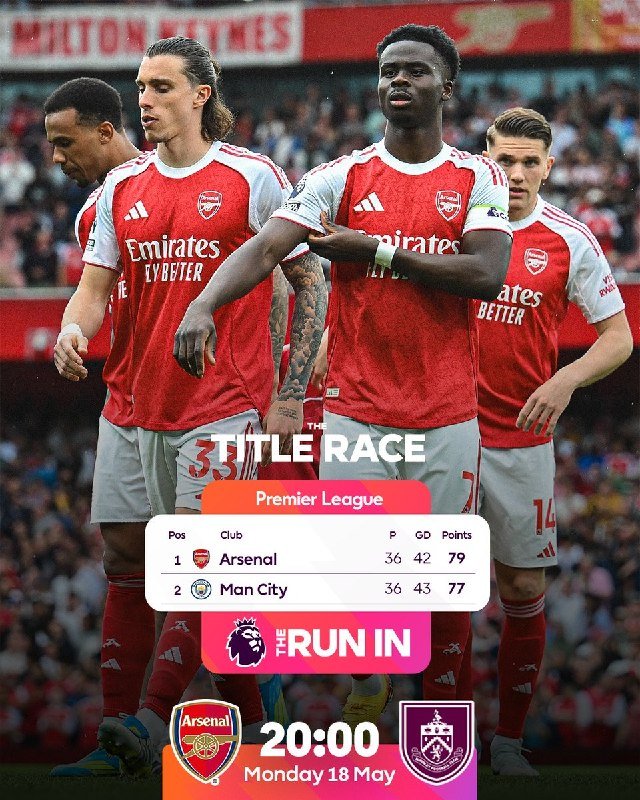
Arsenal's women's side are building something quietly formidable. While the narratives around the WSL this season have cycled between Manchester City's resilience and the structural challenges facing clubs lower down the table, the Gunners have assembled a squad whose depth is now rendering the traditional title race arguments obsolete. The evidence sits in the results column, in the seamless integration of players into the starting eleven, and in the way head coach Renée Slegers has navigated a fixture congestion that has destabilised rivals.
The pattern is worth examining closely. Arsenal have not simply accumulated points; they have done so while rotating personnel in ways that suggest genuine squad architecture rather than desperate scrambling. When key performers have required rest, the replacements have maintained intensity. That is not incidental. In a league where fixture pile-up and international duty conspire to fragment title challenges, Arsenal's consistency suggests a structural advantage that their competitors have not yet solved.
Manchester's two principal clubs have stumbled, and the nature of those stumbles matters. Manchester City, for years the default answer to any WSL conversation about sustained excellence, have looked disjointed in critical fixtures. The reasons are multiple — managerial transitions, player departures, the particular difficulty of sustaining intensity when the squad's architecture is in flux — but the outcome is concrete: points dropped in games where the historical expectation would have been victory. Manchester United, meanwhile, have struggled with the particular pressure of a project that has always promised more than it has delivered in terms of silverware. The two clubs' difficulties are different in origin but convergent in effect: the title race has opened in a way that Arsenal are best positioned to exploit.
The counter-narrative — that Arsenal's position is built on an easier fixture calendar or favourable scheduling — deserves examination but does not survive it. The Gunners have beaten sides across the table, not merely the lower-placed teams who provide false comfort. The quality of performances, not merely the results, has been the distinguishing factor.
Barcelona's 1-1 draw away to Bayern Munich on 27 April 2026 offers a different lesson. The Spanish champions have dominated European women's football for years through a style built on domination of the ball, high defensive lines, and the clinical conversion of chances created through positional superiority. That model works when opponents cannot disrupt the sequence of possession and when the pitch geography — tight spaces, high tempo — favours Barcelona's technical baseline. When those conditions fragment, as they did in Munich, the model requires adjustment.
Alexia Putellas, speaking after the Bayern result, was direct: Barcelona have to "adapt our game." The quote, carried by wire reports on 27 April 2026, is notable not for what it says but for who says it. Putellas is not a voice given to tactical uncertainty. Her career has been built on a specific footballing philosophy, one she has embodied at every level of the game. That she frames adaptation as a necessity rather than a preference indicates the gap between Barcelona's habitual approach and what the current competitive environment demands.
Bayern did not merely defend well; they disrupted the sequences Barcelona rely upon. They pressed in ways that forced turnovers in zones that made the subsequent transition dangerous. They refused to allow the slow build that Barcelona use to stretch opposition shapes before breaking them open. The response — one goal, one point, an incomplete calibration — suggests that Barcelona's coaching staff have work to do in translating tactical awareness into structural adjustment.
The sporting case for adaptation is clear. The competitive environment in women's football has improved at the top end. Bayern, Wolfsburg, Lyon, Manchester City — all have developed the personnel and tactical sophistication to make the old dominance formulas insufficient. Barcelona's challenge is not unlike the one Real Madrid's men's side have navigated across different eras: maintaining identity while acknowledging that identity must evolve to survive contact with improving opposition.
A separate controversy has drawn attention to the sport's infrastructure gaps. Sam Kerr's "perfect hat-trick" — three goals in a single half, each from distinct positions and requiring different technical solutions — was reportedly not recognised as such during the match due to a lack of appropriate technology to track and confirm the achievement in real time. The specifics of the incident circulated in football media on 27 April 2026.
The incident is small in isolation. A hat-trick is recorded; the goals do not disappear because a technical confirmation system is absent. But the underlying issue is not small. Women's football has expanded rapidly in terms of audience, commercial investment, and competitive quality. The administrative and technological infrastructure has not always kept pace. Inconsistencies in goal-tracking, match data, and player performance systems create situations where achievements are disputed or simply unrecorded in the form that allows proper historical comparison.
For a sport still building its statistical foundation — where milestone achievements carry cultural and commercial weight beyond the immediate result — the absence of robust technology is not merely an operational inconvenience. It is a gap in how the game's history is being documented. The decisions made now about the systems that record, verify, and report events on the pitch will determine how the sport's story is understood in twenty years.
The convergence of these three threads — Arsenal's structural advantage, Barcelona's tactical recalibration, and the technology gap — points to a women's game in a specific moment of development. The sport is competitive enough that traditional powers cannot coast on reputation. It is professional enough that infrastructure decisions carry material consequences. And it is accessible enough that the decisions made by clubs, governing bodies, and broadcast partners in the next two to three years will shape what the sport looks like when it reaches the成熟期 that its growth trajectory suggests it will eventually achieve.
Arsenal are well positioned to benefit from this moment. Barcelona face a challenge that, if met with the intelligence their history suggests they possess, need not become a structural problem. And the technology question, while unglamorous, may be the issue that determines whether the sport's emerging prominence is built on solid foundations or on narrative momentum that later proves difficult to sustain.
This publication covered the WSL title race with emphasis on Arsenal's squad depth and Barcelona's tactical adjustment needs, drawing on wire reports from 27 April 2026. The technology debate in women's football remains under-reported relative to its structural importance.
- 29 AprWomen's Football's Technology Deficit and the Champions League's Competitive Test
- 28 AprWomen's Football Roundup: Arsenal's Dominance, Barcelona's Adaptation Problem, and the Technology Gap Costing Goals
- 27 AprEuropean women's football in flux: Arsenal's dominance, Barcelona's adaptation crisis, and the technology gap costing goals