Iran releases footage of Araghchi-Putin meeting as nuclear talks enter critical phase
Telegram footage of Iran's foreign minister meeting Vladimir Putin surfaces days before a fresh round of nuclear talks in Oman, raising questions about the diplomatic sequencing Tehran is managing.
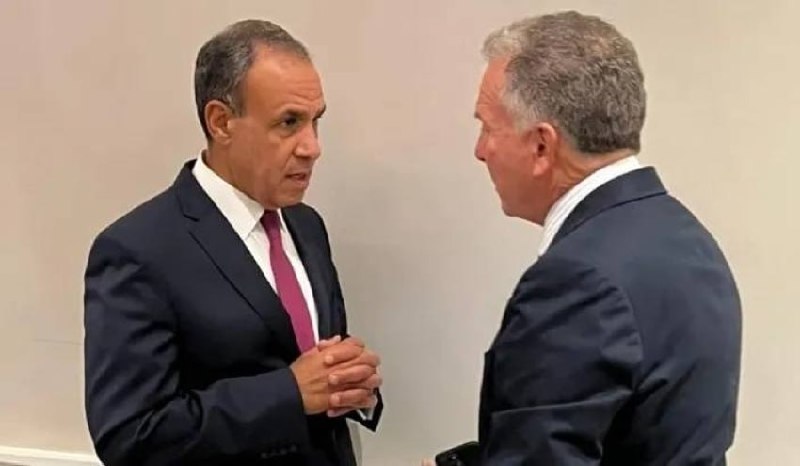
On 27 April 2026, a video showing a portion of the meeting between Iranian Foreign Minister Abbas Araghchi and Russian President Vladimir Putin was published via Telegram, according to a wire post from the sprinterpress account. The footage emerged without accompanying caption text specifying what portion of the meeting was shown or what had been said. No transcript, readout, or official summary of the meeting was included in the source item.
The publication date matters for its timing. Araghchi has been the lead Iranian negotiator in the effort to revive the 2015 Joint Comprehensive Plan of Action — the nuclear agreement from which the United States withdrew in 2018. The current round of talks has been conducted through Omani mediation, with European signatories and the United States in intermittent contact with the Iranian team. A fresh session had been expected in the days following this meeting.
Moscow-Tehran alignment and its diplomatic cost
Iran and Russia have deepened their diplomatic and economic coordination substantially since 2022. Western governments have repeatedly alleged that Iran has supplied Shahed drones — and, in more recent months, ballistic missiles — to support Russia's military campaign in Ukraine. Iran's government has denied the ballistic missile transfers in official statements. Russia has not issued a formal response to the allegations beyond dismissing them in background comments carried by wire services.
The diplomatic cost of this alignment is real and has been visible in the nuclear talks themselves. European capitals, operating under instructions influenced by the United States, have used the weapons-transfer questions as leverage in the negotiating context — conditioning relief from oil sanctions on progress in both the nuclear file and the regional behaviour questions. Iran has pushed back against what it characterises as extraneous linkage, arguing that the nuclear agreement's obligations are distinct from questions about its bilateral defence cooperation.
The video's publication adds a visual dimension to this tension. A photograph or video of a senior Iranian diplomat seated with Putin carries its own signal in a diplomatic environment where Western officials have spent two years arguing that Tehran is demonstrating bad faith through its relationship with Moscow. Whether the video was released by the Iranian side, the Russian side, or a wire service acting independently of both governments is not specified in the source item — a gap that itself carries interpretive weight.
The Omani channel and the sequencing problem
Iran has consistently maintained that it wants a negotiated revival of the nuclear deal. Its negotiating team, led by Araghchi, has expressed willingness to accept constraints on uranium enrichment above 3.67 percent and to allow expanded International Atomic Energy Agency monitoring in exchange for sanctions relief — particularly the delisting of Iran's central bank from the U.S. sanctions list.
The sequencing problem has been persistent. Iran wants sanctions removed first, arguing that it has already made significant concessions and that further steps without relief would be politically untenable for the government of President Masoud Pezeshkian. The United States and European powers want verified Iranian steps first, pointing to what they describe as an inadequate accounting of past nuclear activities and insufficient cooperation with the IAEA as recently as 2023.
Where Putin fits into this picture is structurally ambiguous. Russia is a signatory to the original JCPOA and retains a formal role in the monitoring architecture. But Moscow's utility as a mediating actor has been compromised by its position in the Ukraine conflict — a conflict in which Iran, whatever its denials, is structurally aligned with the Russian side. Western diplomats have made clear that any deal involving Russian technical cooperation would carry additional scrutiny given the current geopolitical environment.
The meeting with Putin may have been intended to manage that complication rather than resolve it. A brief video showing a cordial exchange — without disclosed substance — leaves open both the possibility that hard commitments were made and the possibility that the meeting was largely performative.
What the footage does not show
The source item does not disclose the full context of the meeting — its duration, location within the Kremlin compound, who else was present, or the topics covered. No transcript has been published by either government as of the filing date. The video published by sprinterpress shows a portion of the encounter; it does not constitute a full account.
This matters because the visual alone does not resolve any of the substantive questions surrounding the Araghchi-Putin relationship. It confirms that the meeting took place. It does not confirm that any particular agreements were reached, that any specific assurances were given about Iran's nuclear posture, or that Russia's role in the nuclear talks was either enhanced or diminished by the encounter.
The absence of a read-out also means that the video itself becomes an object of interpretation rather than a source of confirmed fact. Readers encountering it through wire aggregators will fill the interpretive gap themselves — some will read it as evidence of an expanding Iran-Russia bloc, others as routine diplomatic courtesy between two governments with convergent interests but separate priorities.
Forward view
The nuclear talks are expected to resume in Oman within the week, according to sources familiar with the Omani mediation effort. Iran's negotiating team carries into those sessions the implicit weight of having met with Putin in the preceding days — a signal that may be read as reassurance by some, as a complication by others, and as deliberately ambiguous by those who see Tehran's diplomatic style as built on strategic opacity.
The United States has not issued a direct statement on the Araghchi-Putin meeting as of 27 April. State Department officials, speaking on background to wire reporters, have described the bilateral relationship with Russia as a factor they account for in the nuclear negotiation but not a disqualifying one. Whether that posture holds if the talks collapse — and Tehran's alignment with Moscow is cited as a reason — will be a test of the current diplomatic architecture.
The video adds nothing to the substantive record. It adds texture to the political record, and in diplomacy, texture has its own weight.
This publication covered the Araghchi-Putin video through wire aggregation noting the Telegram post on 27 April; no official read-out was available at filing. The broader framing places the meeting within the JCPOA revival negotiating context, where Western capitals have used Iran's Russia relationship as leverage, while Iran has resisted linkage as a separate-track concern.
Wire provenance
This editorial synthesis draws on the following public wire/social posts:
- https://t.me/s/sprinterpress/16455