Israel's Southern Lebanon Airstrikes Will Not Deliver Lasting Deterrence
The April 27 wave of strikes across southern Lebanon towns is militarily legible but strategically hollow — and the pattern signals a leadership that has confused volume of force with resolution of conflict.
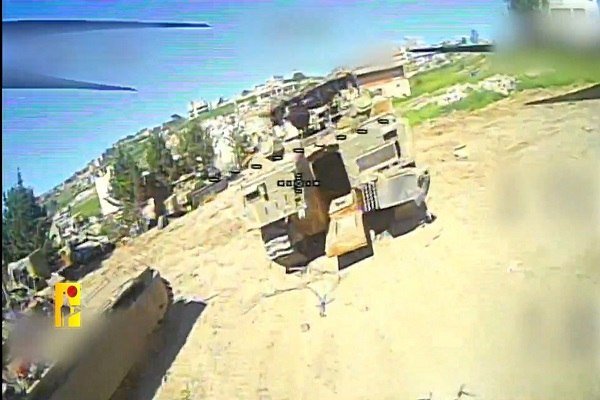
On 27 April 2026, Israeli jets carried out simultaneous strikes across at least three Lebanese border towns — Burj Qalaway, Zawtar Al Sharqiyeh, and Al-Ghandouriya — within a span of minutes. The attacks, catalogued by open-source monitoring accounts operating that day, represent the continuation of a bombing campaign that has run with few interruptions since October 2023. The Israeli Defense Forces have not published a target list, casualty accounting, or stated rationale for the individual strikes. What they have published is routine: statements of the form "we struck a Hezbollah target," followed by silence.
This is the problem. A strike that cannot be explained cannot be evaluated. And an airstrike campaign that runs on autopilot — executing the same pattern against the same category of target in the same geography, day after day — has ceased to be a policy instrument. It has become a ritual.
What the strikes actually accomplish
The stated purpose of the ongoing southern Lebanon campaign is to degrade Hezbollah's military infrastructure and deter the group from launching attacks into northern Israel. In narrow tactical terms, some degradation has occurred. Intelligence assessments, including periodic summaries published by Western defense ministries, acknowledge that Hezbollah has lost equipment, personnel, and some stand-off capability. Nobody disputes that the group's rocket arsenal has been reduced from its pre-October 2023 levels.
But deterrence — the specific outcome that would justify the political and humanitarian costs of sustained bombardment — has not materialised. Hezbollah has continued to launch projectiles into Israeli territory throughout the campaign. Northern Israeli communities remain evacuated. The stated condition for ending the campaign — the return of some 60,000 displaced residents to their homes — is no closer to being met than it was eighteen months ago. Military analysts who have published assessments in journals tracking Eastern Mediterranean security have noted the dynamic before: force applied in sufficient quantity to degrade an adversary does not automatically generate the political outcome that force was meant to produce.
The ritual problem in Israeli strategy
There is a structural tendency in how airpower-dependent militaries talk about operations like these. When strikes achieve their immediate objective — the target is hit, the munition lands where intended — the operation is declared a success. The downstream question of whether the target's destruction changes the adversary's behavior, their willingness to accept the political terms being imposed, or their calculation about the costs of continued conflict — that question rarely gets a clear answer in the communiqués that follow. What gets recorded is the strike. The evaluation stops there.
Israeli strategists are not unaware of this trap. Past campaigns — including the 2006 Lebanon war, which produced outcomes that the Israeli military itself later assessed as unsatisfactory relative to objectives — have been studied for exactly this lesson. The lesson is not that airpower fails. It is that airpower alone cannot produce political results in conflicts where the adversary's willingness to absorb losses is not matched by a corresponding willingness to surrender the political objective that justifies those losses. Hezbollah's stated position has not shifted. The group's leadership has communicated through official channels and proxies that its operations in support of Gaza are non-negotiable until a ceasefire is reached there. No amount of strikes on border villages changes that equation.
What the international context allows
It is worth being precise about what space this campaign operates in. The United States has continued to supply Israel with materiel throughout the period of sustained strikes. Congress has debated further restrictions on certain categories of bombs; the administration has not imposed them. European governments have issued statements calling for restraint, but have not taken concrete steps — no arms embargo, no sanctions on Israeli military officials, no mechanisms that would cost the Israeli government anything material for continuing the campaign. The United Nations Security Council has not passed new resolutions addressing the Lebanon dimension of the conflict. Hezbollah's Iranian patron has been subject to sanctions that predate the current escalation.
This international environment — one in which the Israeli government faces no meaningful costs for continuing the bombing campaign — is itself part of the problem. When the consequences of an action are borne entirely by the target of that action, and when the actor controlling the target's behavior faces no price for continuing, the rational calculation favors continued action regardless of results. The campaign runs not because it is working, but because stopping it would require facing the political cost of admitting it has not worked.
What happens next
The trajectory, if it continues, produces predictable outcomes. Hezbollah absorbs further losses but retains sufficient capability to maintain a threat posture. Northern Israel remains uninhabitable. The political pressure inside Israel to demonstrate progress — pressure that produced the original ground operation in the north, launched in late 2025 — builds until it demands something beyond airstrikes. The options available at that point are the same ones that have been available for two years: a negotiated arrangement that links the northern front to a Gaza ceasefire, or a ground operation that carries its own casualty and escalation risks.
Airstrikes against Burj Qalaway and Zawtar Al Sharqiyeh do not bring either option closer. They sustain a status quo in which nobody wins, nobody concedes, and the question of what actually ends the conflict remains unanswered.
The editorial position of this publication holds that Israeli security concerns are legitimate — that rocket fire into Israeli territory is not an abstraction but a material threat to communities that have been displaced from their homes. That concern is real. But a security concern that can only be addressed by a campaign producing no measurable improvement in security is not a strategy. It is a posture. And postures, however justified their origin, become dangerous when they calcify into policy substitutes.
Wire provenance
This editorial synthesis draws on the following public wire/social posts:
- https://t.me/wfwitness/1842
- https://t.me/wfwitness/1843
- https://t.me/wfwitness/1844