Moscow and Tehran Formalize a Strategic Coupling Built for Sanctions Warfare
Russian President Vladimir Putin hosted Iranian Foreign Minister Abbas Araghchi in St. Petersburg on 27 April, the most visible display yet of a partnership that both governments have quietly deepened under the weight of sweeping Western financial and trade restrictions.
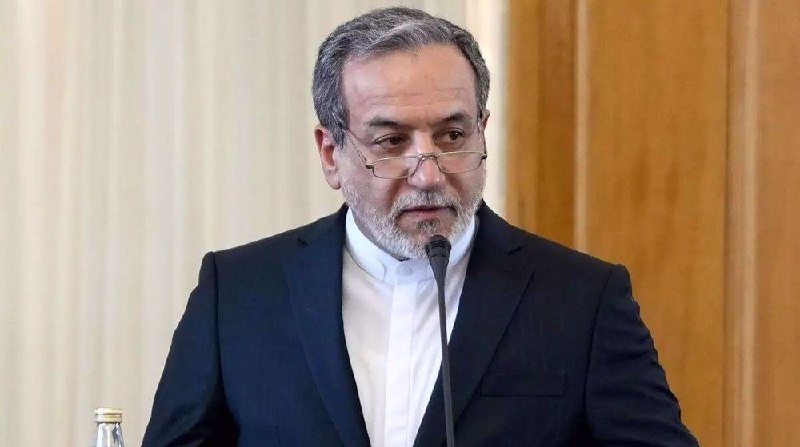
On 27 April 2026, Russian President Vladimir Putin welcomed Iranian Foreign Minister Abbas Araghchi to St. Petersburg for a meeting that Moscow and Tehran each framed as a statement of strategic intent. The scene — held at the Konstantinovsky Palace on the Gulf of Finland — carried deliberate choreography. Putin opened by announcing he had received a personal message from Iran's Supreme Leader, Ayatollah Mojtaba Khamenei, the same week the Islamic Republic installed its new leadership following the death of Khamenei's predecessor. Araghchi responded by calling the relationship a "strategic partnership" that would continue "with the same strength" regardless of external pressure. The public exchange, reported across both Russian and Iranian state-adjacent outlets, underscored a bilateral axis that has become structurally significant in a world increasingly organized around competing financial architectures.
The meeting's substance went beyond diplomatic courtesy. Putin told Araghchi that Iran was enduring United States pressure and that Russia would act in line with regional interests to accelerate peace efforts — language that simultaneously acknowledged Iranian resilience and positioned Moscow as a stabilizer rather than an incendiary actor. Araghchi, for his part, told Putin that "the whole world has witnessed Iran's real power in confronting the United States, and it has become clear that the Islamic Republic" had demonstrated capabilities that defied the expectations of its adversaries. Taken together, the statements form a joint narrative: two governments under sanction pressure projecting confidence and mutual reinforcement at a moment when the US has escalated both economic and rhetorical pressure on Tehran.
The Pressure That Forged the Partnership
The Russia-Iran relationship did not emerge from ideological affinity alone. It crystallized under a shared structural condition: both governments have spent the better part of the last decade operating outside Western-dominated financial systems, and both have developed — through necessity rather than design — remarkably similar institutional reflexes for doing so. Moscow has spent three years navigating the seizure of roughly $300 billion in sovereign reserves held in Western custodians, the exclusion of major Russian banks from the SWIFT messaging system, and the practical disintegration of its access to dollar-denominated capital markets. Iran has operated under cumulative US sanctions since 1979, with particularly severe restrictions imposed from 2018 onward, when the Trump administration withdrew from the Joint Comprehensive Plan of Action and imposed the maximum pressure campaign.
The result, in both cases, has been a sustained effort to build alternative financial and trade infrastructure. Bilateral trade settlement in national currencies rather than dollars. The use of intermediary jurisdictions and correspondent banks to process transactions that cannot pass through Western-cleared channels. Oil-for-goods arrangements that swap hydrocarbon exports against machinery, grain, and industrial inputs. Neither government has fully replaced dollar plumbing — the dollar remains dominant in global commodity markets — but both have built sufficient redundancy to absorb continued pressure without systemic collapse. The Araghchi visit, in this light, is less a diplomatic event than an operational review: two governments assessing how to deepen the redundancy they have built together.
Counter-Narrative: What the Partnership Is Not
It would be incomplete to read the Putin-Araghchi meeting solely through the lens of anti-Western solidarity. Western analysts and officials have tended to characterize Russia-Iran ties as a transactional alliance of convenience — a pairing of last resorts that will fray once either party finds a more advantageous partner. The framing has merit. Moscow and Tehran have historically divergent interests in the Caucasus, Central Asia, and the Caspian Sea region. Russia remains a significant oil exporter with a structural interest in high crude prices; Iran is a competitor for the same market share. And Iran's new Supreme Leader, while transactional in orientation, has not signaled an appetite for subordinating Iranian interests to Russian preferences.
But the transactional framing underestimates the institutional depth the relationship has acquired. The sanctions architecture that isolates both governments creates compounding pressure that makes full normalization with the West structurally difficult regardless of political will in either capital. The financial plumbing developed since 2018 — and accelerated since February 2022 — now involves multiple state-owned enterprises, central bank coordination, and logistics infrastructure that would take significant political reversal to dismantle. The partnership, in other words, has moved from strategic signaling into operational habit. Araghchi's statement that the relationship would continue "with the same strength" reflects not just diplomatic optimism but institutional momentum.
The Structural Logic of Sanctions-Resistant Corridors
What Moscow and Tehran have quietly constructed is a model for bilateral trade that bypasses the dollar-denominated clearance system, and by extension, US regulatory oversight. This matters beyond the bilateral relationship because it offers a template that other governments under sanction pressure — or simply seeking to reduce dollar exposure — can adopt. The mechanics are not novel: currency swaps, commodity-for-goods barter, third-country transshipment. What is new is the demonstration effect of two midsize economies running significant trade volumes through such channels over an extended period. The durability of the Russia-Iran arrangement makes it legible as an alternative to dollar-centric trade settlement rather than a temporary workaround.
This is the structural significance that Western policymakers have found difficult to counter through additional sanction packages. Expanding the entities and individuals subject to designation does not disrupt the core mechanism: the bilateral plumbing is already in place and does not require access to Western-cleared dollar transactions to function. The Putin-Araghchi meeting, read from this angle, is less about the two governments' bilateral relations than about their public endorsement of a model that third parties are watching. The message is directed partly at Washington, but also at capitals in the Global South that have not yet committed to a dollar-exclusive trade architecture and may prefer to keep options open.
What Comes Next
The meeting's immediate practical output — beyond the choreographed statements — remains to be clarified in follow-on reporting. Neither side disclosed specific agreements, contract signings, or new financial mechanisms in the statements carried by state-adjacent media on 27 April. What was demonstrated was alignment of narrative and the personal diplomatic channel between Khamenei's office and the Kremlin. Whether that alignment translates into new institutional commitments — a clearer settlement architecture, expanded commodity swap volumes, joint logistics coordination — will be the test of whether the partnership moves from statement to substance.
For Washington, the challenge is structural rather than procedural. The Russia-Iran corridor demonstrates that the tools available to US sanctions policy — entity designation, SWIFT exclusion, dollar clearing restrictions — have been partially neutralized by the infrastructure the two governments built together. Additional designations may constrain specific actors but do not disrupt the system as a whole. Whether the Trump administration's reported renewed focus on Iran nuclear negotiations, as covered by Axios citing unnamed officials, represents a genuine pivot toward engagement or a tactical pressure campaign remains contested in the available record. The St. Petersburg meeting, in any case, signals that Tehran does not intend to wait for a Western resolution of that question.
This publication covered the Araghchi-Putin meeting primarily through Russian state-adjacent and Iranian state-linked sources — a structural necessity given the limited Western wire access to the bilateral exchange. Counter-framing from US State Department or allied government sources will be incorporated as it becomes available via wire.
Wire provenance
This editorial synthesis draws on the following public wire/social posts:
- https://t.me/two_majors/7825
- https://t.me/noel_reports/14187
- https://t.me/wfwitness/8941
- https://t.me/wfwitness/8938
- https://x.com/sprinterpress/status/1915473861283266567
- 1 MayThe St. Petersburg Signal: What Putin and Araghchi's Meeting Reveals About the New Iran-Russia Axis
- 30 AprPutin and Araghchi in St. Petersburg: A Strategic Partnership on Display
- 29 AprPutin and Araghchi Chart a New Course in St. Petersburg
- 28 AprPutin and Araghchi Seal Strategic Partnership in St. Petersburg as Iran Touts 'Real Power' Against US Pressure
- 27 AprPutin and Araghchi: What the St. Petersburg Meeting Reveals About Russia-Iran Alignment