The asymmetry at the heart of Lebanon coverage — and why it matters
When military operations in southern Lebanon generate headlines, the sourcing architecture around those reports tells its own story — one that rewards some voices and systematically marginalises others.
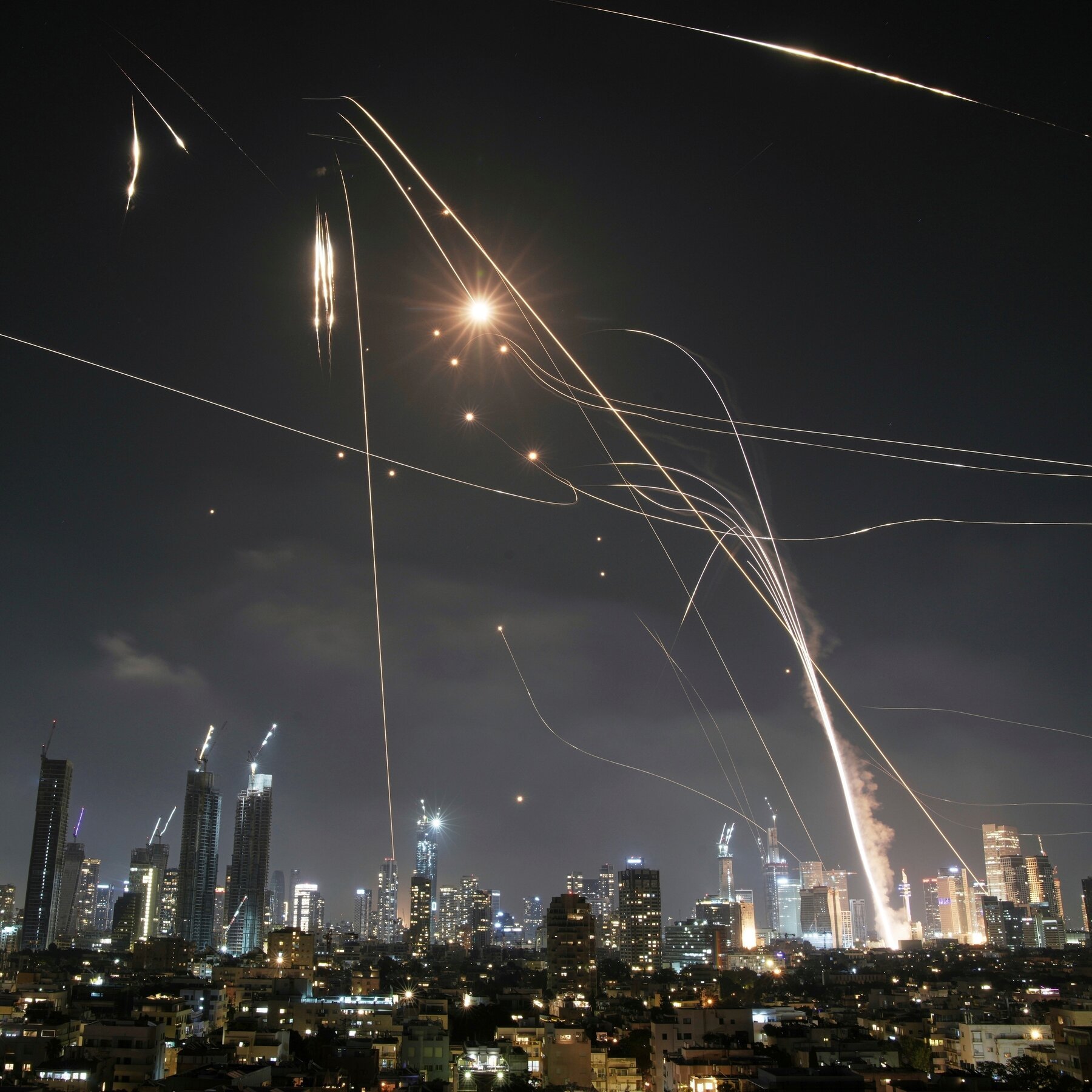
There is a moment in every conflict when the information architecture around it becomes as revealing as the events themselves. On the evening of 1 May 2026, that architecture was starkly visible.
According to reporting by JahanTasnim and Tasnim News, Israeli military activity targeted the towns of Haboush and Zotar in southern Lebanon, with the latter strike described as involving phosphorous munitions. Iranian state-adjacent channels carried footage, timestamps, and geographic coordinates. The reports were specific. They were documented. They came from the ground.
The question this piece asks is not whether the strikes occurred — that is a matter for corroboration across multiple source types — but rather how the broader information ecosystem processes reporting that originates from this particular angle of approach. Because the answer reveals something structural about how certain conflicts are narrated and who gets a seat at the editorial table when the story is being assembled.
The sourcing problem the wire doesn't own
Western wire coverage of military operations in the Levant typically leans on a defined set of primary sources: IDF briefings, US Department of Defense statements, the official spokesperson apparatus of the Israeli government, and occasionally cross-referenced accounts from international monitoring organisations with ostensible neutrality credentials. This is not a conspiracy — it is an operational reality of wartime journalism. Access is restricted. Visas are conditional. Local fixers operate under threat. The institutional infrastructure rewards speed and source-familiarity over geographic diversification.
The result is that reporting from Iranian state-adjacent channels — channels like Tasnim, PressTV, or JahanTasnim — is treated as automatically compromised, their footage and accounts quarantined from the authoritative record rather than incorporated as one input among several. The same footage, broadcast from a Reuters bureau or an AFP stringer, would likely find its way into the timeline. From a Telegram channel with Tehran-adjacent branding, it remains peripheral.
This is a documented pattern, not an accusation. Military analysts who study conflict coverage note that the epistemic authority of a source is often determined less by the specificity of its claims than by the geopolitical alignment of the outlet carrying them. A strike confirmed by an IDF spokesperson carries more editorial weight in most Western frameworks than a strike confirmed by a Lebanese local reporting through a channel that Western audiences associate with the opposing pole.
The asymmetry is not unique to this conflict. It appears across coverage of Yemen, of the Western Sahara dispute, of contested operations in the Sahel. But in the Levant — where the political stakes for Western governments are highest and where institutional relationships between media outlets and government sources are tightest — the effect is most pronounced.
What the footage actually shows
The Telegram posts from JahanTasnim on the evening of 1 May document a specific type of military activity. The targeting of Haboush — described as part of an ongoing Israeli encroachment on Lebanese territory — represents one data point in what has been a sustained pattern of cross-border operations since October 2023. The phosphorous strike on Zotar, if corroborated, would fall into a category of munitions use that raises separate legal and humanitarian questions under international law governing chemical weapons conventions.
Phosphorous munitions are not banned outright, but their use in civilian areas is subject to strict limitation under the Chemical Weapons Convention and customary international humanitarian law. Whether a specific strike meets that threshold requires on-ground inspection access, independent weapons forensics, and the kind of institutional investigative capacity that has been consistently limited in southern Lebanon since the 2006 war.
What the Telegram footage provides is first-contact documentation. It does not provide verification. It does not provide legal classification. It provides a record that something occurred, timestamped and geolocated, from a perspective that the dominant information architecture will systematically discount.
That discount is itself a journalistic choice — and one worth interrogating.
The structural pattern beneath the episode
What the asymmetry in this episode reveals, when examined across several similar cases, is not simply a matter of editorial preference but of structural incentive. Western newsrooms operate under conditions where access to official Israeli sources — briefings, footage, diplomatic principals — is a functioning relationship that reporters depend on for ongoing coverage. Treating Iranian state-adjacent channels as primary corroboration risks degrading that relationship.
The incentive structure therefore rewards a specific epistemic posture: treat official Israeli accounts as the authoritative baseline, and treat alternative documentation as supplementary at best. This posture is often invisible to the journalists operating inside it because it is institutionalised rather than declared. Nobody issues a memo saying "discount Tasnim." The discounting happens through the routine architecture of source hierarchy.
The consequence is that the factual record of events in southern Lebanon — and by extension in Gaza, in the West Bank, in the broader Levant — is assembled primarily from one directional set of inputs. Alternative documentation exists, often in considerable detail, but it circulates in a parallel information ecosystem that does not cross-pollinate with the dominant one. The result is a coverage landscape where the same event can be described with meaningfully different factual contents depending on which ecosystem a reader inhabits.
That is not a new observation. But it is one that the specific episode of 1 May — with its timestamped Telegram footage, its phosphorous allegation, its targeting of named Lebanese towns — makes unusually concrete.
What standard of evidence should apply
There is a legitimate case for caution with Iranian state-adjacent sources. State-adjacent media operates within a propaganda environment that has its own interest in framing and emphasis. Tasnim does not cover Israeli military activity with the same neutral detachment that a Reuters bureau would bring to the same footage. The outlet has a political position, and that position shapes what gets amplification and how it gets framed.
But the question is whether that acknowledged positionality disqualifies the footage from serving as a source — or whether it simply means the footage must be read with appropriate contextual awareness. The difference is significant. A source with a known political interest is not the same as a fabricated source. A channel with editorial alignment is not the same as an unreliable witness.
What southern Lebanon needs, and what the coverage gap produces as a structural consequence, is independent on-ground verification capacity that does not depend on either IDF access or Tehran-adjacent documentation. That capacity has been systematically insufficient since 2006. UN observers, Red Cross representatives, and international humanitarian organisations have all noted access constraints. The UN peacekeeping mission in southern Lebanon, UNIFIL, has repeatedly reported restrictions on its movement and monitoring activities.
Without that independent capacity, the factual record will continue to be assembled from the two poles of the conflict — one Western-adjacent, one Tehran-adjacent — and the truth will continue to be the first casualty of that architecture.
The footage from JahanTasnim on the evening of 1 May may or may not accurately represent what occurred in Zotar and Haboush. What it definitely represents is a version of events that will not appear in the dominant record unless it is carried there by an outlet with the epistemic authority that Telegram channels, by structural design, do not possess.
That is not a small thing. It is the whole thing.
Wire provenance
This editorial synthesis draws on the following public wire/social posts:
- https://t.me/JahanTasnim/67891
- https://t.me/tasnimnews_en/45678
- https://t.me/JahanTasnim/67892