Khamenei's Hormuz Ultimatum Is Theatre Built on Fragile Foundations
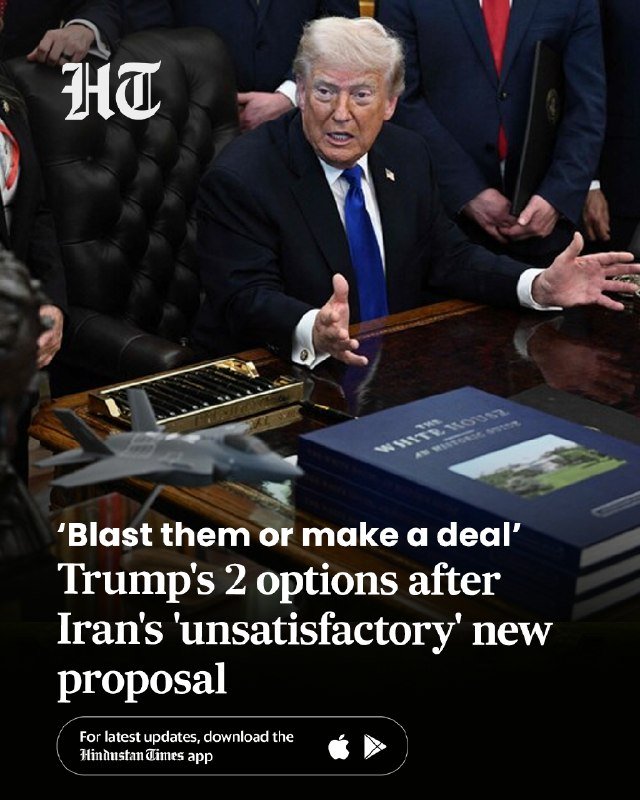
On 1 May 2026, Iran's Supreme Leader issued what his office described as a categorical response to foreign naval activity in Persian Gulf and Gulf of Oman waters. The language was unambiguous: those operating in the region "from thousands of kilometres away" had, in Khamenei's framing, no place there except "at the bottom of the sea." A separate statement declared Tehran would move to stop the enemy's "misuse" of the Strait of Hormuz.
The statements arrived without preamble or apparent tactical trigger — no fresh US carrier deployment, no new sanctions tranche publicly released that morning, no Gulf incident reported by any wire service. That timing matters. Khamenei's address was calibrated not as a reaction to a specific provocation but as a declaration of posture: Iran intends to be heard, and intends the international shipping community to hear it.
This publication finds that the statements merit serious analysis — and also that the gap between the language deployed and the operational reality Tehran would face in attempting to back it is wide enough to drive an oil tanker through.
The Hormuz Leverage Problem
The Strait of Hormuz is the world's most consequential maritime chokepoint for liquid fuels. Roughly 20–21 million barrels per day of crude and condensate moved through it in recent years, according to shipping data and US Energy Information Administration baselines. Any significant disruption — real, not merely threatened — sends shockwaves through global energy markets within hours.
Tehran understands this arithmetic better than most. Iranian officials have brandished the Hormuz card repeatedly over the past two decades: in 2011–2012, when sanctions tightened; in 2019, when the Trump administration exited the JCPOA and the Islamic Revolutionary Guard Corps threatened to close the strait in response to assassinations attributed to Washington; and again in 2024 amid heightened US-Iran tensions over nuclear progress.
On each occasion, the threats preceded and accompanied diplomatic pressure campaigns. On each occasion, the strait remained open. The pattern is consistent enough that energy markets — while alert — no longer panic at the sound of Iranian officials using the word "Hormuz" in public remarks.
What the Language Conceals
There is a structural distinction between the threat of closure and the capacity to execute one. The Islamic Republic's navy and Revolutionary Guard naval assets are qualitatively capable of laying mines, deploying fast patrol craft, and harassing commercial traffic — tactics that have been demonstrated in past incidents involving tankers transiting Gulf waters. What Tehran demonstrably lacks is the air defence architecture to hold the strait against a determined US or US-coalition naval response in open conflict.
Khamenei's phrasing — "at the bottom of the sea" — is visceral, deliberately so. It is also precisely the kind of language that plays as theatre to a domestic audience for whom anti-imperialist rhetoric carries institutional weight. Iranian state media will amplify the remarks; the IRGC will cite them as vindication of hardline posture. The political economy of the statement thus becomes legible: it is not a battlefield directive but a message addressed simultaneously inward and outward.
The external audience — Western governments, Gulf monarchies, energy traders — is meant to register uncertainty. The internal audience is meant to register strength. These are not identical purposes, and they pull in different operational directions.
The Regional Counterweight
What has shifted since 2019 is the geopolitical map surrounding the Persian Gulf. The Abraham Accords normalised Gulf Arab-Israeli cooperation on shared security architecture. Saudi Arabia and the UAE have deepened intelligence-sharing arrangements with Washington that include real-time maritime domain awareness in and around the strait. US Fifth Fleet posture, while never static, has remained robust enough that any serious blockade attempt would face pre-positioned response capacity.
Iran's own regional network has contracted. Hezbollah remains operative but is stretched by conditions in Lebanon and Syria. Iraqi militia coordination is complex and contested. The Houthis, despite demonstrated willingness to strike shipping in the Red Sea, operate from a different theatre entirely — and have not been positioned as an instrument of Gulf strait interdiction.
Put plainly: the coalition Iran would need to make a Hormuz blockade credible as anything more than harassment has not materialised, and the conditions for one have not been created by the statements issued on 1 May.
The Stakes — For Whom
The proximate audience for this rhetoric is the Trump administration, which has pursued a maximum-pressure posture on Iran since returning to office in January 2025. Khamenei's language is a message to Tehran's negotiating posture: do not expect concessions under duress, and understand that Iran retains asymmetric leverage it will deploy if cornered.
Energy markets face a more proximate hazard in the form of sanctions enforcement on Iranian oil exports — enforcement that has tightened under the current US administration but that remains porous at the margins through third-country intermediaries. The Hormuz language functions, for traders and insurers, as a reminder that that porosity carries a geopolitical risk premium.
The real losers if this rhetoric escalates are commercial shipping companies operating in or adjacent to the Gulf — forced to account for a higher baseline threat in insurance calculations and transit planning. The winners are domestic audiences in Tehran, and possibly hardliners across the Gulf who find a common enemy useful for their own political purposes.
The statements issued on 1 May are significant as signals. They are not, on their face, an operational declaration. Khamenei has issued this category of warning before; the strait remains open. The structural conditions for a decisive Iranian move have not materially changed. That does not make the remarks dismissible — it makes them legible for what they are: diplomatic theatre with a nuclear-adjacent cast.
Monexus covers Iranian regional posture through primary state-media and independent regional sources. The wire treatment of Khamenei's remarks led with the "bottom of the sea" phrasing as a standalone provocation; this analysis contextualises the statements within the operational and diplomatic record.
Wire provenance
This editorial synthesis draws on the following public wire/social posts:
- https://t.me/Khamenei_ir/17482
- https://t.me/Khamenei_ur/13141