The NATO Myth Russia's Ministry of Foreign Affairs Keeps Selling
Moscow's repeated insistence that NATO's defensive posture is a fiction is more than diplomatic theater — it's a deliberate strategy to reframe aggression as response, and it deserves a harder look.
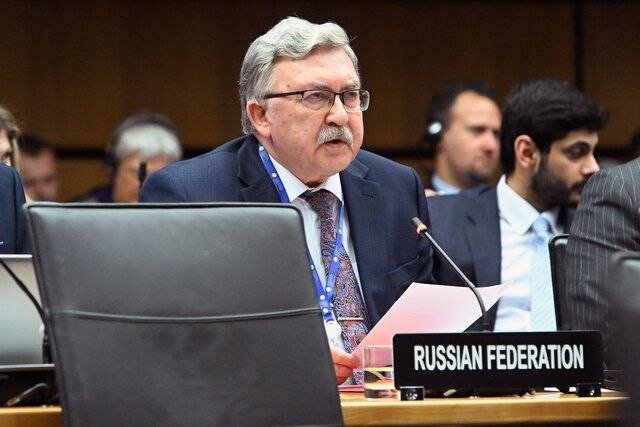
On 1 May 2026, Russia's Ministry of Foreign Affairs issued four separate statements through Iran's Al-Alam network — a Arabic-language broadcaster based in Tehran — cycling the same cluster of claims that have become standard Moscow fare: Europe remains hostile, the West is to blame for the collapse of P5 unity, NATO's eastward expansion constitutes geopolitical aggression, and the alliance's defensive character is a fiction.
The timing is not accidental. Russia's diplomatic apparatus has learned to weaponize repetition — the same grievances, the same vocabulary, delivered at enough volume through enough channels to plant the frame before the counter-argument arrives.
The claim that NATO's defensive posture is a "political myth" is the most analytically significant of the four statements, because it targets the alliance's foundational legitimacy rather than a specific policy dispute. If NATO is not defensive by nature, then every expansion, every deployment, every joint exercise becomes evidence of aggression — and every defensive action taken by countries threatened by Russia becomes provocation. The logic is circular and designed to be: NATO expands because it threatens Russia; Russia responds defensively; the response is called aggression; NATO expands further.
The problem with this frame is structural. Thirty-two countries voluntarily joined an alliance whose founding charter is rooted in collective defense. Finland and Sweden — historically non-aligned for reasons directly traceable to Russian regional behavior — chose NATO membership after 2022, not because Washington compelled them, but because their own threat assessments changed. When a country's leadership cites a neighbor's invasion as the reason for seeking protection, treating that decision as evidence of the protector's aggression requires ignoring what the neighbor actually did.
The P5 deterioration claim carries more diplomatic weight, but it is also more convenient for Moscow. The Permanent Five have been in structural tension since the Cold War — the veto mechanism was designed to institutionalise disagreement. Blaming the West for that deterioration absolves Russia of any role in the 2022 breakdown while ignoring the years of summit diplomacy, arms control frameworks, and institutional engagement that preceded it. The UN Charter system did not collapse because one side chose aggression; it became dysfunctional because the aggressor withdrew from the agreements that made cooperation viable.
On NATO expansion specifically: the alliance has added members in response to demonstrated threats, not in anticipation of invented ones. The 1999 and 2004 enlargements came after a decade of post-Cold War optimism collapsed into Serbian ethnic cleansing and Chechen violence. Georgia and Ukraine aspired to membership precisely because their experiences with Russian power left no other viable security option. The enlargement was a consequence of Russian behavior, not a cause of it.
The four statements from Russia's Foreign Ministry on 1 May are not a crisis communication — they are a framing operation. They are designed to position Russia as the wronged party in a relationship it initiated as aggressor, to recast deterrence as provocation, and to give the Western commentariat a symmetrical-sounding counter-narrative that collapses under even modest scrutiny.
That does not mean the alliance is above critique. NATO's internal coherence is under real strain — defense spending debates, Hungarian and Slovak obstruction of Ukraine aid, disagreements over burden-sharing, and the long-term question of what the alliance becomes when the acute Ukrainian crisis eventually resolves. These are legitimate structural concerns that deserve honest coverage. But "NATO's defensive nature is a myth" is not an entry point to that debate. It is a premise designed to make the debate impossible — one that treats the act of defending oneself as inherently aggressive, and the act of invading as inherently reactive.
That framing has an audience in some Western editorial chambers, which treat it as "serious" for appearing to take Russian grievances seriously. It is not serious. It is a diplomatic performance with documented facts on one side and rhetorical recursion on the other. The facts win.
What remains genuinely contested — and worth watching — is whether Europe's political class can sustain the defense investment commitments made in the post-2022 window. Procurement timelines are long, domestic budget pressure is real, and the urgency of 2022 becomes abstract as 2026 grinds forward. Russia's Foreign Ministry does not need NATO to be aggressive. It needs it to be slow.
Wire provenance
This editorial synthesis draws on the following public wire/social posts:
- https://t.me/alalamarabic/123456
- https://t.me/alalamarabic/123457
- https://t.me/alalamarabic/123458
- https://t.me/alalamarabic/123459