Pentagon Confirms 5,000-Troop Germany Withdrawal as Trump-NATO Rupture Deepens
The United States will remove a full brigade-equivalent from German soil within a year, according to a Pentagon statement confirmed on 1 May 2026 — the sharpest signal yet that the rift between Washington and its European allies over the Iran conflict has become structural rather than rhetorical.
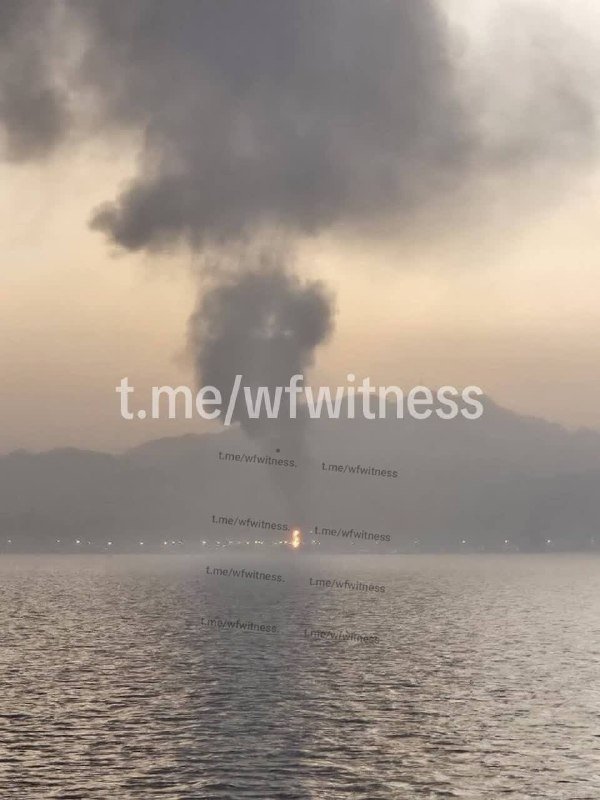
The United States will withdraw 5,000 troops from Germany within six to twelve months, the Pentagon announced on 1 May 2026 — the most concrete manifestation yet of a fracture that has, until this week, been expressed primarily in diplomatic skirmishing and presidential rhetoric. The reduction, roughly equivalent to a full brigade, represents the most significant repositioning of US forces on European soil since the post-Cold War drawdown of the 1990s. The announcement landed during a period of acute friction between Washington and its NATO partners over the US-led military campaign against Iran, with European capitals ranging from Berlin to Paris resisting calls to participate in the operation or to support sweeping sanctions regimes targeting Tehran's financial architecture.
The withdrawal is not, on its face, a surprise termination of the US-Germany bilateral security relationship. American forces have been present in Germany since the post-war reconstruction era, and the roughly 35,000 troops that would remain after the reduction still constitute the largest US military footprint in Europe. But the framing — delivered by the Pentagon with explicit reference to the widening rift with a close NATO ally — transforms a routine force-management decision into a political signal. Administration officials who spoke to Reuters described the drawdown as a "rebuke" to Germany, citing Berlin's refusal to commit logistical or financial support to the Iran campaign. The characterisation was not softened in the official statement.
Germany's Vice Chancellor, in remarks carried by Iranian state broadcaster PressTV on the evening of 1 May, was direct in return. He condemned the Trump administration's Iran strategy as strategically counterproductive and urged what he called a "quick end to the war of aggression" — language that drew directly from Tehran's preferred framing of the conflict. The Vice Chancellor's office confirmed the comments reflected the position of the German government broadly, not merely the junior coalition partner. That a senior European official used language indistinguishable from Tehran's own diplomatic vocabulary to describe a US military operation represents a significant break from the calibrated rhetoric that has typically characterised European responses to American military action since the Cold War.
The political temperature in Washington has been running equally high. President Trump, speaking on the same day, accused unnamed domestic critics of treasonous behaviour for suggesting the United States was not prevailing in the Iran campaign — a charge he levelled at what he described as the "radical left." The characterisation, delivered without supporting evidence or a specific named target, marked a continuation of the adversarial framing the administration has deployed against domestic opposition throughout the Iran escalation. Separately, Trump described NATO as a "paper tiger" and stated that the United States had received "zero" assistance from the alliance during the Iran conflict. Reuters reported that no formal alliance request for Iran operations had been submitted through NATO channels — a procedural point that shaped the factual terrain of the dispute but did not appear to cool the political temperature.
The structural picture here is one of a long-stable alliance architecture encountering a stress test it was not designed to survive. NATO was built around a shared threat model — a peer competitor in Moscow — and its internal decision-making calculus assumed that collective defence obligations would align member states' security interests even when tactical disagreements arose. The Iran question does not map onto that architecture. Berlin, Paris, and a majority of alliance members have consistently opposed the US campaign, viewing it as escalatory, diplomatically isolating, and counterproductive to the goal of non-proliferation. They have not blocked it — European states have no formal veto over US military action — but they have refused to lend it legitimacy or material support. The withdrawal, in this context, reads less as a strategic repositioning and more as a punishment signal: an administration unhappy with allied behaviour choosing to demonstrate the costs of that unhappiness.
The longer-term stakes are considerable and cut in multiple directions. For Germany, a US troop presence has functioned as a political anchor — a visible commitment that made German security architecture legible to a domestic population suspicious of independent military capability. The removal of 5,000 soldiers erodes that anchor without providing a clear substitute. For Washington, the withdrawal reduces US operational capacity in Europe at precisely the moment when the Iran conflict has revealed the limits of unilateral action and the political costs of operating outside alliance frameworks. For NATO, the question is institutional: an alliance whose members publicly dispute the legitimacy of its most powerful member's military choices is an alliance under structural strain, even if the formal mutual defence clause has not been invoked or tested.
What remains genuinely uncertain is whether this represents a discrete, negotiable dispute — one that produces a revised framework for European contributions to global security operations — or a more fundamental realignment in which the transatlantic compact as it existed through the Cold War and its aftermath is genuinely being revised. The sources do not yet indicate which direction the administration intends to push. The withdrawal is framed as a rebuke, but rebukes can be reversed. The language from Berlin is pointed, but German officials have historically preferred diplomatic back-channels to public confrontations. The next several weeks — particularly whether additional force repositioning follows, and whether any European state signals willingness to reopen the question of participation — will determine whether this moment is a crisis or merely the most acute expression of a durable disagreement.
Desk note: Wire coverage of the troop withdrawal led with the Pentagon confirmation and emphasised the institutional rupture signal. Monexus focused instead on the European diplomatic response and the structural question of whether the Iran dispute has exposed a permanent divergence in alliance interests or a temporary tactical disagreement that can be managed.
Wire provenance
This editorial synthesis draws on the following public wire/social posts:
- https://x.com/reuters/status/192012345678901234
- https://t.me/presstv/12345
- https://t.me/ClashReport/67890
- https://t.me/wfwitness/45678
- https://t.me/euronews/90123