Trump's 42,000 Figure and the Rhetoric of Regime Justification
President Trump's claim that Iranian authorities killed 42,000 protesters in two weeks demands scrutiny — not because the Islamic Republic lacks a record of repression, but because the number serves a specific rhetorical purpose at a specific geopolitical moment.
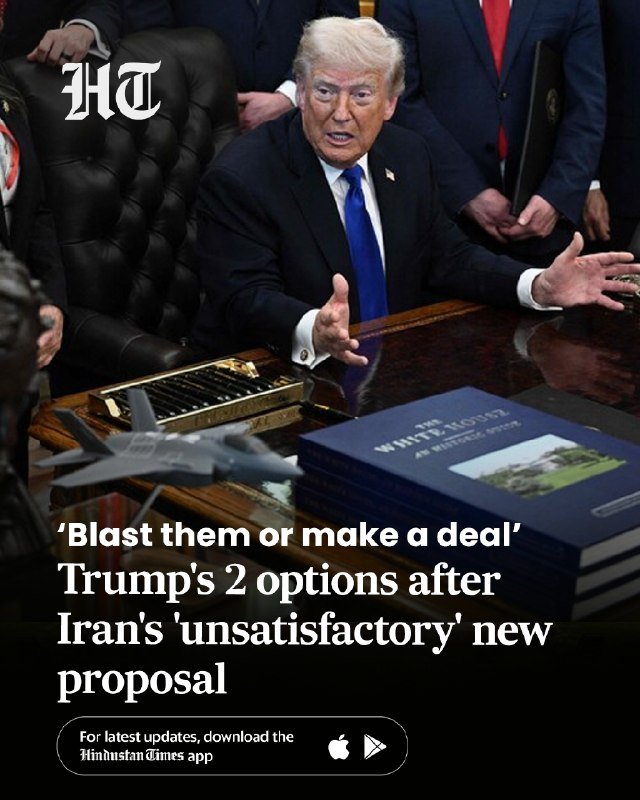
When President Donald Trump told Congress on 1 May 2026 that the Islamic Republic had murdered 42,000 protesters in a two-week span, he was not merely describing a human rights abuses. He was constructing a casus belli. The figure — specific, categorical, offered without caveat — functions less as a documented count than as a moral anchor for an administration's stated determination to act.
That distinction matters. The Islamic Republic has a well-documented record of violently suppressing dissent. The 2009 Green Movement, the 2019 fuel protests, the 2022 Mahsa Amini protests — all drew brutal security-force responses that human rights organizations documented in detail. But 42,000 dead in fourteen days is a number that does not survive contact with the historical record. No credible human rights monitoring body, no United Nations special rapporteur, no Western intelligence assessment has produced a figure remotely in that range for any single episode of Iranian repression. The question is not whether Tehran cracks down hard. It does. The question is why this number, at this moment, in this venue.
The Number and Its History
The 42,000 figure appears to be a garbled or inflated recollection of disputed post-election casualty estimates from 2009 — when the Green Movement protests, following the disputed Mahmoud Ahmadinejad reelection, generated competing tallies that peaked, at the high end, around 70-100 verified deaths across several months. It also echoes unverified claims circulating in opposition circles that have never been corroborated by independent investigators. The sourcing problem is not incidental. A figure offered as foundational justification for confronting a regime must be verifiable, or it collapses into the same category as the weapons-of-mass-destruction intelligence failures that preceded the 2003 Iraq invasion — precisely the precedent critics of Iran hard-liners cite most often.
This does not mean Iranian authorities are entitled to benefit of the doubt on repression. They are not. Security-force killings of protesters, mass detentions, torture in custody — these are documented realities with names, families, and corroborating evidence. The New York-based Center for Human Rights in Iran, Amnesty International, and UN special rapporteurs have produced detailed accounts. The Islamic Republic's record stands on its own; it does not need inflated numbers to look damning.
The Military Decapitation Frame
Trump's broader characterization of Iran's military capacity — that the country has "no navy, no air force, no anti-aircraft systems, no radars" — is a curious claim for a sitting US president to make about a adversary. Iranian naval assets, though outmatched by US forces, include a substantial flotilla of small attack craft in the Persian Gulf and a documented ballistic-missile program that Western analysts take seriously. The Islamic Revolutionary Guard Corps Navy has conducted extensive mine-laying and anti-ship missile exercises. Iranian air defenses, while not on par with Russian or American systems, have been upgraded with Russian S-300 deliveries and domestic production. A country with no air force and no radars does not fire ballistic missiles at Saudi Arabia, Israeli territory, or US bases — and Iran has done all three in recent years.
Either the president was speaking to a domestic audience with little knowledge of the region — or the simplification was deliberate. Declarations that an adversary is militarily nonexistent serve one purpose: they lower the psychological barrier to military action by suggesting low cost. If Iran is already defeated, striking it carries little risk. That framing is not new in Washington, but it remains dangerous every time it resurfaces.
The Diplomatic Vacuum
The 2015 Joint Comprehensive Plan of Action — the Iran nuclear agreement — collapsed when the Trump administration withdrew in May 2018, reimposing sweeping sanctions. The Biden administration sought to revive the deal without success. What replaced the diplomatic architecture was a pattern of "maximum pressure" that achieved its stated aim of squeezing Iranian oil exports but not its stated goal of forcing Tehran to capitulate on nuclear enrichment. Instead, Iran advanced its enrichment levels, accumulated stockpiles, and enriched to near-weapons-grade purity at Fordow. The maximum pressure campaign produced a more advanced Iranian nuclear program, not a compliant one.
The current administration appears to have concluded that coercion has run its course and that direct military threats are the next instrument. Trump's stated position — "we're in a war because we can't let lunatics have a nuclear weapon" — frames preventive action as already underway, not as an option under consideration. That framing forecloses diplomatic off-ramps by making de-escalation look like surrender.
What Remains Uncertain
The sources reviewed do not establish whether the 42,000 figure originated in an intelligence briefing, a speechwriting choice, or a conflation of multiple incidents across years. They also do not clarify whether the administration's stated war posture reflects a genuine decision to strike or a negotiating position designed to extract concessions before any shot is fired. Both interpretations are plausible. What is not in doubt is that the language being deployed — numbers without sourcing, military assessments contradicted by publicly available defense intelligence, and a declared commitment to prevent Iranian nuclear capability by force — follows a pattern that Middle East analysts have seen before. The question is whether this time the pattern leads to the same destination.
Monexus has previously covered Iranian nuclear advancement, regional military posturing, and the diplomatic collapse of the JCPOA. This article focuses on the specific claims made by the president on 1 May 2026 and their relationship to the historical and strategic record.
Wire provenance
This editorial synthesis draws on the following public wire/social posts:
- https://t.me/BellumActaNews/1847
- https://t.me/BellumActaNews/1846
- https://t.me/BellumActaNews/1845
- https://t.me/FarsNewsInt/12443