Trump Declares Iran War Over — But Wars End in Treaties, Not Letters
The White House has formally notified Congress that what it calls the Iran conflict is concluded. Whether that constitutes peace depends on what Tehran and the world make of it.
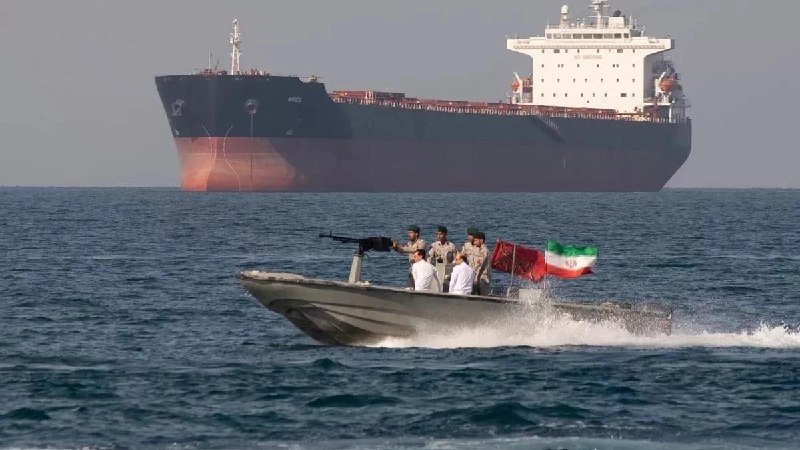
On the afternoon of 1 May 2026, the White House delivered a letter to Speaker Mike Johnson stating that the military actions Washington launched against Iran on 28 February have ended. The notification, confirmed by the Associated Press, carries the trappings of finality — but international law does not recognise unilateral declarations of peace, and the sources available do not yet indicate any binding agreement with Tehran.
The letter amounts to a formal accounting exercise under the War Powers Resolution, the 1973 statute requiring presidents to notify Congress within 48 hours of introducing US armed forces into hostilities. Whether it also functions as a political signal — that the executive branch considers the Iran chapter closed for purposes of both law and domestic messaging — is a separate question, and the two functions do not necessarily align.
What the Letter Actually Does
The document, as characterised in wire reporting, notifies Congress that hostilities initiated on 28 February 2026 have ceased. It does not, based on the available sourcing, describe the terms under which they ceased. It does not reference a ceasefire, a negotiated settlement, or any instrument of international law. It states a fact about the cessation of US military operations — nothing more.
This distinction matters. The executive branch has an interest in declaring conflicts over when military operations wind down, both to reset the legal basis for ongoing force posture and to manage a domestic political environment where the costs of Middle Eastern intervention have become a liability. But a presidential declaration of peace is not peace. Peace requires an adversary's acquiescence, or a treaty, or a ceasefire agreement with international monitoring — instruments that bind both sides and carry consequences for violation.
The Dissenting Republican Voice
Margery Taylor Green, a former US House representative who backed Trump's 2025 outreach to Tehran during the earlier diplomatic phase, publicly disputed the characterisation. She called the declaration false — a framing the sources present without elaboration, but whose substance is available in her public statements. Her objection is not a fringe position: it reflects a recognisable concern that a conflict which began with strikes can be declared over without the diplomatic architecture to ensure it does not resume.
That concern has structural weight. Trump began his second term with direct negotiations with Iran, reached what was described as a framework in early 2025, and then reversed course following a disputed incident attributed to Iran by US intelligence. The strikes launched in late February were not authorised by Congress under any formal war declaration. The letter to Johnson now closes that operational chapter — but the diplomatic chapter that preceded it was abandoned, and no new one appears to have opened in its place.
The International Law Problem
Congressional notification under the War Powers Resolution is a domestic mechanism. It satisfies a US statutory obligation. It does not satisfy the standards that govern the end of hostilities under international law, which require either a ceasefire agreement, a peace treaty, or a UN Security Council resolution — instruments that create binding obligations on all parties and establish a framework for verification.
Iran has not issued any formal statement accepting the end of hostilities as declared by Washington. Iranian state-adjacent channels, cited in the available thread, carried the Margery Taylor Green controversy but did not report a complementary Iranian declaration. That asymmetry — one side announcing the war is over, the other side silent — is itself a statement. It means the conflict has paused, not resolved. The ceasefire, such as it is, rests on a unilateral US declaration that Tehran has not endorsed.
Stakes and Forward View
The stakes of a premature peace declaration are concrete. If the executive branch treats the Iran chapter as closed while Iran neither confirms nor denies the claim, the ambiguity creates space for either side to interpret future incidents through a war lens or a peacetime lens — with no agreed baseline for which standard applies. A strike that would be a ceasefire violation under a binding agreement is merely a bilateral incident without one. Escalation that would be illegal under a ceasefire is, without one, a grey zone.
The Trump administration gains a domestic win — an end to a conflict it did not inherit and did not campaign on, framed as a presidential accomplishment. Critics gain a legitimate question: what exactly was accomplished? The sources do not yet indicate an answer to that question.
What the letter to Speaker Johnson confirms is that US military operations related to Iran have ceased as of 1 May 2026. What it does not confirm is that peace has been established, that Iran accepts the termination, or that the structural conditions that produced the February strikes have been resolved. Those are separate questions. The available evidence settles the first one. It leaves the others open.
This publication covered the White House notification via Telegram wire and Associated Press reporting. The dominant wire framing treated the declaration as a straightforward administrative conclusion; this analysis focuses on the gap between that framing and the legal and diplomatic standards that govern the actual end of armed conflict.
Wire provenance
This editorial synthesis draws on the following public wire/social posts:
- https://x.com/sprinterpress/status/1918960345123217685
- https://t.me/tasnimnews_en/112345
- https://x.com/sprinterpress/status/1918957345123217685