Trump's Iran Narrative Is Fracturing on the Grid Between Rally Stage and Congressional Letter
The president is broadcasting two distinct Iran signals simultaneously — aggro at the rally, constraint on paper — and the gap is becoming impossible to dismiss as mere negotiating posture.
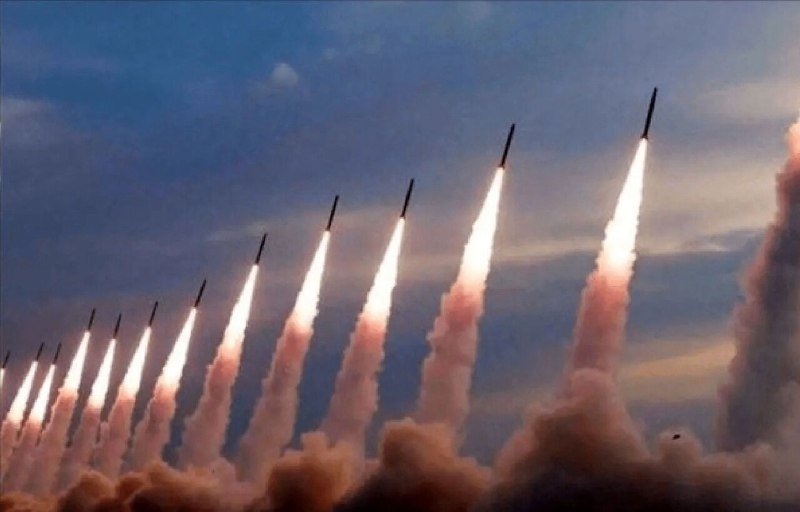
On the campaign trail and before rally audiences, Donald Trump has deployed unmistakably aggressive language toward Iran — pledging to destroy its military capability, describing engagement with Tehran as existential necessity, drawing thunderous applause with the declaration that the United States cannot allow lunatics to possess a nuclear weapon. In a letter transmitted to Congress, according to reporting from Fars News International and Fars Arabic, the language was materially more measured. The president's formal communication appears to have withdrawn from the more expansive public framing of military objectives. The dissonance between the two registers — the stage and the stationery — is not a communication glitch. It is the policy.
The gap between what the White House says at a podium and what it commits to on congressional correspondence matters because the Iran question is not merely rhetorical. It has downstream consequences in energy markets, in allied coordination with Gulf states, in the calibration of Israeli strategic planning, and — as Oregon's senior senator made clear on 1 May 2026 — in the gasoline prices paid by commuters in states that have no particular ideological stake in Middle Eastern geometry. Senator Ron Wyden, a Democrat representing Oregon, attributed continued pressure on prices at the pump directly to what he described as the president's failure to plan for the economic repercussions of his own foreign policy posture. That is not a partisan talking point. It is a law of motion in commodity markets: Middle Eastern tension, real or manufactured, moves the price of Brent crude, which moves the price of retail gasoline, which appears on statements from stations in Bend and Beaverton.
The Stage Register
Trump's rally rhetoric on Iran has been consistent in its register. Public statements have centred on the impossibility of permitting a nuclear-armed Iran — framed in alarmist, almost moralistic terms that draw from a well-worn playbook of regime delegitimisation. The appeal is potent. It maps onto a recognisable American exceptionalist strain: the world cannot function if the worst regimes acquire the most dangerous weapons. The applause is predictable. The framing is politically useful because it does not require the audience to engage with structural complexity — Iran's enrichment programme, theJCPOA's suspended architecture, the IAEA inspection regime, or the incentive structures that push Tehran toward weapons-capable breakout timelines. It simply says: lunatics, nuclear weapons, unacceptable. That is a complete political sentence.
But it is not a policy.
The Congressional Register
The letter to Congress, as reported by Fars News International, appears to have withdrawn from the full-spectrum public framing. This is significant. Congressional correspondence from the executive carries constitutional weight that rally remarks do not. It shapes the baseline from which legislative oversight proceeds. It sets the reference point against which future actions are measured. When a president says, on the record to Capitol Hill, that he is not pursuing the full destruction of another state's military apparatus, that language constrains the Options A through F that might later be presented in a briefing room. The withdrawal signals something real — whether it reflects internal deliberation, allied pressure, or a calculation that maximum pressure has reached its marginal yield.
The Iran nuclear question in 2026 sits inside a particularly cluttered strategic environment. TheJCPOA remains formally defunct. The ayatollah regime has advanced its enrichment levels incrementally. Regional actors — Gulf states, Israel, Turkey — are making hedging calculations based on what they believe American commitment looks like. A president who says "we cannot let lunatics have a nuclear weapon" at a rally and then writes "we are not pursuing military destruction of Iran's armed forces" to Congress is speaking to two different audiences with two different constraint structures. One audience wants resolve. One audience, or at least the institution it constitutes, wants operational clarity about authorisations and escalatory bounds.
The Economic Feedback Loop
Senator Wyden's intervention is easy to dismiss as political sniping if one is not paying attention to the mechanism he is describing. The mechanism is straightforward: American Iran posture affects investor expectations about Strait of Hormuz transit risk, which affects futures pricing for crude, which flows through into retail gasoline pricing with a lag of two to six weeks depending on refinery capacity and inventory levels. Oregon, landlocked to any Gulf-adjacent pipeline, is fully exposed to that futures price signal. When Wyden says the president's failure to plan for economic repercussions is costing Oregonians money at the pump, he is identifying a causal chain, not a sentiment.
The White House has apparently not publicly responded to Wyden's specific charge as of the evening of 1 May 2026. The broader administration posture on Iran — mixing maximum-pressure rhetoric with reported congressional restraint — has not been reconciled into a single declared policy. This is the condition, not the exception, in an era when foreign policy is increasingly conducted through overlapping registers: the NSC memo, the public speech, the Senate Armed Services Committee briefing, the Truth Social post. Each register operates under different constraint structures. None of them is necessarily the real policy. All of them have downstream effects.
What the Gap Is Telling Us
The structural reality is that Trump faces an Iran dilemma that does not resolve cleanly with either maximalist or moderate positioning. A president who runs on maximum pressure but writes moderate letters to Congress is not being strategic in the coherent sense — he is absorbing pressure from two directions simultaneously and outputting the average. The economic feedback from that uncertainty, as Wyden is pointing out, falls on people who have no seat at the table when the options are presented. The gas price in Bend, Oregon, is not an abstraction. It is a downstream consequence of a foreign policy whose coherence is, at the moment, indeterminate.
The sources do not establish whether the congressional letter was a deliberative correction or a procedural response to a specific legislative query. That ambiguity is worth preserving. What the sources do establish is the textual fact: the public position and the congressional position on Iran's military future have diverged. That divergence has real-world consequences beyond the diplomatic register. Until the administration resolves the gap — either by escalating the congressional language or walking back the rally rhetoric — the uncertainty premium will persist in energy markets and in the calculations of every allied government trying to determine what an American commitment looks like in practice. Senator Wyden is not wrong to call it out. He is simply the first to say it plainly.
Wire provenance
This editorial synthesis draws on the following public wire/social posts:
- https://t.me/farsna/8923
- https://t.me/FarsNewsInt/4512
- https://t.me/alalamarabic/11441
- https://t.me/BellumActaNews/2871