Trump's Iran Ultimatum Is a Diplomatic Contradiction Dressed Up as Strength
The president's latest broadside against Tehran combines factual shortcuts, inflated claims, and a negotiating posture that undermines the very deal he claims to want.
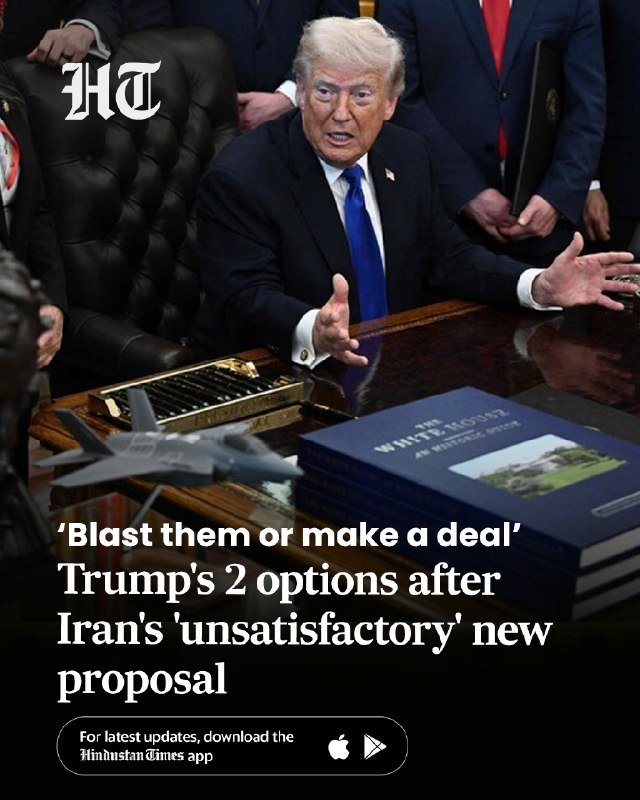
Donald Trump returned to familiar rhetorical terrain on 1 May 2026, delivering a broadside against the Islamic Republic that doubled as campaign rally theatre and foreign policy pronouncement in a single breath. The statements were categorical: Iran had "slacked off" on reaching a deal. Its leaders were "evil people." Its military had been gutted—no navy, no air force, no anti-aircraft systems, no radars. The only acceptable outcome was capitulation dressed as negotiation. "We're in a war," Trump declared, "because I think you would agree, we can't let lunatics have a nuclear weapon." The applause was thunderous.
What the speech actually delivered was less ultimatum than performance—a demonstration of the transactional logic driving this administration's approach to the region, and an object lesson in how coercive rhetoric can undermine the very leverage it purports to project.
The Decimation Claim Doesn't Survive Scrutiny
The centerpiece of Trump's assessment—that Iran's military has been reduced to irrelevance—is, to put it charitably, contested. Independent military analysts have not uniformly concluded that Iran's defensive capabilities are as degraded as Trump suggested. Iran's air defense architecture, centered on systems including the Russian-supplied S-300 and domestically produced variants, remains operational. Iran's naval assets in the Persian Gulf, while outmatched by US firepower, have not ceased to function. The "no navy, no air force" framing flatters a political narrative more than it reflects assessed reality.
This matters because inflating an adversary's weakness is a peculiar foundation for demanding strong concessions. If Iran is as diminished as Trump claimed, Tehran's rational calculation might be that the costs of a deal outweigh its benefits—if Washington already believes the Islamic Republic cannot respond, why offer meaningful compromises? The rhetorical move that flatters a domestic audience simultaneously erodes the reciprocal pressure required in any credible negotiation.
The Body Count Claim and Its Uses
Trump invoked a specific figure on 1 May: Iran had killed 42,000 protestors in a period of two weeks. The sources do not establish where this figure originated, nor is it consistent with documented UN or independent accounts of unrest inside Iran, including the 2022–2023 protests triggered by Mahsa Amini's death. Whether the president was citing a disputed opposition estimate, conflating distinct episodes of unrest, or improvising entirely cannot be determined from the record at hand.
The specific invocation matters stylistically. Exact figures borrowed from contested sources, presented without qualification in a political setting, serve to dehumanize the target and foreclose nuance. Iran's human rights record is a legitimate subject of international scrutiny. But weaponizing an unverified body count—particularly without attribution—does not advance accountability; it advances rhetorical escalation.
The Structural Dilemma: Coercion Without Leverage
The administration faces a structural problem that the bellicose framing papers over rather than solves. The goal, as articulated, is a "deal"—one that prevents Iran from acquiring nuclear weapons and constrains its uranium enrichment to levels acceptable to Washington. That goal requires a willing Iranian counterpart and a credible package of incentives and constraints. Trump's language actively undermines both requirements.
The history of nuclear diplomacy suggests a pattern: maximum pressure campaigns that combine economic strangulation, military posturing, and diplomatic isolation can bring a target to the table, but only if backed by a realistic off-ramp. The JCPOA, before its 2018 dissolution under the first Trump administration, succeeded in part because both sides received something and both retained something to lose. The current approach appears to offer Tehran only the binary of surrender or war. That is not a negotiating position; it is an ultimatum. And ultimatums, as every diplomat knows, are most credible before they are issued.
What Comes Next
The sources do not indicate whether the administration has a defined diplomatic off-ramp that does not involve public capitulation from Tehran. What the record shows is a president who appears politically invested in presenting the Iran question as resolved in America's favor—regardless of whether any deal actually exists.
This creates a genuinely dangerous dynamic. Domestic political commitment to "strength" can calcify into a position where walking back rhetoric becomes politically costlier than maintaining it. Military posturing, sustained long enough, begins to import its own logic. The administration may believe it is conducting high-pressure diplomacy. Tehran may conclude that military action is now inevitable regardless of diplomatic compliance. The gap between those two interpretations is where miscalculation lives.
Iran's nuclear program, regional behavior, and domestic governance warrant scrutiny—scrutiny this publication has applied to multiple administrations. But scrutiny requires precision. The language deployed on 1 May 2026 was precise in its political function and imprecise in its factual foundations. A deal may yet be possible. But the current rhetorical posture does not describe a path toward one—it describes a demand for surrender presented in the grammar of diplomacy.
Monexus covered Trump's statements as a negotiation posture requiring verification of underlying claims, rather than as established fact. The wire framing emphasized the administration's stated preference for a deal; the structural contradictions within that preference received less attention in parallel coverage.
Wire provenance
This editorial synthesis draws on the following public wire/social posts:
- https://t.me/BellumActaNews/2847
- https://t.me/BellumActaNews/2846
- https://t.me/BellumActaNews/2845
- https://t.me/BellumActaNews/2844
- https://t.me/FarsNewsInt/8471