The rhetoric of war: what Trump's Iran framing reveals about his broader foreign policy
President Trump's statement on 1 May 2026 that the United States is effectively at war with Iran — framed around preventing nuclear weapons — exposes a consistent pattern: economic leverage and dramatic military language deployed together to compel compliance, regardless of whether the underlying strategy holds up to scrutiny.
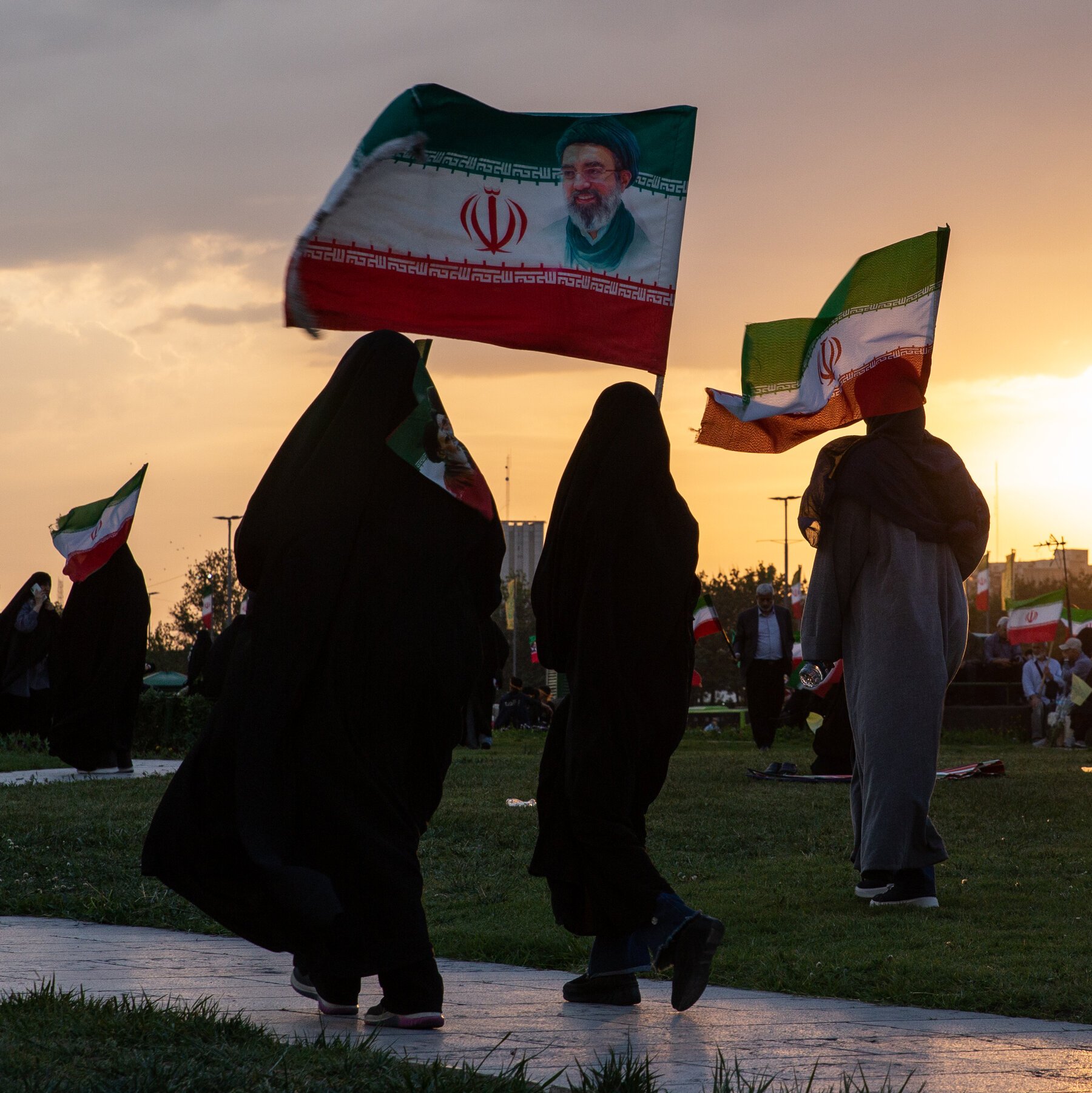
On 1 May 2026, President Donald Trump stood before a crowd in the United States and declared that the United States was, in effect, at war with Iran — not over territory or ideology, but over the question of whether Tehran would be permitted to acquire nuclear weapons. "We're in a war," he said, "because, I think you would agree, we can't let lunatics have a nuclear weapon." The applause that followed suggested the audience agreed. But the framing raises a harder question: what kind of war is this, and can the strategy sustaining it survive contact with reality?
The administration has built its Iran policy on two interlocking pillars. The first is economic: a sustained campaign of tariffs and trade pressure applied as a geopolitical instrument. On the same day as his war declaration, Trump stated that countries which locate manufacturing on American soil and employ American workers would face no tariffs — an offer designed to make compliance more attractive than confrontation. The second pillar is military threat: language intense enough to signal resolve, specific enough to suggest the Pentagon has options, and public enough to foreclose diplomatic ambiguity. "Iran isn't coming through with the kind of deal that we need to have," Trump said on 1 May 2026. "We're going to get this done."
What the administration calls a "deal" has never been fully defined in public. What is clear is that the Iranian side, according to Trump's own characterisation, has been unresponsive — describing Tehran as "slacking off" in negotiations. That language is notable. It implies a bilateral process in which one side is considered to be under-performing its obligations. But it also sets the rhetorical conditions for failure: if Iran is not cooperating, the blame for collapse falls on Tehran, not on Washington.
The war framing does significant political work domestically. Invoking wartime posture against a foreign adversary has historically consolidated political coalitions, particularly within Trump's own party. It reframes the question of whether the administration has a coherent Iran strategy not as a policy debate but as a matter of national security — and opposing a president in wartime is electorally costly. The rhetoric also inoculates against charges that the broader tariff programme is erratic: if the goal is to force structural changes in how other nations relate to the United States, then military escalation becomes the backdrop against which economic demands appear reasonable rather than arbitrary.
Stripped of its theatrical surface, the administration's Iran posture is a pressure campaign conducted through two simultaneous channels: economic coercion and strategic ambiguity about military force. The historical record on such campaigns is instructive. Maximum-pressure strategies succeed when the target state's internal political economy fractures under the weight of sanctions — when the leadership faces credible domestic opposition that can be leveraged. They tend to fail when the leadership is sufficiently insulated, or when the target calculates that a nuclear capability, once achieved, provides a more durable shield than any negotiated concession.
Iran appears to be making the latter calculation. Trump's own description of Iran's military state as "decimated" — lacking a navy, an air force, functioning anti-aircraft systems, or meaningful radar coverage — underscores the asymmetry between Iran's conventional military and its nuclear programme. If that assessment is accurate, it is also an argument against military escalation: a country so depleted of conventional capacity has every incentive to accelerate whatever weapons programme offers a retaliatory deterrent. The very weakness Trump cites as justification for his hard line may be the condition that drives Tehran toward the capability he has declared unacceptable.
The broader international system absorbs additional risk from this approach. A foreign policy constructed partly from tariffs and partly from threats of force — where the threshold between competition and conflict is set by the president's characterisation rather than by institutional process — introduces a predictability problem that strategic rivals will factor into their own planning. Every statement of this kind from Washington reinforces the incentive for other governments to pursue capabilities that cannot be neutralised by negotiation or economic pressure, because the demonstrated preference for escalation removes the guarantee that talks will deliver security.
What remains genuinely uncertain is whether the administration has an off-ramp it has not disclosed, or whether the public rhetoric and the private diplomatic channel operate on different logics. The withdrawal of previous language about the "destruction of Iran's military power" in a communication to Congress suggests at least some movement in phrasing, if not in substance. Whether that represents a genuine concession, a tactical signal to intermediaries, or simply a rhetorical adjustment to avoid domestic legal complications remains unclear from the public record.
The war Trump described on 1 May 2026 is not, in any conventional sense, a war at all. It is a coercive campaign whose effectiveness depends entirely on whether Iran blinks before acquiring the capability that Washington says would be intolerable. If it does not, the administration will face a choice it has not publicly addressed: escalate to actual military action, absorb the political cost of a failed maximum-pressure campaign, or negotiate from a position the president has repeatedly said he would not accept. None of those outcomes is comfortable. The certainty of the rhetoric does not extend to the consequences.
This article was filed from Washington. Monexus covered the president's statements as a direct quote rather than as a policy announcement, while most wire services framed the same material as a negotiating signal. The editorial choice to foreground the structural dynamics of the pressure campaign — rather than the personalities involved — reflects this publication's view that policy pattern matters more than individual character in geopolitics.
Wire provenance
This editorial synthesis draws on the following public wire/social posts:
- https://t.me/BellumActaNews/48291
- https://t.me/BellumActaNews/48300
- https://t.me/BellumActaNews/48307
- https://t.me/BellumActaNews/48288