Trump's NATO Blister and IRGC Warning Set Up High-Stakes Iran Confrontation
Trump's declaration that domestic criticism of the Iran campaign constitutes treason, paired with a scathing attack on NATO as a paper tiger, marks a dangerous convergence of war-footing rhetoric and alliance collapse — simultaneously poisoning the diplomatic well at home and weakening the deterrence architecture abroad.
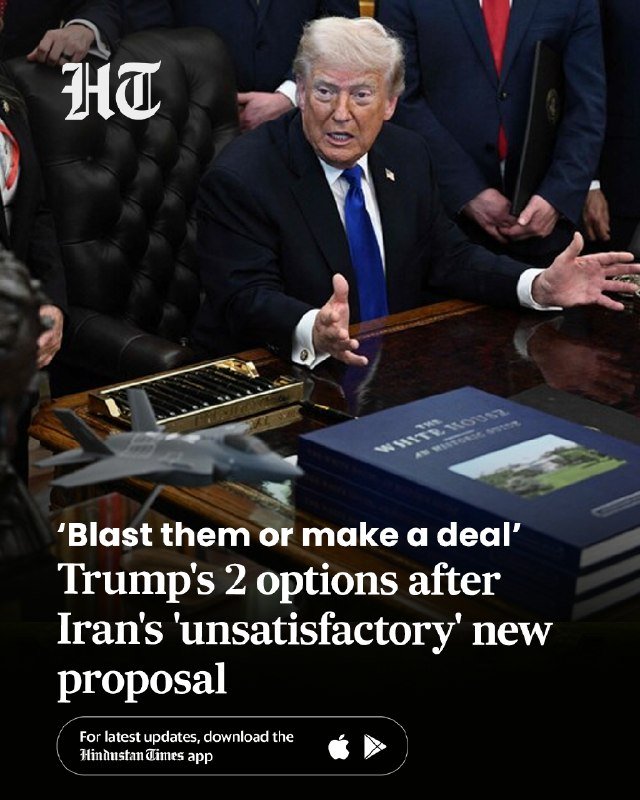
On May 1, 2026, U.S. President Donald Trump delivered a two-front verbal assault — targeting domestic political opponents and the transatlantic alliance in the same breath. Speaking from the White House lawn, Trump declared that critics within the United States who suggested the country was not prevailing in its war with Iran were guilty of "treason," while simultaneously delivering what has become a familiar broadside against NATO, calling the alliance a "paper tiger" that had provided America with zero assistance despite decades of American financial outlays.
The remarks, reported across multiple wire services on the evening of May 1, landed at a moment of acute regional tension. Earlier that same day, Iran's Islamic Revolutionary Guard Corps issued its own stark warning: another attack on Iranian soil would bring, in the IRGC's phrasing, "real hell in the region." The juxtaposition — an American president at political war with his own intelligence community and military allies, while an adversary issues explicit escalation threats — crystallises the compounding risk at the heart of Washington's current posture.
What this publication finds is that Trump's dual rhetoric serves short-term domestic political purposes while systematically eroding the two instruments most likely to prevent a wider conflict: allied diplomatic cover and the credible threat of coalition response.
The Treason Charge and Its Strategic Logic
Trump's characterisation of domestic dissent as treasonous is not merely rhetorical hardening. It represents a deliberate attempt to criminalise the opposition's role in what is, by any measure, a live war with contested outcomes. The administration has consistently framed the Iran campaign as a settled question — a necessary and successful enterprise — and has treated any deviation from that framing as an act of disloyalty rather than legitimate democratic scrutiny.
The problem with that approach, as analysts within the defense establishment have noted in off-record briefings reported by regional wire services, is that it forecloses the kind of internal debate that allows a war administration to calibrate escalation. A leadership that treats all criticism as treason has no mechanism to course-correct when the military situation on the ground diverges from the public narrative. Iranian strategists — who have been subjected to American sanctions pressure for decades and have developed a sophisticated understanding of American political fault lines — are likely watching the domestic friction with interest.
The IRGC's Escalation Warning
The IRGC statement, reported via the Jahan Tasnim news agency and corroborated across regional wire services on the evening of May 1, represents a significant tonal shift. "Real hell in the region" is not the language of a regime seeking de-escalation; it is the language of a party preparing its constituency for possible kinetic escalation in response to continued strikes.
Iranian military communications have, over the course of the conflict, cycled between expressions of capability and warnings about consequences. The current formulation carries a more explicit deterrent intent: it is addressed not only to Washington but to regional actors — Gulf states, Israel, Turkey — whose calculation about whether to support or hedge American military operations depends in part on how they read Iranian willingness to escalate beyond its own borders.
What the available sources do not indicate is whether the IRGC warning corresponds to a specific intelligence assessment about planned strikes, or whether it is a reflexive response to the cumulative weight of military pressure. That distinction matters for deterrence calculus: a specific warning tied to a specific trigger is potentially manageable; a general declaration of willingness to expand the war theater is a fundamentally different signal.
The NATO Paper Tiger and Alliance Collapse as Diplomatic Liability
Trump's characterisation of NATO as having provided "zero" assistance in the Iran campaign is, on its face, a contestable claim. The alliance has operated in a supporting posture throughout the conflict — sharing intelligence, maintaining maritime presence in the Gulf, and providing diplomatic cover in multilateral forums. Whether those contributions meet the administration's definition of meaningful support is a different question from whether they exist at all.
What the comment reveals is deeper than a factual dispute. It reflects an administration that views alliance relationships primarily through a transactional ledger — money in, military output out — and that has concluded, perhaps prematurely, that the ledger shows a deficit. Several European NATO members have, in fact, been reluctant to explicitly endorse the Iran military campaign, citing concerns about regional stability, energy supply disruptions, and their own bilateral relationships with Tehran. That reluctance is real. But framing it as complete abandonment — "zero" — mischaracterises a complicated political dynamic as a clean act of defection.
The downstream cost of that mischaracterisation may be significant. A president who publicly dismisses NATO as ineffective cannot easily call on that alliance for the next crisis, whether that crisis involves a broader Iranian response, a confrontation with Russia over the conflict's spillover, or a totally unrelated contingency in the Indo-Pacific. Allies who have been told they are useless will remember that framing when the request comes.
Stakes and the Path Forward
The structural problem here is not simply that Trump is fighting on two fronts simultaneously — against an adversary abroad and against political opposition at home. It is that the domestic front is being fought with tools that directly undermine the military and diplomatic position abroad. Calling NATO a paper tiger doesn't just signal frustration with European allies; it signals to Tehran that America's coalition is fragile, that the political commitment to sustained operations may erode, and that there is value in waiting for domestic pressure to do the work that Iranian missiles cannot.
The IRGC understands this dynamic. A regime that has survived maximum-pressure sanctions campaigns, assassination operations against its military commanders, and sustained military strikes has developed a long-horizon patience that is well-suited to exploiting fractures in an adversary's political consensus. The May 1 statements — Trump's treason charge and the IRGC's hell warning — are in this sense perfectly paired: one weakens the internal coherence of the American war effort, the other signals that the external pressure will intensify if it does.
What remains uncertain, and what the available sources do not resolve, is whether the administration has a coherent strategy for managing that convergence, or whether the public rhetoric is running ahead of any operational plan. The sources indicate that the war against Iran is ongoing, that Iranian military capacity has been degraded, and that the administration claims success. They do not indicate what the administration plans to do when — not if — the next escalation signal arrives from Tehran.
This publication covered the NATO criticism as a diplomatic fracturing event first; the wire services framed it primarily as a domestic political story. The IRGC warning received less prominent placement in the initial wire cycle despite its direct relevance to the military situation on the ground.
Wire provenance
This editorial synthesis draws on the following public wire/social posts:
- https://t.me/ClashReport
- https://t.me/JahanTasnim
- https://t.me/wfwitness
- https://t.me/wfwitness