The Arithmetic of Alliance: Trump, NATO, and the Reckoning That Was Always Coming
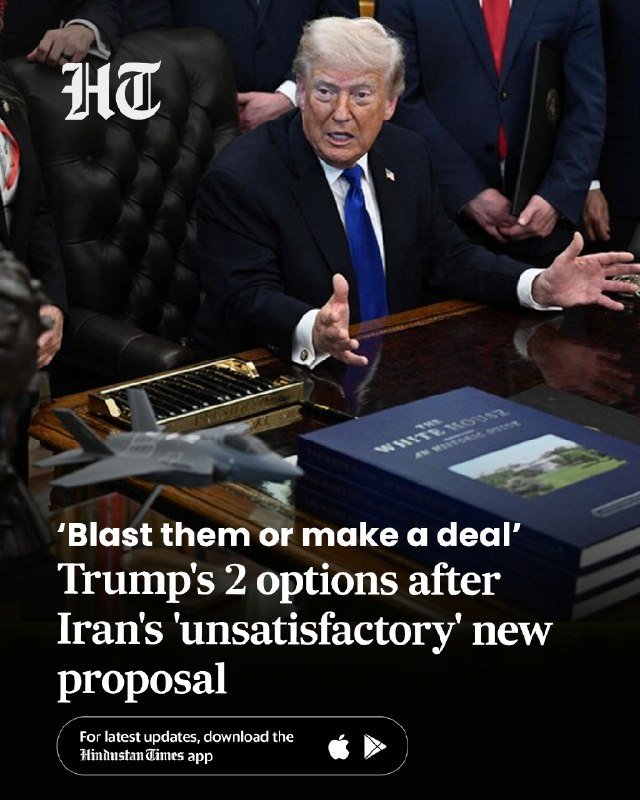
On 1 May 2026, Donald Trump delivered a speech that NATO's European members will spend the next fortnight pretending to dismiss and quietly panicking about in private. The complaint was not new — American presidents of both parties have vented frustration at alliance burden-sharing for decades — but the bluntness with which Trump articulated it, and the specific theatre he chose, marked something of a threshold. "Despite spending trillions of dollars on NATO, we have nothing," he said, referencing the alliance's performance in confronting Iran. The statement landed in European capitals like a气压计掉进鱼缸: everyone saw the damage, no one wanted to acknowledge the depth of the water.
The standard Atlanticist response is already assembling itself. Allies will point to increased European defence spending — a figure that has risen meaningfully since Russia's 2022 full-scale invasion of Ukraine. They will note that Article 5 has only ever been invoked once, in the collective spirit that followed the September 11 attacks, and that NATO's deterrent value lies precisely in the act of not being used. They will invoke the founding charter, mutual defence obligations, and the idea that an alliance's worth cannot be measured in transactional invoices. These responses are not wrong. They are also, increasingly, insufficient.
The Arithmetic of Alliance
The "trillions" figure Trump cited is, like most presidential math, more rhetorical than forensic. The United States has contributed substantially to NATO's collective defence infrastructure over the alliance's 75-year history, but the figure requires context. American defence spending — roughly 3.5 percent of GDP annually across various budget lines — is not NATO spending per se. It is US defence spending, a portion of which happens to be allocated to alliance-related operations and forward deployment.
That said, the structural complaint underneath the inflation is real. European NATO members collectively spend less on defence as a share of GDP than the United States has long requested. The two-percent-of-GDP target, agreed at the 2014 Wales Summit, remains aspirational for a significant cohort of alliance members rather than a floor. Germany, long the largest European economy, spent decades treating defence as a residual budget item. Poland, Baltic states, and the United Kingdom have carried a disproportionate share of the continent's deterrent burden. The complaint that American taxpayers subsidise European security is not a Fox News invention; it is the consistent finding of Pentagon budget analyses stretching back administrations.
European capitals counter that American forward presence in Europe serves Washington's own strategic interests — staging grounds, intelligence sharing, a platform for Middle East operations. This is true. It is also the precise kind of argument that, when applied consistently, erodes the moral architecture of collective defence. If American forces in Germany are there for American interests, then American forces in the Pacific are there for American interests, and the entire edifice of alliance obligation reduces to a series of bilateral cost-benefit calculations conducted in real time.
The Iran Dimension
Trump's specific grievance — NATO's failure to support the United States "in confronting Iran" — is the sharpest edge of the speech and the one least discussed in European capitals, where the reflex is to defend NATO's honour in the abstract rather than interrogate the specific claim.
The United States has pursued a maximum-pressure campaign against Iran since withdrawing from the Joint Comprehensive Plan of Action in 2018. American sanctions have targeted oil exports, financial channels, and the Islamic Revolutionary Guard Corps. The EU, while condemning Iranian missile programmes and regional behaviour, has resisted the full re-imposition of secondary sanctions that would sever European companies from Iranian trade.
This divergence is not a failure of NATO. NATO is a collective defence alliance; the Iran question is a foreign policy matter on which the US and its European allies have, under multiple administrations, genuinely disagreed. France, Germany, and the United Kingdom have tried to maintain the JCPOA's economic architecture even as Washington dismantled it. Whether this constitutes "no support" depends entirely on how you define the term — and on whether you believe the European approach is more likely to moderate Iranian behaviour than the American one.
What Trump is signalling, however, is that he does not view this distinction as exculpatory. For the current US administration, European hesitation on Iran is not a diplomatic nuance; it is a betrayal of alliance solidarity. This framing will deepen fractures that already run through the transatlantic relationship.
The Structural Reckoning
The more consequential question is not whether Trump's characterisation is precise but whether the architecture he is implicitly proposing — an alliance in which American protection is contingent on European alignment with American foreign policy — is new, or simply more honest about what the alliance has always been.
Critics of this reading will note that NATO's Article 5 commits members to defending each other against armed attack. It does not commit members to joining each other's wars of choice. This is correct as a legal matter. It is increasingly disconnected from the political reality of American foreign policy, which has, under multiple administrations, treated alliance cohesion as a package deal: American security guarantees in exchange for alignment across the full spectrum of foreign policy disputes.
The problem is not that Trump is wrong to ask European allies to carry more of the burden. Most serious defence analysts in Washington and European capitals have been asking the same question for years. The problem is that he is asking it in a way that treats alliance relationships as purely commercial — a ledger in which American military commitments are balanced against European compliance on Iran, trade, and technology policy. This framing may be honest. It is not compatible with the alliance's self-understanding as a values-based collective, and European leaders know it.
The Stakes
If the Trump administration's position hardens, European NATO members face a choice that most of them have spent three decades avoiding: develop genuine strategic autonomy or accept a more subordinate position within an American-defined security architecture. The first option requires sustained defence investment, industrial policy coordination, and the political will to pursue independent diplomatic relationships with adversaries — including, on this reading, Iran. The second requires swallowing grievances and continuing to treat American tutelage as the price of the transatlantic relationship.
Neither path is comfortable. The European defence industrial base, fragmented across national champions and competing procurement systems, cannot credibly replicate American capabilities in the near term. But the political momentum toward European strategic autonomy has been building since Brexit and accelerated after the Ukraine invasion. Trump's latest salvo may be the push that forces European capitals to stop treating strategic autonomy as a Brussels talking point and start treating it as a survival requirement.
The alliance is not ending. It is renegotiating — in public, in terms that European publics will eventually be forced to reckon with. That reckoning is overdue.
Wire provenance
This editorial synthesis draws on the following public wire/social posts:
- https://t.me/mehrnews
- https://t.me/tasnimnews_en
- https://t.me/JahanTasnim