Trump's Assertive Stance on Iran Raises Constitutional Questions
The president's claim that no congressional approval is needed for military action against Iran draws on contested legal theory and ignores three decades of precedent, raising questions about both the constitutional balance of war powers and the direction of the nuclear standoff.
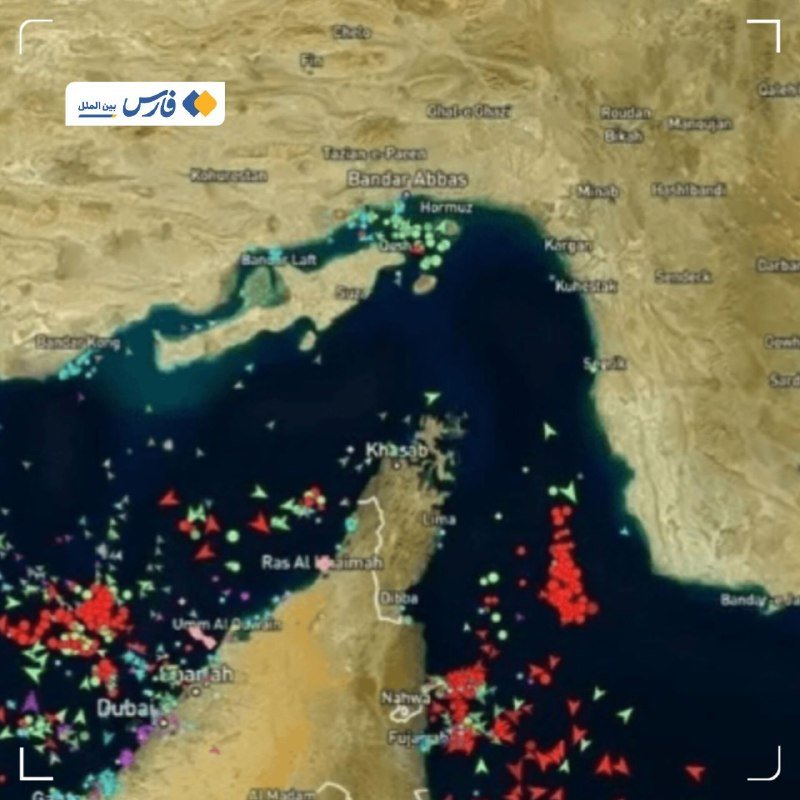
On 1 May 2026, the president of the United States told an audience that no congressional authorization is required to wage war on Iran. "No one has ever asked for Congress's approval," he said, casting the question as settled. Hours earlier, residents of Jolfa — a border town in northwestern Iran near the Azerbaijan frontier — reported six drones crossing the sky eastward at two-minute intervals. The two events sit on the same news feed, and neither can be fully understood in isolation.
The claim about congressional authority is not new. It has been a fixture of executive-branch legal theory for years, and it has been contested just as long. What has changed is the context: a sitting president invoking it publicly, in reference to a country with which the United States has no active armed conflict, and in the middle of a stalled nuclear negotiation that both sides say they want to resolve. The framing matters. The timing matters. And the constitutional question, which the administration appears to want to close, remains open.
The Constitutional Claim
The argument that a president can initiate military hostilities without prior congressional authorization rests on a reading of the War Powers Resolution of 1973 that its own authors would not recognize. The resolution was passed specifically to require prior consultation; it was, in large part, a congressional response to executive overreach in Vietnam. Administrations across party lines have disputed its constitutionality, but none has successfully dismantled its core requirement that the White House consult with Congress before committing forces to hostilities.
The phrase "No one has ever asked for Congress's approval" is, on its face, inaccurate. Congress has voted on the use of force against Iraq twice — in 1991 and 2002 — both times explicitly authorizing military action. TheAuthorization for Use of Military Force Against Iraq Resolution of 2002 passed the Senate 77–23. That is not an argument made in silence. The administration has not addressed this precedent in its public statements, and the Telegram posts reporting the president's remarks did not include a challenge to the claim from lawmakers on either side of the aisle.
What the claim does is sidestep the question rather than answer it. Sidestepping is not the same as winning the argument, and in a constitutional dispute, the White House cannot simply declare the issue closed by announcing it as fact.
Iran at the Table
Iranian officials have said they are not agreeing to the terms the United States is demanding. That much is clear from the reporting of 1 May 2026. The phrasing — "the terms of the deal that we need" — suggests the administration has a specific framework in mind and that Iran has rejected it. Iranian state media, for its part, has characterized the American position as overreaching and the sanctions regime as coercive rather than incentive-based.
Tehran's leverage in any negotiation is real but constrained. The Iranian economy has suffered under sanctions for years, and the nuclear program, while advanced, has not produced weapons that Western intelligence confirms have been deployed. Iranian officials — including through state-linked channels — have signaled willingness to negotiate, but have insisted on sanctions relief as a precondition for any agreement that includes permanent restrictions on their enrichment program. The administration's position appears to demand a more comprehensive surrender of enrichment capacity than Tehran is prepared to concede.
The drone sightings reported from Jolfa add a layer of ambiguity. Six unmanned systems crossing from the Azerbaijan direction at regular intervals suggest either intelligence-gathering missions, monitoring of the border region, or — in a more alarming reading — a demonstration of capability. Iranian state-linked reporting framed the sightings as routine observation. There is no confirmation from Western or independent sources of the drones' origin or purpose, and the Telegram posts do not provide independent corroboration beyond the descriptions of residents who observed the crossings.
The Escalation Question
What makes the constitutional claim significant is not the legal theory in isolation. It is what the claim enables. If the executive branch can initiate hostilities with Iran without congressional authorization, the range of available options expands dramatically. Strikes on nuclear facilities, infrastructure targeting, or a broader bombing campaign all become decisions that can be taken by the president alone.
The risks of that trajectory are not speculative. Iranian military doctrine has long held that any strike on national territory — regardless of its target — warrants a response. Iranian officials have repeated this principle in recent years. The drone activity, whatever its purpose, reinforces that surveillance is active on both sides of the border. The space for miscalculation is not theoretical. It is physical, and it is monitored.
The administration has said it will not leave before its time. The phrase implies a timeline controlled by Washington and a willingness to stay the course. That position is defensible if the goal is a verifiable agreement that blocks Iran from a weapons capability. It is far less defensible if the goal shifts — even implicitly — toward regime change or military degradation as the primary instrument of policy.
What Comes Next
Congressional Democrats have shown little appetite for a confrontation over war powers in an election cycle, but the constitutional question will not stay quiet if the administration moves toward military action without a vote. Several members have already called for explicit authorization. Republican voices on Capitol Hill have been more cautious, but not uniformly supportive of unconstrained executive authority.
The nuclear negotiation is not dead. Both sides have indicated they want a deal. The problem is that "a deal" means different things to each side, and the gap — enrichment rights, sanctions sequencing, verification timelines — has not narrowed sufficiently for either government to sell an agreement to its domestic constituencies. That does not make military action inevitable. It makes it more dangerous if it happens without the political legitimacy that congressional authorization would provide.
The drones over Jolfa were reported on the same day the president claimed the authority to strike Iran without asking Congress. One story may be unrelated to the other. In the current environment, treating them as unconnected requires more certainty than the available evidence provides.
This publication covered the presidential claim as a constitutional and policy story rather than a diplomatic progress report. The Thread context did not include independent corroboration of the drone sightings or updated reporting on the state of nuclear negotiations from mainstream wire services, and those gaps are reflected in the reporting.
Wire provenance
This editorial synthesis draws on the following public wire/social posts:
- https://t.me/sprinterpress/5819
- https://t.me/sprinterpress/5818
- https://t.me/sprinterpress/5820
- https://t.me/sprinterpress/5817