Alex Zanardi, Formula 1 Driver and Four-Time Paralympic Champion, Dies at 59
Former Formula 1 driver Alex Zanardi, who reinvented himself as a four-time Paralympic gold medallist after a life-altering cycling accident in 2020, died on 1 May at the age of 59.
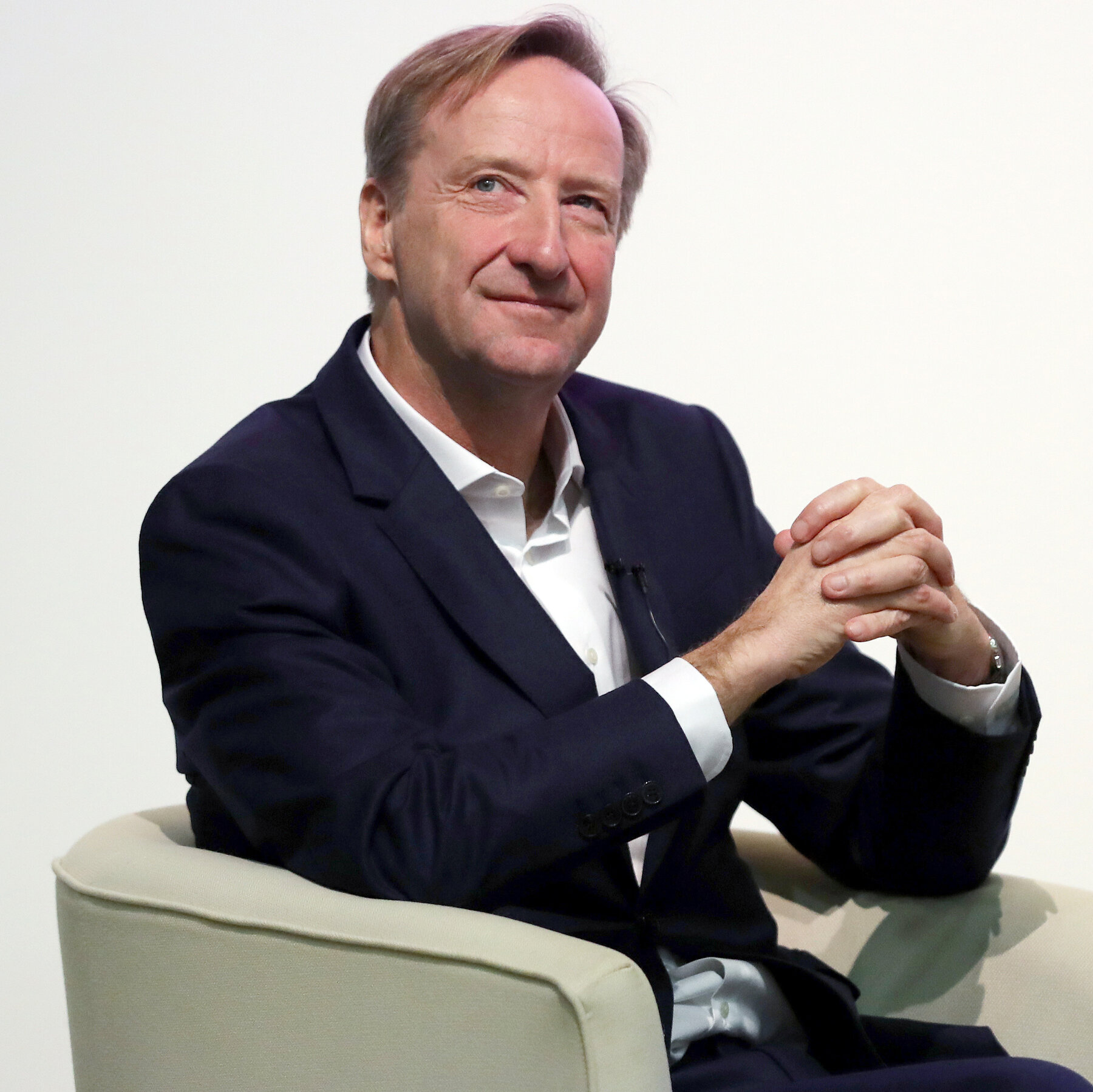
On the afternoon of 19 September 2020, Alex Zanardi veered his handcycle into the opposing traffic lane on a stretch of road near Siena. The collision with a Mercedes truck left him with catastrophic brain and spinal injuries, spending the next four and a half years in neurological rehabilitation. He died on 1 May 2026, aged 59, surrounded by family at a Roman facility, his loved ones confirmed in a statement reported by Reuters on 2 May.
Zanardi's trajectory was unlike any other in modern motorsport — a prodigy from Bologna who reached Formula 1 in the early 1990s, survived a violent crash at the 2001 Lausitzring that cost him both legs below the knee, returned to competitive racing within fourteen months, then pivoted entirely in his forties toward elite handcycling, winning four Paralympic golds between 2012 and 2021. His death closes a life that refused to treat adversity as a closing argument.
The Bourdais Era and a Formula 1 Career That Defied Gravity
Zanardi arrived in F1 in 1991 with Minardi, a team that had neither the resources nor the infrastructure to develop a raw talent into a consistent performer. Two seasons with Lotus followed — the team in visible decline — before a 1999 switch to CART, where he reconnected with Chip Ganassi Racing and found his form. He won the CART championship in 2001, outpacing drivers in machinery that was genuinely competitive rather than merely adequate.
That same season brought the accident that reshaped his body. At the Lausitzring, his car contacted Patrick Carpentier's during a pit stop re-entry, clippling at speed into the turn-one wall and then into the catchfencing. The injuries were severe; the surgical interventions necessitated the above-knee amputations on both sides. The medical consensus at the time gave his racing career as finished. He proved it wrong. By early 2003 he was back in an IndyCar cockpit with a modified driving setup, competing at speed and without apparent concession to his prosthetics. He returned to Formula 1 with BMW Sauber for the 2005 and 2006 seasons, scoring points but never replicating the title-winning pace of his CART years.
The Siena Crash and the Long Convalescence
The handcycling programme began after his competitive driving career ended. Zanardi was drawn to the sport's physical demands and, by his own account in interviews, to the discipline of measuring performance against a stopwatch rather than a starting grid. By the time he arrived at the Tokyo Paralympics in 2021 — he won two golds at Rio 2016 and two more at Tokyo — he was widely considered the finest handcyclist of his generation, Italy's dominant voice in a discipline where the country's para-athletics programme had historically underperformed.
The crash that ended his competitive life was sudden and, by all initial accounts, an anomaly — a momentary loss of control on a road he had ridden hundreds of times. The injuries to his skull and cervical spine were immediately classified as life-threatening. He spent months in intensive care at the Florence hospital where he was first admitted, then moved to specialist neurological rehabilitation. The public statements from his family throughout those years maintained a tone of guarded hope, never fully ruling out recovery, never promising it.
A Legacy Compressed Into Two Acts
The difficulty in locating Zanardi within a single narrative is that he effectively lived two distinct sporting careers. The first — F1 driver, CART champion, technical innovator in prosthetic adaptation — belongs to the mythology of the athlete who refuses to concede to physical limits. The second — Paralympic handcyclist, four-gold medal winner, ambassador for neurological rehabilitation research — belongs to a different register entirely: the person who builds a new identity from the wreckage of the old one with full public visibility and, by Italian standards, remarkable stoicism.
Neither narrative cleanly contains the other. The F1 years show an instinctive driver who peaked at CART level and found F1 a consistently harder environment. The Paralympic years show a performer who trained at the intensity of a full-time athlete while managing what his medical team described as significant neurological compromise. To flatten him into either story is to miss the thing that made him unusual: the ability to function at elite level in two fundamentally different bodies, with two entirely different sets of equipment.
What is less ambiguous is his cultural standing in Italy. The tributes that surfaced immediately after the announcement on 2 May were unusually broad — spanning the sporting press, political figures, and public broadcasters who do not typically engage with Paralympic athletics as a matter of first-order news. That breadth reflects something real about how Italians processed Zanardi's story: not merely as a sportsman, but as a figure whose post-accident public life had become a reference point in conversations about disability, institutional care, and what competitive recovery actually looks like.
What the Record Does Not Settle
The sources available do not fully establish the specifics of his medical trajectory between 2020 and his death — the precise neurological diagnoses, the duration of specific treatment phases, or the circumstances that led to the Roman facility where he died on 1 May. His family's statement, published on 2 May, described the moment as peaceful and surrounded, which is consistent with end-of-life accounts but is also the language families typically reach for in public communications of this kind. That is not a criticism; it is a recognition that the medical detail that would allow a more complete clinical picture remains, as of this writing, private.
What is certain is that Zanardi leaves behind two sporting records that were, at time of writing, still unmatched in the specific combination of motorsport and Paralympic achievement — a distinction that in the absence of any immediate comparator will likely define the terms of his remembrance for years to come.
Wire provenance
This editorial synthesis draws on the following public wire/social posts:
- http://reut.rs/4utSaQZ
- https://t.me/LiveMint