The Ambiguity Itself Is the Story: Air Strikes Over Southern Syria
Multiple strikes, disputed attribution, and a Syrian state unable to control its own airspace expose the hollowness of post-war sovereignty claims across the Levant.
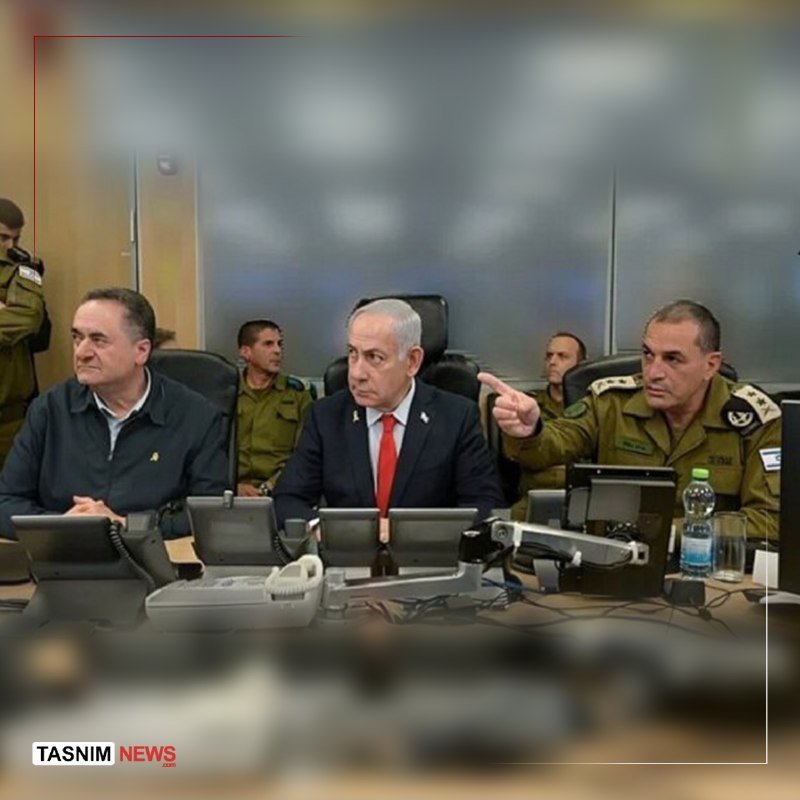
On the evening of 2 May 2026, the airspace over southern Syria became, briefly, a contested通讯 space—not through diplomatic negotiation or ceasefire protocol, but through the blunt language of explosive ordinance. Multiple explosions were reported in Western Swaida Governorate and the eastern reaches of Daraa Governorate, according to pro-government sources cited by regional wire services. The town of Al Muftarah, under Syrian government control, was hit. What remains unclear hours later is which air force did the striking—and that ambiguity is not incidental. It is the story.
The confusion began within minutes of the first reports. Initial dispatches carried the caveat "apparently Jordanian airstrikes." Subsequent updates pivoted to Israeli jet activity over southern Syria. By mid-evening UTC, both attributions sat side by side in the wire feeds, each sourced to unnamed "pro-government sources" or "security-aware Telegram channels." The Syrian government confirmed the explosions occurred. It did not confirm who caused them. This is the operational reality of sovereignty in contemporary Syria: a state that formally controls territory it cannot fully secure, and regional powers that act within that territory without seeking permission, explanation, or consequence.
Jordan's Security Calculus
Jordan has legitimate concerns about its northern border. The kingdom has long cited smuggling networks—arms, narcotics, and increasingly synthetic drugs—flowing south from Syrian territory. The Daraa governorate, in particular, has been described by Jordanian officials as a lawless transit corridor. Cross-border strikes are not unprecedented: Amman has conducted limited military operations in Syrian space before, typically framed as targeted responses to specific threats rather than broader political statements.
If the strikes on Al Muftarah are attributable to Jordan, they fit a pattern of kinetic边境管理—using precision force to signal that sovereignty norms will not be permitted to shield hostile activity. The problem with this logic, from a legal standpoint, is that it treats Syrian territory as Jordan's extended security perimeter. That framing may be understandable in Amman. It is not defensible under international law, which reserves cross-border military action for self-defence scenarios meeting the conditions set out in Article 51 of the UN Charter. Jordan has not publicly articulated a specific imminent threat that would justify tonight's strikes, assuming they prove to be Jordanian.
Israel's Buffer Zone Logic
Israel's presence over southern Syria is less ambiguous in its motivation, if equally questionable in its legality. Tel Aviv has stated repeatedly that it will not permit Iranian-aligned forces to establish themselves permanently in areas adjacent to the Golan Heights ceasefire line. Israeli officials have described southern Syria as a buffer zone in all but name—territory whose future security architecture Israel reserves the right to shape unilaterally.
This position has been reinforced by repeated Israeli strikes inside Syrian sovereign territory since the escalation of the broader Middle East conflict. The rationale is consistent: threats must be addressed at their source, and the source, in Israel's reading, is wherever Iranian military infrastructure or proxy forces are present. Syrian government consent is neither sought nor offered. Syrian airspace is treated as navigable space for Israeli military assets when Tel Aviv deems it operationally necessary.
The structural implication is significant. A sovereign state's airspace is, by definition, subject to its exclusive control. Syria no longer exercises that control in its southern regions. The international community has accepted this reality without formally acknowledging it—which creates a precedent with implications far beyond southern Syria. What is true for Syrian airspace today could, in theory, apply to other contested zones where state capacity has collapsed or been deliberately curtailed by external military pressure.
Syrian Sovereignty in Practice
The Syrian government controls territory that it cannot secure. This is not a new condition—it has been the operational reality since the civil war fragmented the country's administrative apparatus. But the strikes on 2 May 2026 make the condition newly visible. Al Muftarah is not a disputed outpost or a contested border village. It is a town under government control in a governorate that Damascus nominally administers. The fact that explosions there can occur without clear attribution—to Jordan, to Israel, or to some combination of both—is a measure of how thoroughly external actors have embedded themselves in Syrian military decision-making.
The Syrian foreign ministry, if it issues a statement, will likely condemn the strikes as violations of sovereignty. It will not, presumably, name the perpetrators—if only because doing so would create diplomatic obligations it may not want to meet. Naming Israel invites a response. Naming Jordan creates a bilateral crisis. The utility of ambiguity, for Damascus, may outweigh the irritant of uncertainty.
This publication finds that the ambiguity surrounding tonight's strikes reflects something deeper than reporting difficulties. It reflects a regional security architecture in which Syrian sovereignty is a legal fiction that multiple states selectively invoke when convenient and disregard when it is not. The consequence is a country that exists on paper as a unified state but functions, in practice, as a collection of zones controlled by different external actors pursuing different security agendas.
What Remains Uncertain
The sources do not specify the scale of damage or whether there were casualties in Al Muftarah. The Telegram channels reporting the strikes have not provided independent visual confirmation of strike craters, debris patterns, or wreckage that would allow attribution by technical means. Pro-government Syrian sources have confirmed the explosions occurred; they have not confirmed the nationality of the aircraft involved. Jordan has not commented publicly as of this article's publication. Israel rarely confirms or denies specific strikes inside Syria until forced to by evidence that makes denial implausible.
Until more granular information emerges—satellite imagery of the strike sites, statements from the relevant defence ministries, or independent on-the-ground reporting—the attribution question will remain contested. That uncertainty itself is worth noting: in earlier decades, a strike of this nature would have generated immediate diplomatic protest and a clear attribution within hours. In the current regional environment, ambiguity is treated as a diplomatic resource rather than a reporting problem.
The strikes on southern Syria are a reminder that sovereignty, in the Levant, is contingent on the presence and willingness of external actors—not on legal frameworks or international consensus. What happens in Swaida and Daraa tonight will not stay in Swaida and Daraa. It will reinforce the calculation, held in multiple capitals, that Syrian territory is available for use by anyone with the capability and the appetite to act.
Wire provenance
This editorial synthesis draws on the following public wire/social posts:
- https://t.me/wfwitness/18432
- https://t.me/wfwitness/18428
- https://t.me/wfwitness/18426