China's Tehran Gambit: Beijing Declares It Will Ignore U.S. Sanctions on Iranian Oil
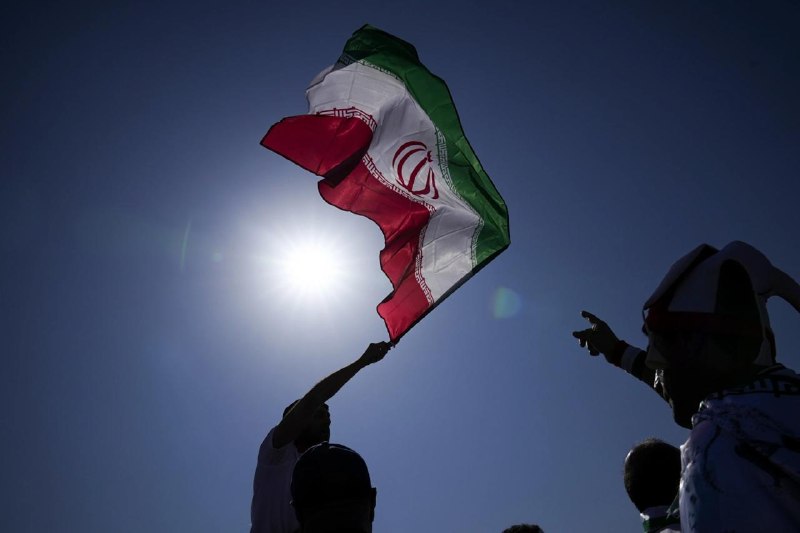
On 2 May 2026, Beijing delivered a formal response to what it characterizes as American overreach: Chinese officials announced that China does not recognize U.S. sanctions related to Iranian oil purchases and will not comply with them. The announcement, confirmed through statements attributed to the Chinese foreign ministry, explicitly names five Iranian oil firms as beyond the reach of American enforcement action. The statement represents one of the most direct challenges Beijing has issued to the dollar-based sanctions architecture that has anchored U.S. financial leverage for decades.
The declaration did not arrive without context. In preceding days, Chinese officials had signalled that Beijing's relationship with Tehran extended well beyond the Strait of Hormuz corridor — the narrow waterway through which roughly a fifth of the world's oil flows. That framing positions the sanctions rejection not as an improvised response to pressure, but as a deliberate articulation of a broader strategic posture: one in which China reserves the right to conduct commercial relations with sovereign states without reference to American law.
The Anatomy of the Challenge
U.S. sanctions on Iranian oil are not new. The Obama administration imposed sweeping secondary sanctions in 2018 after withdrawing from the Joint Comprehensive Plan of Action, threatening third-country buyers with exclusion from the American financial system. That mechanism — using dollar infrastructure as a choke point — proved effective for years. Chinese purchases of Iranian crude did decline sharply following the withdrawal from the nuclear deal. What is new is the formal repudiation rather than the quiet circumvention.
By announcing non-recognition rather than simply resuming purchases through opaque intermediaries, Beijing is testing a threshold: whether the dollar's reserve status still compels compliance when the economic logic no longer favors it. China is Iran's largest oil customer and has been steadily rebuilding volumes since 2023. The formal declaration suggests Chinese analysts have concluded that the cost-benefit calculation has shifted — that American enforcement capacity has weakened enough to make defiance a viable option, or that alternative payment infrastructure is now sufficiently established to reduce exposure.
Washington's Problem
The United States has historically enforced Iranian oil sanctions through a narrow but effective mechanism: any bank, refinery, or shipping entity processing transactions in dollars falls under U.S. jurisdiction. The leverage rests not on naval interdiction alone but on the dollar's ubiquity. Refuse to comply and you lose access to the American financial system — which means effectively losing access to global trade.
Beijing's counter-move targets that architecture directly. Chinese state banks have been developing yuan-denominated oil contracts through the Shanghai International Energy Exchange. Transactions can be settled without touching dollar correspondent accounts. The framework is not yet fully mature, but the Iranian oil relationship provides a real-world test case. If China can demonstrate that Iranian crude can flow without dollar exposure, the precedent weakens the sanctions regime structurally — not just for Iran, but for any future target.
The Trump administration has indicated it will escalate designations against the named Iranian firms and potentially against Chinese financial institutions facilitating the transactions. But enforcement against a G2 economy operating with explicit rather than covert defiance presents a qualitatively different problem than enforcement against smaller third-country actors. The options — secondary sanctions on Chinese banks, export controls, diplomatic confrontation — all carry significant costs for American interests as well.
Tehran's Quiet Leverage
Iran has watched this confrontation from a particular vantage. Years of maximum-pressure sanctions have been debilitating for ordinary Iranians, but the Islamic Republic's export infrastructure has proved more resilient than Washington anticipated. Iranian oil has continued to flow through Iraq, Afghanistan, and Venezuela, with opaque routing that frustrates American tracking efforts. A formal Chinese repudiation of sanctions compliance transforms that patchwork into something more coherent: a commercial relationship with a major power conducted openly, with political cover from Beijing.
The five Iranian firms named in the U.S. designation represent a cross-section of the sector — upstream producers, midstream logistics operators, and refiners with international customer exposure. Washington's targeting of these specific entities signals a desire to disrupt the relationship at the transaction level rather than just the policy level. The Chinese response nullifies that targeting for firms operating within Beijing's orbit.
What remains uncertain is whether other buyers will follow Beijing's lead. India's position on Iranian oil has been inconsistent, oscillating between commercial appetite and American pressure. European refiners remain largely absent from the Iranian market despite the JCPOA's formal reinstatement. A single major buyer defying the regime is significant; a broader coalition would represent a structural fracture.
The Stakes Beyond Oil
The immediate stakes are commercial — billions of dollars in Iranian exports, the credibility of U.S. designation authority, the operational viability of American sanctions as a foreign policy tool. But the structural stakes extend further. The dollar's reserve status rests partly on the expectation that international actors will comply with American law as a condition of accessing dollar infrastructure. That expectation is what Beijing is now formally contesting.
For emerging economies across the Global South, the Iranian oil precedent carries signal value. If a country can openly defy secondary sanctions without catastrophic commercial consequences, the implicit tax that dollar dominance imposes on sovereignty diminishes. That prospect alarms U.S. strategists precisely because it cannot be addressed through military means. The answer — maintaining the dollar's appeal through genuine economic strength and alliance value — requires something harder than enforcement.
Beijing appears to have calculated that the moment has arrived to test that proposition. The declaration on 2 May 2026 does not just concern Iranian oil. It announces that the era in which American law operates as a global default is under formal review.
This article was filed from Beijing. Monexus coverage of U.S.-China economic confrontation is ongoing.