Democratic Congressman Labels Trump’s Iran Campaign an Illegal War, Charges President With Exceeding Constitutional Authority
A Democratic member of Congress has accused the Trump administration of waging an undeclared and constitutionally dubious campaign against Iran, arguing the president has acted without the consent of the legislature and positioned himself above the law.
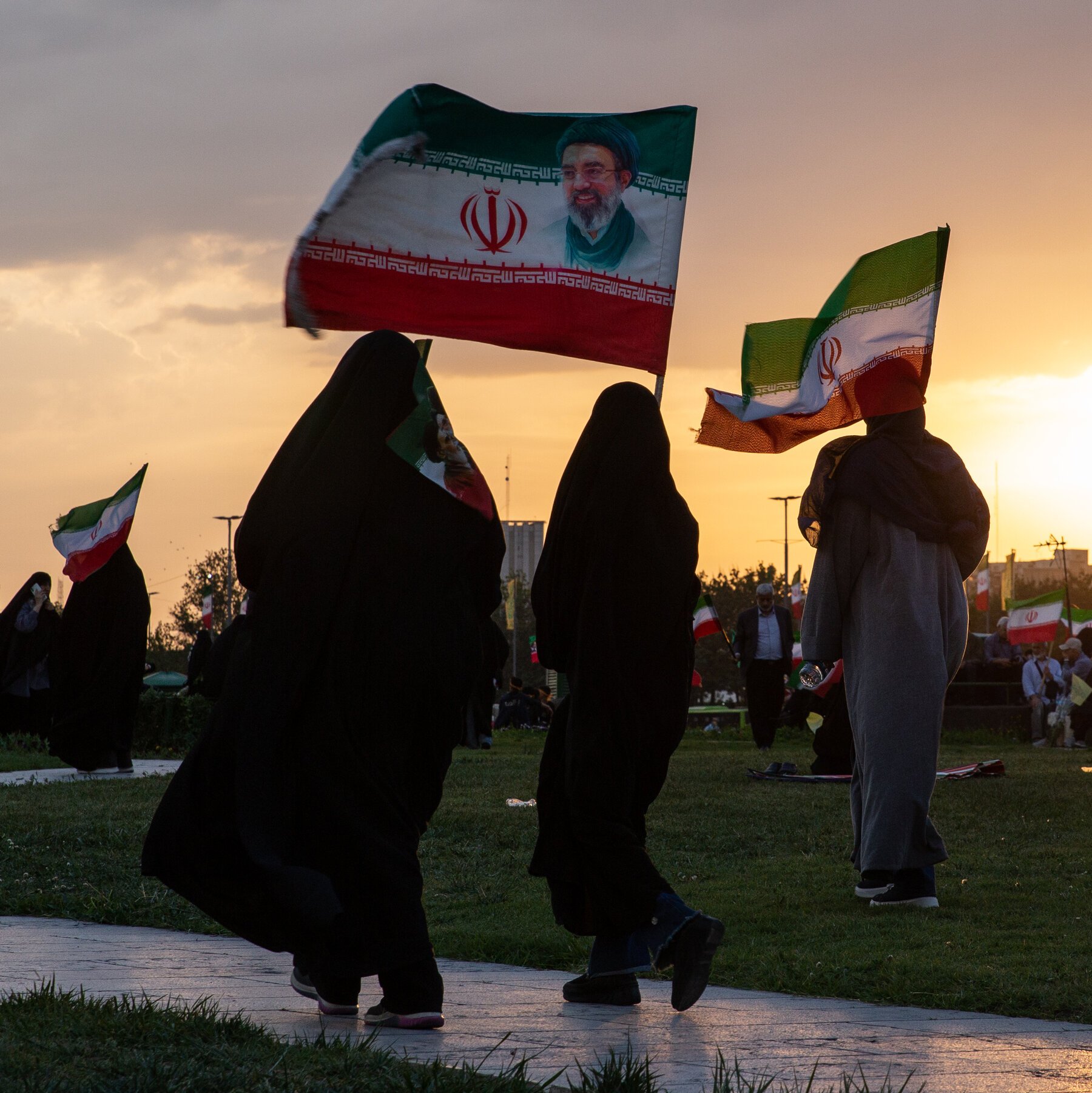
Representative John Larsen, a Democrat serving in the US House of Representatives, has declared that the United States' current conflict with Iran constitutes an illegal war, and that the president has placed himself above the law in prosecuting it. Larsen's objections, voiced publicly on 2 May 2026, centre on the absence of a formal Congressional authorization for military action — a constitutional threshold the congressman argues has not been met, despite ongoing American operations targeting Iranian interests or infrastructure.
The contention strikes at the heart of a recurring fault line in American governance: the tension between executive war-making authority and the legislature's constitutionally mandated power to declare war. Since the Second World War, no US president has secured a formal declaration of war from Congress. Instead, administrations have relied on authorizations enacted under the 1973 War Powers Resolution, standalone statutory authorities, or the implicit tolerances of resolutions funding military operations without explicit opposition. Larsen's charge suggests none of those doctrines currently apply to whatever operations the Trump administration is conducting against Iran — or that the administration is operating without clear statutory cover entirely.
The congressman has been direct in framing the stakes. The administration, he argued in remarks carried by Iranian state-linked wire services on 2 May 2026, treats Congressional non-authorization as an inconvenience rather than a legal bar. The president, in this reading, has decided the war is justified on his own authority and has declined to seek the approval that the Constitution requires. Whether the specific operations underway constitute a full-scale war, a sustained kinetic campaign, or covert strikes that amount to de facto hostilities, Larsen's argument turns on the same underlying principle: the White House cannot unilaterally commit the nation to conflict with Iran without crossing the threshold Congress established as a check on executive power.
The constitutional question is not incidental. Under the War Powers Resolution, presidents must consult with Congress before introducing US forces into hostilities or imminent hostilities, and must withdraw forces after sixty days absent Congressional authorization. Critics of the Resolution have long argued it constrains legitimate presidential prerogatives in crises; defenders argue it is the minimum expression of the legislature's war-declaration role in a world where military flashpoints move faster than Congressional calendars allow. The Trump administration, depending on the operational specifics of its Iran posture, may be testing whether that framework still functions as a genuine constraint — or whether the combination of executive assertiveness and Congressional paralysis has rendered it effectively unenforceable.
The political environment in which Larsen's objection lands matters as much as the legal architecture. The administration has framed Iran as a principal adversary — a designation reinforced by the administration's withdrawal from the Joint Comprehensive Plan of Action nuclear agreement and its campaign of maximum-pressure sanctions. That framing creates political cover for escalated operations: Iran is presented as a regime whose nuclear ambitions, regional proxy networks, and ballistic-missile programme justify a hard line. Within that frame, asking whether the war is legal can sound like a distraction from urgent national-security imperatives.
But the reverse logic also holds. If the president can determine on his own that Iran constitutes a sufficient threat to justify kinetic action, the War Powers Resolution is a dead letter. Congress, which controls budget appropriations and retains oversight authority, becomes a bystander to decisions that commit American lives and risk broader regional escalation. Larsen's objection — that the president considers himself above the law — reflects a concern that is not purely procedural: it is about accountability, about who carries the weight of a decision that could draw the United States into a wider Middle Eastern conflict, and about whether the public and its representatives have consented to that outcome.
The broader context is one of institutional strain. Congress has repeatedly demonstrated an inability to check executive military action in real time — wars in Vietnam, Iraq, and Libya proceeded or extended without formal declarations — and this has been a bipartisan failure. What Larsen's charge adds, in the current moment, is a specific legal argument attached to a specific adversary. Iran, under the current Iranian government, is not a sympathetic actor to many American ears. That reality makes the constitutional argument harder to press in the court of public opinion, even if it is legally sound.
What remains uncertain, and what the available sources do not fully resolve, is the operational scope of the American campaign against Iran that Larsen is calling illegal. The sources do not specify whether the congressman is describing covert operations, targeted strikes, cyber actions, or something more sustained. That ambiguity complicates the legal analysis: a limited strike under existing statutory authorities (for instance, the 2001 Authorization for Use of Military Force targeting terrorist groups) might be constitutionally defensible even without a fresh Congressional vote, whereas a sustained bombing campaign or ground involvement almost certainly would not. The available reporting gives Larsen's conclusion but not the operational facts that would allow a reader to assess the strength of his legal premise on its own terms.
For now, the congressman has put the question on the record. Whether it generates a Congressional response — a floor vote, a resolution demanding withdrawal, a probe by the Armed Services Committee — or simply becomes another contested claim in a political environment where institutional norms are under sustained pressure remains to be seen. The administration has not publicly addressed Larsen's specific charges as of this publication. The constitutional question, however, will not resolve by silence.
Wire provenance
This editorial synthesis draws on the following public wire/social posts:
- https://t.me/tasnimplus/12452
- https://t.me/alalamfa/9981
- https://t.me/alalamarabic/8877
- https://t.me/presstv/44321
- https://www.govinfo.gov/content/pkg/COMMITTEES-SENATE-J4/html/COMMITTEES-SENATE-J4.htm