De Zerbi's winners and losers: how Tottenham's survival fight exposes Premier League power gaps
Roberto De Zerbi told Tottenham to ignore the noise. Liverpool are closing on Champions League qualification. The two stories are not unconnected — and both reveal where power actually sits in English football's upper tier.
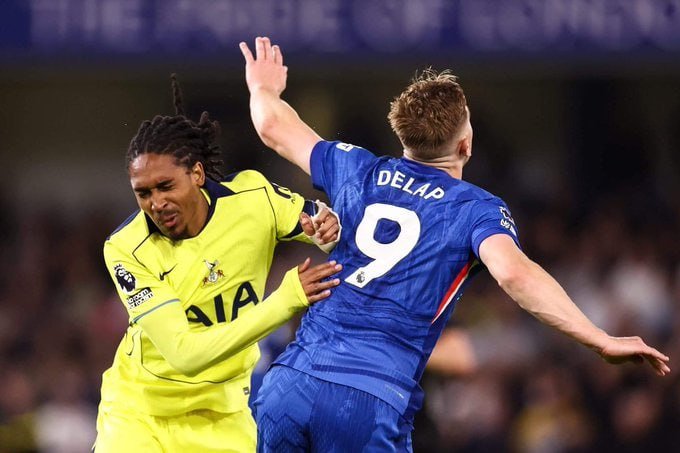
On 1 May 2026, Roberto De Zerbi gathered his Tottenham squad and delivered a message that would circulate across sports desks by evening. Only losers cry, he told them. Ignore the negativity. Sit with the pain but do not yield to it. Liverpool, meanwhile, moved within touching distance of leapfrogging Manchester United into second place. Two clubs, two very different pressures — and a Premier League table that has spent the season sorting the actual winners from the aspirational ones.
The distance between these narratives is not merely sporting. De Zerbi is managing a club fighting to stay in the top flight. Liverpool are managing a club with genuine designs on domestic and European primacy. The language of urgency sounds similar in both places. The resources available to respond to it do not.
A manager speaking to himself as much as his players
De Zerbi's monologue — "it's like we're all crying and relegated" — was notable less for what it said about Tottenham's immediate situation than for what it revealed about the psychological distance between the club's ambitions and its present standing. Tottenham are not yet relegated. They are not yet safe. But the manager felt compelled to address the emotional texture of the room before he could address the tactical deficiencies on the pitch.
That impulse is revealing. Clubs in survival mode rarely operate in a purely rational register. The pressure compresses decision-making timelines, sharpens internal fault lines, and forces managers to become something closer to team therapists than football tacticians. De Zerbi was hired because his work at Shakhtar Donetsk, Brighton, and before that in Italy suggested a coherent footballing philosophy. What he is managing at Tottenham is something closer to institutional anxiety.
The "only losers cry" formulation is a blunt instrument for that job. It may rally the room for a week. It may also alienate players who are already questioning whether the manager's methods are suited to a club fighting at the wrong end of the table rather than competing for European honours.
The counter-reading: why the message might still land
There is a version of this intervention that reads as genuine leadership rather than desperation. De Zerbi is correct that the Premier League generates an enormous amount of ambient noise — fan forums, social media, punditry — that has no predictive value whatsoever about what happens on the pitch on a given Saturday. Players at clubs like Tottenham have heard every variation of the club's supposed dysfunction for years. The noise becomes a distraction, not a motivator.
The counterpoint is structural: De Zerbi was appointed because the previous manager, Ange Postecoglou, could not arrest a slide that predated him. The squad he inherited was not built to his specifications. The recruitment strategy under the current sporting director has not consistently prioritised the profile of player that makes De Zerbi's preferred system effective. He is asking a squad assembled under different philosophical premises to execute a demanding tactical programme under acute pressure.
That is a difficult sell regardless of how effectively he frames it.
Liverpool and the Champions League arithmetic
Liverpool's situation provides a useful foil. The club sit third in the table as of 1 May 2026, with Mohamed Salah — whose Anfield future had been the subject of extended speculation — expressing that he is at peace with how things stand. The noise surrounding his contract has not disrupted the team's trajectory. That is not accidental.
Arne Slot has been permitted to build something coherent. The squad has been shaped with a clear idea of how it wants to play. The ownership structure, even under the shadow of the FSG succession questions that have run for several seasons, has maintained a level of sporting continuity that allows the manager to think in terms of seasons rather than gameweeks. Liverpool are hunting Manchester United for second place — United hold a game in hand, but the gap is narrow and the form book favours Slot's side.
This is the Premier League's functioning meritocracy: clubs that make structural decisions well are rewarded with breathing room. Clubs that cycle through managers, sporting directors, and ownership transitions without coherent direction spend their energy managing crises rather than building anything durable.
The structural picture: where the money and the choices go
The Premier League's financial architecture creates its own logic. Broadcast revenue distributes widely, but the gap between the clubs that qualify for European competition and those that do not compounds season over season. Champions League qualification brings Uefa prize money that further widens the gap. A club like Tottenham, fighting to stay in the top flight rather than competing for continental places, faces a different resource reality than Liverpool even before the sporting outcomes diverge.
De Zerbi's intervention is happening in a context where Tottenham's next manager — whoever that is — will inherit a club that has not qualified for a major European competition for four seasons running. The recruitment budget will reflect that. The players available to attract will reflect that. The institutional confidence required to make long-term appointments will reflect that.
Liverpool, by contrast, are managing from a position of strength. Salah's peace with his situation is partly the peace of a player whose team is winning and whose club has a recognisable direction. The noise around him was managed without becoming a distraction. That is also a form of institutional management.
Stakes and the weeks ahead
Tottenham's immediate stake is binary: stay up or go down. The financial consequences of relegation — broadcast settlement, parachute payments that decline over three seasons, the difficulty of attracting first-choice targets from Championship limbo — would reshape the club's trajectory for years. De Zerbi may or may not survive the process. The more interesting question is whether anyone does, given the structural pressures accumulating on north London.
Liverpool's stakes are different in kind. Second place brings not merely status but a seeding advantage in next season's Champions League draw. The gap between Liverpool and Arsenal at the top is not closing this season. But the gap between Liverpool and United — which for several seasons appeared to be widening in United's favour — has narrowed materially. That is a consequence of decisions made over 18 months, not outcomes of a single transfer window.
De Zerbi told Tottenham that only losers cry. Whether he meant it as motivation or prophecy remains to be seen. The Premier League has a way of making examples of both.