The Deal That Wasn't: Inside the US-Iran Diplomatic Collapse
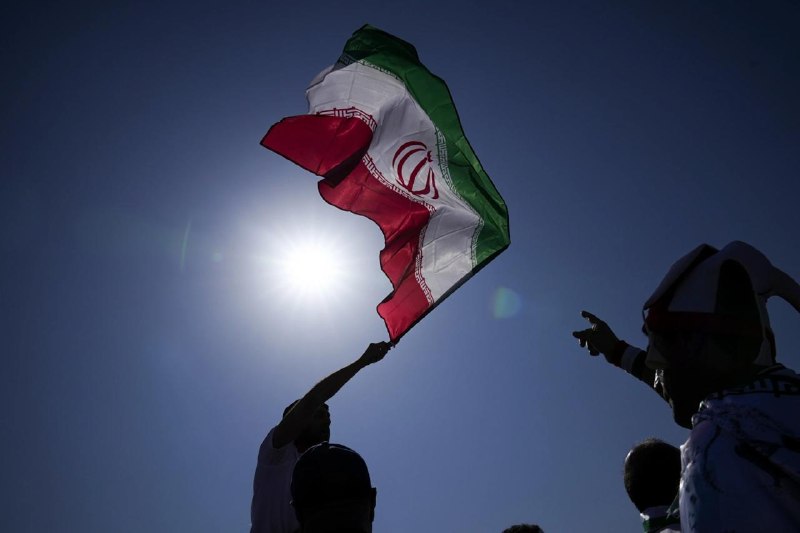
For weeks, the machinery of diplomacy turned in whispers. Pakistani intermediaries carried a proposal from Tehran to Washington. Senior officials in at least two administrations quietly tracked the shuttle traffic. And on the morning of 2 May 2026, President Donald Trump stood before cameras and delivered a verdict the intermediaries had apparently not prepared their counterparts to receive: the United States was "not happy" with Iran's latest peace offer.
The exchange, fragments of which have been confirmed across Middle East Eye's live coverage and CGTN's wire reporting, amounts to the most substantive yet most fragile moment in US-Iran relations since the collapse of the original nuclear accord in 2018. What the public record shows is a negotiating process that has reached a point of acute mutual incomprehension — not about interests, which overlap more than either side admits in public, but about面子, face, and the political costs of appearing to yield.
This publication has identified at least six distinct public statements from the past 48 hours that, read together, sketch a picture at once more alarming and more farcical than either government's preferred narrative allows.
What Washington Says It Tabled
The US position, as Trump described it on 2 May 2026, is that Washington issued what he characterised as a "final proposal" — a formulation loaded with implications for any party that might seek further negotiation. According to reporting carried by Middle East Eye's live blog, the administration has framed its offer as comprehensive and non-reopenable. Iranian officials, through channels that remain partly opaque, submitted a counter-proposal via Pakistani mediators that included elements the US side found insufficient.
Trump's public posture has been consistently muscular. On the same date, he told assembled journalists that Iran was being led by "lunatics" who could not be permitted control of nuclear weapons — language that Iran International and regional Arabic-language outlets have noted carries particular resonance given its use in previous maximum-pressure cycles. Separately, and with legal as well as diplomatic significance, Trump asserted that no congressional approval would be required for any military action against Iran following the establishment of a ceasefire — a claim that legal scholars have disputed but that carries domestic political weight in a Republican conference already divided on intervention abroad.
The administration's harder public line has been accompanied by a more aggressive operational posture. According to figures cited in Middle East Eye's coverage of the naval standoff, the US military has turned back approximately 45 ships under Iran's blockade operations in the Gulf. The number, if accurate, represents a significant volume of commercial traffic disrupted — and signals that the operational dimension of US-Iran confrontation is running parallel to, and potentially outpacing, the diplomatic track.
What Tehran Says It Tabled
The Iranian position, as articulated through state-aligned outlets including PressTV and Mehr News, insists that the fault lies not with the substance of its proposals but with the atmosphere in which they were received.
Foreign Minister Abbas Araghchi, whose public comments have been carefully monitored across regional wires, has repeatedly stated that Iran stands ready for diplomacy — but that the precondition is a cessation of what Tehran characterises as threatening rhetoric from Washington. This formulation, familiar to observers of Iranian diplomatic practice, serves a dual function: it positions Iran as the reasonable party willing to negotiate while demanding that the burden of de-escalation fall on the United States.
The demand is not trivial. Within Tehran's political system, the ability of any negotiator to deliver an agreement depends on a perception among domestic hardliners that the other side made meaningful concessions first. The Pakistani channel, chosen deliberately because it carries no direct US institutional footprint, was reportedly designed to allow both governments to explore terms without the public political exposure that official negotiations entail. That channel appears to have delivered enough signal to bring both governments to the table in private — but not enough to produce the document both sides apparently need.
The Structural Problem Neither Side Is Naming
Beneath the surface-level disagreement over proposal content lies a more fundamental problem that neither capital is incentivised to acknowledge publicly: both the United States and Iran have internal audiences that make genuine compromise structurally difficult.
In Washington, the administration's political coalition includes constituencies for whom any agreement with Tehran short of complete denuclearisation constitutes appeasement. Republican congressional voices who have publicly supported hardline positioning on Iran represent a bloc that the White House cannot afford to alienate, particularly as midterm calculations begin to shape legislative strategy. Trump himself has invested significant political capital in a posture of strength vis-à-vis Iran, and any agreement that critics could characterise as a concession would face immediate backlash.
In Tehran, the calculus is different but structurally parallel. The Islamic Republic's negotiating tradition involves extracting maximum concessions from counterparties before any reciprocal movement, a pattern that has produced both the 2015 Joint Comprehensive Plan of Action and its subsequent collapse. Supreme Leader Ayatollah Ali Khamenei, whose authority is necessary for any final agreement, has publicly maintained that Iran will not negotiate under duress — language that effectively requires any agreement to be presented as a victory secured under conditions of American weakness.
The result is a negotiating dynamic in which both parties may genuinely prefer a deal in principle but are unable to achieve one in practice because the political architecture of each government prevents the flexibility required for compromise. This is not a new problem. It is the same structural incompatibility that produced the failure of the original JCPOA negotiations under the Trump administration and the subsequent diplomatic paralysis under Biden.
What Is Different This Time
The current moment, however, contains elements that distinguish it from previous cycles — and those distinctions matter for anyone attempting to assess where this leads.
First, the operational tempo has been higher. The 45 ships turned back under the Iranian blockade represent not merely commercial disruption but an escalation of the kind that, in prior cycles, has preceded kinetic incidents. The US naval presence in the Gulf has been publicly reinforced; Iranian naval posture has been described by regional military analysts as more assertive than at any point since the tanker wars of the late 1980s.
Second, the Pakistani intermediary channel represents a genuine departure from precedent. In previous negotiations, European Union intermediaries or Omani channels served as the primary diplomatic bridge. The Pakistani involvement suggests that both governments have determined that the political costs of direct or even semi-direct negotiation are too high to bear — but also that both see value in a channel that can offer plausible deniability to domestic audiences.
Third, and perhaps most significantly, the nuclear timeline is compressing. Iran's enrichment programme has advanced materially since the JCPOA's collapse. Fordow and Natanz are operating at levels that, under the original agreement, would have been unthinkable. The Trump administration has reportedly made clear in private channels that it views the current enrichment ceiling as a red line — a position that Tehran disputes on both technical and sovereign grounds.
The Stakes and What Comes Next
The implications of a sustained diplomatic failure are asymmetric but serious for both parties.
For the United States, a breakdown in negotiations does not automatically resolve into military confrontation — but it does remove the diplomatic off-ramp that Washington has repeatedly signalled it prefers to kinetic action. The administration's public posture has been to hold the military option open while pursuing negotiation. If the negotiation track is seen to have definitively failed, the pressure on the president to demonstrate resolve through action — or to be seen as having bluffed — becomes acute.
For Iran, the stakes are existential in a more immediate sense. International Atomic Energy Agency inspectors have been expelled or restricted in previous confrontations; a renewed confrontation would likely accelerate that process. The economic pressures under which the Islamic Republic has operated since 2018 are real but have been absorbed with more resilience than Western analysts predicted. A sustained blockade escalation would test that resilience significantly.
For the broader region — and this dimension is often underweighted in Washington-centric analysis — the US-Iran dynamic shapes everything from Iraqi political stability to Lebanese Hezbollah's operational calculus to the Afghan economic situation. A sharp escalation would cascade across multiple fault lines simultaneously.
What the sources reviewed for this article make clear is that both governments understand these stakes. What they have not yet found is a formula for managing them that does not require either side to perform capitulation for domestic consumption.
The diplomatic window, as of this publication, remains technically open. Whether either side has the political architecture to walk through it before the operational situation forecloses the option is a question that the next 72 hours may answer — regardless of what either government says in public.
This publication's coverage of the US-Iran diplomatic track differs from wire-service emphasis in one notable respect: while Reuters and AP have focused primarily on the content of the proposals in circulation, this analysis foregrounds the structural conditions — domestic political constraints, intermediary channel dynamics, and operational escalation parallel to diplomatic effort — that make proposal-level negotiation insufficient to produce agreement. Both framages are grounded in the same underlying reporting; the emphasis reflects a editorial judgment that the structural conditions are, at present, the determinative variable.
Wire provenance
This editorial synthesis draws on the following public wire/social posts:
- https://t.me/hindustantimes/2050205732591554560
- https://t.me/CGTNOfficial/2050485994281947137