The Dollar, The Chain, and The Strait: Financial Infrastructure as Geopolitical Leverage
Two stories from the same week—one in fintech, one in diplomacy—reveal a single underlying pattern: the dollar-denominated financial architecture that underpins global commerce has become an instrument of geopolitical power, and its reach is extending into new domains simultaneously.
On 1 May 2026, MoonPay announced the MoonAgents Card, a product enabling AI agents to spend stablecoins directly from onchain wallets via the Mastercard network. The same week, Axios reported that Iran had proposed reopening the Strait of Hormuz—the transit corridor through which roughly a fifth of the world's oil passes—in exchange for postponing nuclear negotiations with the United States. Two stories, two different registers: one a product launch at the frontier of fintech, the other a geopolitical gambit at one of the world's oldest flashpoints. They have more in common than first appears.
Both stories are episodes in the same structural drama: the extension of dollar-denominated financial infrastructure into new domains, and the friction that extension generates. The financial architecture of the global economy—the payment rails, card networks, messaging systems, and settlement layers that denominate transactions in dollars—has never been politically neutral. It is the operating system of American economic power. And it is being stretched further than ever before.
The MoonAgents Card: Stablecoin Rails Meet the Compliance Machine
MoonPay's announcement on 1 May 2026 is a milestone in the institutionalisation of stablecoins. The MoonAgents Card allows AI agents—autonomous software programmes operating onchain—to spend US-dollar-backed stablecoins directly via Mastercard, converting them into fiat at the point of sale. The integration is not merely technical. It is a deliberate act of onboarding: bringing AI agent activity into the same compliance framework that governs credit cards, bank accounts, and wire transfers. Know-your-customer checks, anti-money-laundering screening, and sanctions filtering apply at the Mastercard layer. The onchain wallet may belong to a software agent, but the spending happens inside a system regulated by central banks and financial authorities, overwhelmingly in the United States.
This matters because the regulatory architecture is not a neutral medium. It is a mechanism for projecting American legal authority into new domains. When the US Treasury's Office of Foreign Assets Control designates an entity, that designation travels with the transaction through every Mastercard terminal in the world. The AI agent spending stablecoins via the MoonAgents Card is, structurally, operating inside the dollar compliance ecosystem—regardless of whether its developers are in San Francisco, Singapore, or São Paulo. The stablecoin market has grown substantially: by early 2026, aggregate stablecoin issuance stood at roughly $200 billion in circulation globally, according to publicly available market data. The MoonAgents Card is a signal that this market is maturing from retail crypto speculation into something more structured and, crucially, more legible to financial regulators.
The implications extend beyond compliance. Mastercard's integration with MoonPay marks the expansion of a duopoly—Visa and Mastercard process the vast majority of card-not-present transactions globally, and their decisions about which digital asset firms to partner with effectively determine which stablecoin services can operate at scale. That gatekeeping role has quietly become a form of financial geopolitics.
The Hormuz Gambit: Energy Infrastructure as Bargaining Chip
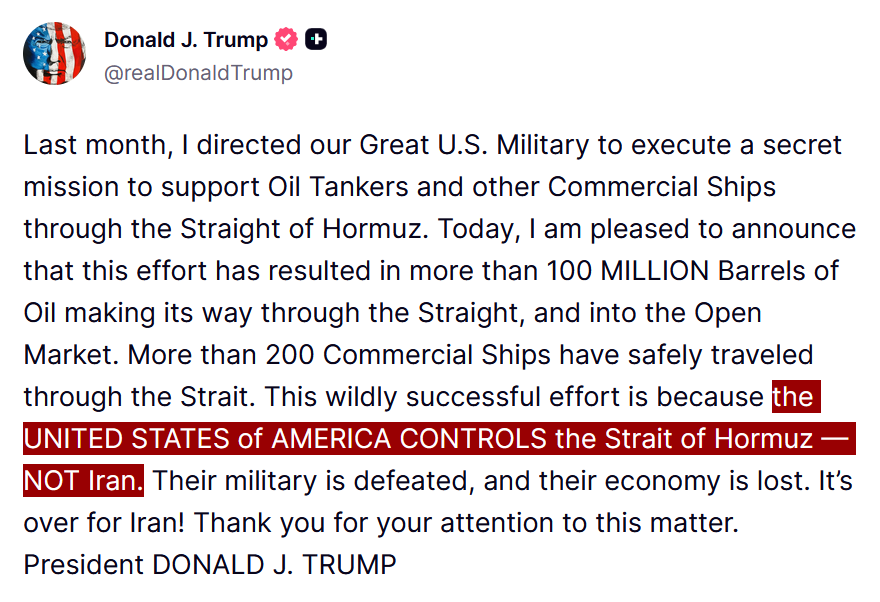
The Iran reporting, confirmed by Polymarket and first carried by Cointelegraph's wire service on 27 April 2026, describes a different but structurally analogous dynamic. Tehran reportedly proposed reopening the Strait of Hormuz—in effect, offering to allow oil tanker traffic to flow unimpeded through the Persian Gulf—in exchange for deferring nuclear negotiations to a later stage. The proposal, if accurate, is a direct acknowledgment of leverage: Iran controls a physical chokepoint through which a substantial share of global oil shipments pass. The offer to reopen it is an offer to stop applying pressure.
The Hormuz Strait has been a site of US-Iranian tension since the 1979 revolution, with the US Navy's Fifth Fleet maintaining a persistent presence to keep the lane open. Iran's counter-strategy has been to hold the strait as a hostage: the capability to disrupt traffic, even if never exercised at full scale, shapes every calculation in the Gulf. The Trump administration's return to maximum pressure—exiting the 2015 nuclear deal, reimposing sweeping sanctions, attempting to drive Iranian oil exports to zero through secondary sanctions on Chinese buyers—has been aggressive. But Tehran has survived: rerouting oil sales through informal channels, using regional proxies to maintain pressure on adversaries, and keeping the Hormuz card in reserve. The current proposal is a signal that Iran is still in the game, and that it wants to know what the US administration actually wants before committing to a formal negotiation process.
What Tehran appears to be seeking—delaying the nuclear talks while preserving its economic operating space—is revealing. The nuclear programme has always been as much about leverage as about energy. A freeze that buys time, while sanctions enforcement remains imperfect, is a better outcome for Tehran than a structured deal that creates inspection obligations and lifts restrictions on oil revenue simultaneously. The Hormuz proposal is not a concession. It is an opening position.
Precedent: The Architecture Was Always Political
The notion that financial infrastructure is an instrument of power is not new. The petrodollar system, established in the 1970s between Washington and Riyadh, denominated global oil trades in dollars and recycled oil revenues through US Treasury markets, giving the US extraordinary leverage over the terms of global commerce. The SWIFT financial messaging system, while technically neutral, became a target of US pressure when the Obama and Trump administrations successfully lobbied the Belgian-registered network to exclude Iranian banks from the system in 2012 and again, more dramatically, in 2018. The effect was to cut Iranian banks off from the nervous system of global trade finance. That exclusion—implemented not by a US law but by a private Belgian cooperative—was arguably the most powerful single act of financial coercion in the twenty-first century.
The MoonAgents Card sits in a different technological register, but the logic is the same. Every time a major card network or payment infrastructure integrates a digital asset service, it extends the compliance perimeter of the existing financial system. The blockchain is not replacing the dollar infrastructure; it is being incorporated into it. The political implications are not accidental by-products of technology adoption. They are the point.
Iran's Hormuz gambit follows the same structural logic from the other end. Tehran is not proposing to destroy the oil market infrastructure—it is proposing to be let back in on more favourable terms. The strait only has value as a negotiating chip because the global oil market depends on unimpeded transit through it, and the dollar-denominated financial system that prices and settles that oil is the same system that excludes Iran from its primary revenue channels. The leverage is real precisely because the system being gamed is the system that was built to exclude Tehran in the first place.
What Comes Next
The structural argument here is straightforward: the dollar-denominated financial architecture has always been political, and its extension into new domains—stablecoins, AI agent payments, onchain settlement—is a continuation of that political project, not a departure from it. The compliance architecture that makes the MoonAgents Card possible is the same architecture that excludes Iranian banks from SWIFT and that enables secondary sanctions on China's oil buyers. The two stories are not the same story, but they occupy the same structural position.
The question is whether the extension of this architecture is sustainable. Every expansion of the dollar compliance perimeter creates an incentive for actors to seek alternatives: different settlement systems, different payment rails, different energy routes that avoid chokepoints controlled by the US and its allies. The blockchain-and-stablecoin ecosystem is still nascent—the MoonAgents Card is one of the first major integrations of its kind, not a mature market. The Hormuz proposal is a negotiating opening, not a settled outcome. Whether the dollar system absorbs these new domains and consolidates its position, or whether it creates the conditions for alternative systems to emerge, is the central question of this decade of financial infrastructure.
The MoonAgents Card extends dollar financial infrastructure into AI agent payments. Iran's Hormuz proposal acknowledges that energy infrastructure has always been a negotiating chip inside the same dollar-dominated system. Both stories assume the durability of the existing architecture—and both suggest that durability is being tested. The dollar has survived previous challenges. But the current configuration—sanctions pressure alongside institutional expansion, chokepoint leverage alongside fintech onboarding—is more complex than anything since the petrodollar's establishment. The decisions being made now, in payment terminals and diplomatic back-channels alike, will determine which version of the system emerges from this moment.
What is clear is that financial infrastructure is no longer just infrastructure. It is the terrain on which geopolitical competition is increasingly being fought.
This article was published on 2 May 2026.
Desk note: Monexus linked these two stories thematically through the structural frame of financial infrastructure as geopolitical leverage—a pattern that both fintech product announcements and Iran diplomacy illuminate from different angles. The Iran reporting relied on limited sourcing (Cointelegraph's Telegram wire and a Polymarket post), and readers seeking full detail on the Axios reporting should consult that outlet directly.
Wire provenance
This editorial synthesis draws on the following public wire/social posts:
- https://t.me/Cointelegraph/142897
- https://t.me/Cointelegraph/142898
- https://x.com/polymarket/status/1917798197123797309