Escalation Without End: Israel's Southern Lebanon Strikes and the Limits of Ceasefire Diplomacy
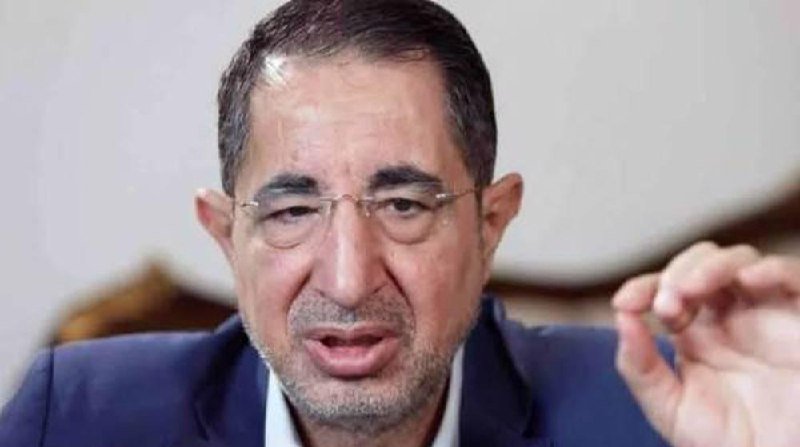
The Israeli military struck the town of Deir El Zahrani with an airstrike on the afternoon of 2 May 2026, according to footage circulated by the Witnesses from Frontlines Telegram channel at 14:42 UTC. Within minutes, a second strike was reported in the adjacent town of Dweir. Separately, the Al Alam Arabic news service — which covers Lebanese affairs from a regional perspective — reported that Israeli artillery had targeted Yahmar Al-Shaqif, while Israeli raids also hit Zefta and Al-Sama'iyya. The clustering of targets, spanning several villages within a concentrated corridor of southern Lebanon, suggested a deliberate pattern rather than a reaction to a single incident.
Israeli officials have not publicly commented on the specific targets or the legal basis for the strikes as of this publication. The timing, however, coincides with a period of renewed diplomatic activity around a proposed ceasefire framework, making the attacks a test of whether the Israeli political echelon is willing to constrain its military in exchange for diplomatic progress — or whether the military logic remains dominant regardless of the political calendar.
The Problem With Precedence
The strikes arrive against a backdrop of months of intermittent violence along the Lebanon-Israel border. Since the initial ceasefire understandings were reached, both sides have claimed violations — but the pattern has been asymmetric in its public communication. Israel has framed each strike as a response to an imminent threat or an operational necessity, a framing that receives substantial amplification in Western wire reporting. The Lebanese side, through state media and affiliated channels, has characterised the same strikes as unprovoked violations of sovereignty. Neither framing is complete on its own. The truth is that the border zone operates under a set of understandings, not a formal peace agreement, and those understandings are perpetually under renegotiation through the language of force.
What is structurally consistent is the way the international response is calibrated. Statements from Western capitals typically urge restraint on both sides while expressing understanding for Israel's security concerns. That asymmetry — urging restraint while validating the actions that make restraint unnecessary — is not unique to this moment, but it has become more visible as the gap between diplomatic timelines and operational timelines has widened.
What the Strikes Actually Accomplish
From an Israeli military perspective, strikes in southern Lebanon serve several functions: they degrade the ability of hostile actors to position assets in the border zone, they demonstrate resolve, and they generate intelligence about response patterns. Whether any of those functions is served by hitting civilian-accessible towns like Deir El Zahrani — a community with a significant civilian population and a history of hosting displaced families — is a question the military logic does not inherently answer. The towns targeted are not military installations. They are population centres. The distinction matters, even when Israeli statements characterise all targets as operational in nature.
The strikes also communicate to Lebanon's political class. A government in Beirut that is already struggling to maintain cohesion — divided between a presidentially aligned bloc and a Hezbollah-affiliated bloc — faces pressure every time a strike occurs on Lebanese soil. The messaging is not primarily to Hezbollah; it is to the Lebanese state apparatus, which is being shown that its sovereignty is contingent on Israeli tolerance. That message is delivered with some frequency, and its cumulative effect is to flatten the political space available for any Lebanese government to negotiate from a position of strength.
The Diplomatic Background
Negotiations over a more durable ceasefire arrangement have been ongoing for months, with Qatar and France playing visible mediating roles and the United States maintaining a supporting function. The stated goal is a framework that would create a formal buffer zone, a verification mechanism, and a path toward full normalisation. The strikes on 2 May do not necessarily represent a breakdown of those negotiations — ceasefire talks have survived worse — but they chip away at the premise that both sides are operating in good faith toward the same endpoint.
Israeli political sources have been quoted in regional press as insisting that military operations will continue as long as threats remain, a formulation that effectively subordinates the diplomatic track to the security establishment's assessment. If the security establishment defines the threat environment as permanent, the diplomatic track becomes a formality rather than a constraint. That is the trap that the 2 May strikes, in their timing and scope, may be designed to expose.
The Structural Disconnect
What is being tested in southern Lebanon is not simply a military question. It is whether ceasefire diplomacy can function as a genuine substitute for a political settlement, or whether it will continue to be a pressure-release valve that allows both sides to maintain the status quo indefinitely while periodically escalating to reset the baseline. The strikes of 2 May are consistent with the latter pattern. They are large enough to matter, contained enough to avoid triggering an automatic international response, and targeted enough to serve operational goals.
The costs of that pattern are borne by the residents of Deir El Zahrani, Dweir, Zefta, and the other affected towns — civilians who are not party to any negotiation and who have no mechanism to enforce their own protection. The international architecture around the border zone, including UNIFIL's presence, has no enforcement capability that can override the logic of a strike once it is launched. That structural gap — between the international framework's ambitions and its enforcement capacity — is where the strikes find their room to operate.
The question for the coming weeks is whether the diplomatic activity can absorb the shock of a day like 2 May and keep moving, or whether the accumulated weight of these strikes will eventually produce a reaction that the diplomatic process cannot manage. That outcome would serve no one's stated interests, but it remains the logical terminus of a pattern that the 2 May strikes have once again demonstrated is fully intact.
This publication notes that the Western wire services did not carry independent reporting on the specific strikes on the evening of 2 May, with coverage relying primarily on accounts circulated via social media channels. The absence of a rapid corroboration process reflects a broader shift in how border-zone incidents are documented — a pattern that has implications for accountability that merit separate examination.
Wire provenance
This editorial synthesis draws on the following public wire/social posts:
- https://t.me/wfwitness/4521
- https://t.me/alalamarabic/88123
- https://t.me/alalamarabic/88129