Escalation Without a Strategy: Why Trump's Cuba Threat Exposes a Deeper Problem
The White House is cycling through the same playbook—maximum pressure, carrier repositioning, rhetorical escalation—and the results are not improving. Cuba is next on the list, but the economic reckoning is already arriving at home.
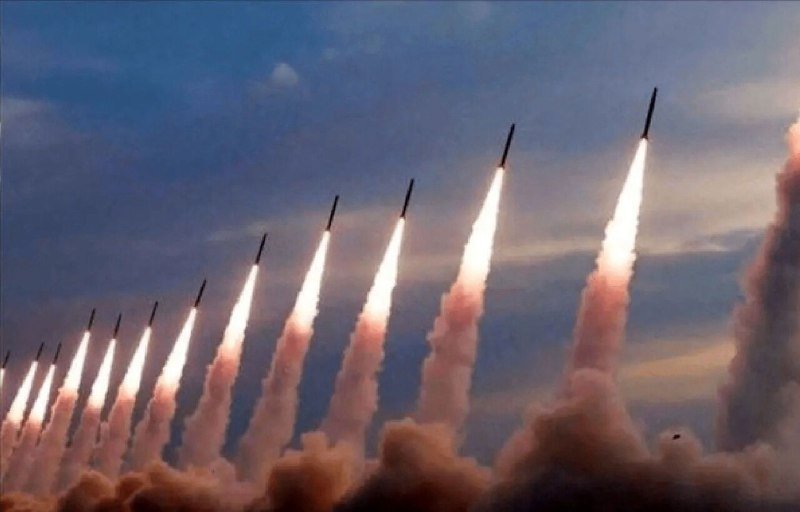
The pattern is becoming familiar. An adversary named, a carrier repositioned, a deadline implied. The administration announces the job is done in one theater, and within hours the rhetorical crosshairs shift to the next target. On 1 May 2026, that target is Cuba. President Trump declared that after Iran—whose conflict remains formally unresolved—Cuba will be "next." The USS Abraham Lincoln, a Nimitz-class carrier, would be positioned, in his words, "about 100 yards offshore," pressing Havana to surrender. The announcement followed a day in which the White House declared an end to hostilities with Iran while acknowledging that disputes over the terms of any settlement persisted.
This publication has watched that sequencing before. It is not a strategy. It is a loop.
The Iran Chapter Is Not Closed
The administration framed the Iran situation as effectively resolved after announcing a cessation of strikes. But senior American legislators were already noting the domestic consequences by 1 May. Senator Ron Wyden of Oregon observed that high gas prices continue to pressure American families, attributing the strain directly to what he called the president's failure to plan for economic repercussions. That is a precise indictment: the White House pursued maximum pressure against Iran without a contingency model for price volatility at the pump. The consequence arrived before the diplomatic outcome did.
More tellingly, Axios and other outlets reporting on the Iran situation noted that disputes continue even after the ceasefire announcement. The administration called the war over; the negotiating record suggests something messier. Iran-aligned analytical channels and regional wires describe ongoing disagreements over sanctions relief sequencing, stockpile verification, and the legal status of the nuclear programme. The version of events the White House presented—a clean finish—is not the version the counterparties are operating from. That gap is not unusual in diplomacy, but it matters enormously when the administration is simultaneously announcing a new front.
Cuba: Geography and History Collide
Cuba sits approximately 90 miles from Key West, Florida. A carrier positioned 100 yards offshore would not merely be a signal—it would be a physical statement that redefines the naval posture the United States has maintained since the early Cold War. The Cuban government is not a peer competitor. It lacks the missile arsenal Iran spent decades assembling. What it has is proximity, a long-standing grievance against American policy, and a deepening economic relationship with actors the White House has already designated as adversaries.
The administration appears to be counting on coercive signaling—the bluff of visible American force—to generate concession. That logic has a mixed record. It produced concessions when adversaries lacked countervailing support. It has not produced them when adversaries have alternatives: Russian oil revenues flowing east, Chinese financing in the Global South, sanctions-busting infrastructure that survives designation because it operates outside dollar-denominated systems. The question this publication raises is not whether America can position a carrier offshore Cuba. It manifestly can. The question is whether that positioning changes Havana's calculus—and the evidence from analogous situations says it often does not, particularly when the target has outside support.
The Economic Footprint of Escalation
The Wyden filing on 1 May is the part of this story that the geopolitical framing buries. American families are absorbing the cost of an administration that announced maximum pressure campaigns without publicly modelling fuel-price exposure. This is not a peripheral concern. It is the mechanism by which foreign-policy risk translates into domestic political cost.
The pattern here deserves attention: each escalation—Iran, now Cuba—generates a domestic economic aftershock. Energy markets price in uncertainty before they price in resolution. The administration has not communicated a clear endgame in either case. With Iran, disputes continue. With Cuba, no specific demand has been publicly articulated beyond "surrender." An adversary cannot surrender to terms it has not received. The absence of clarity is not a negotiating tactic. It is a structure that generates volatility and distributes its costs to ordinary Americans who have no stake in the underlying geopolitical contest.
Escalation Without a Theory of Victory
There is a structural problem beneath the specific targets. The administration appears to operate on the assumption that visible American force has a linear effect: enough pressure applied to enough targets produces enough concessions. But the evidence from three years of this posture suggests a different model. Each escalation generates resistance, alliance differentiation, and economic exposure at home. The concessions do not arrive cleanly. The domestic political cover for continued pressure thins as costs accumulate.
What this publication observes is an administration managing the appearance of strength more than the substance of it. Announcing that Iran is finished while disputes persist is not a diplomatic win—it is a framing exercise. Threatening Cuba while the Iran chapter remains open is not strategic depth—it is pattern repetition. The underlying problem is the same in every theater: there is no publicly articulated theory of what victory looks like, no defined endpoint that would allow American forces to stand down, and no evident plan for managing the economic consequences of getting there.
The carrier can be positioned. The question no one in the current architecture appears willing to answer is: then what?
This publication's approach to the Cuba threat differs from most wire framing in one respect: it refuses to treat visible American force as inherently credible. The evidence from parallel situations suggests that credibility is earned by outcomes, not by presence.
Wire provenance
This editorial synthesis draws on the following public wire/social posts:
- https://t.me/JahanTasnim/99999
- https://t.me/GeoPWatch/88888
- https://t.me/TSN_ua/77777
- https://t.me/alalamarabic/66666