Europe's defence reckoning: Germany absorbs US troop withdrawal as NATO braces for structural shift
Germany has described the planned withdrawal of roughly 5,000 US troops from its territory as foreseeable, with Defence Minister Boris Pistorius framing the decision as a prompt for Europe to deepen its own security architecture rather than a crisis requiring immediate resolution.
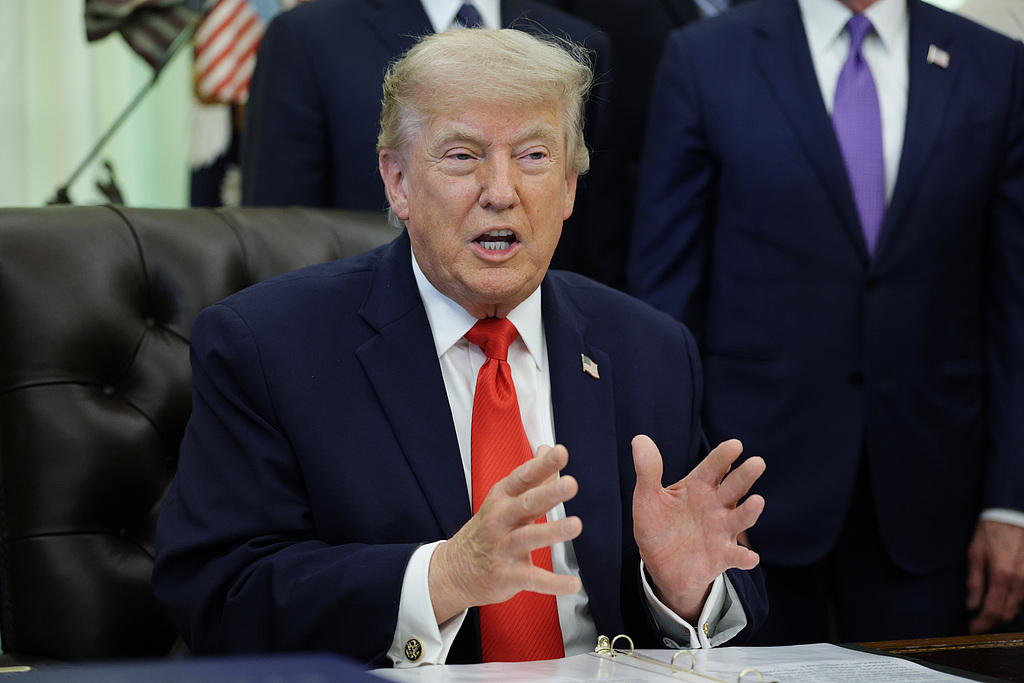
Germany has described the planned withdrawal of roughly 5,000 US troops from its territory as foreseeable, with Defence Minister Boris Pistorius framing the decision as a prompt for Europe to deepen its own security architecture rather than a crisis requiring immediate resolution.
Speaking on 2 May 2026, Pistorius said it had long been anticipated that Washington might reduce its European footprint, including bases on German soil. His comments came as NATO officials sought clarification from the United States about the scope and timeline of the proposed reduction. The German minister's calm framing signals a deliberate attempt to reframe the withdrawal as an accelerant for European defence autonomy rather than an abandonment of the transatlantic compact.
Immediate diplomatic fallout
The withdrawal announcement landed in allied capitals with varying degrees of alarm. According to reporting from the BBC, Berlin's official position is that the decision, while significant, does not constitute a rupture in the bilateral relationship. Pistorius was explicit: if Europe wishes to maintain a transatlantic character, it must build a stronger European defence pillar rather than rely on the continuation of American conventional overmatch on the continent.
That language matters. It marks a departure from the diplomatic boilerplate that has defined German responses to US posture adjustments for decades. Former iterations of this conversation — such as the debate following the Obama-era rotational deployments — were conducted in tones of reassurance and continuity. Pistorius's framing is more transactional: the Americans may be repositioning, and Europe must therefore adapt, not plead.
The sources do not specify what verification measures NATO is pursuing with Washington, but the formal request for clarification indicates that European allies regard the details — numbers, timelines, force structure implications for the NATO eastern flank — as unresolved. Without those specifics, calculating the impact on deterrence architecture remains guesswork.
What the withdrawal actually changes
The numbers are concrete: approximately 5,000 troops, sourced from the BBC's reporting on 2 May 2026. By the standards of post-Cold War force posture, that is not marginal. US presence in Germany has fluctuated since the 1990s, but a reduction of this scale represents the most significant thinning of American conventional forces from the European theatre since the early 2000s drawdown following reunification adjustments.
What it does not change is the nuclear deterrent, which remains the foundation of extended deterrence for NATO's eastern members. But the gap between nuclear deterrence and conventional response has a practical consequence: European allies who lack the logistics, long-range strike capability, and sustainment infrastructure that US forces provide now face a more pronounced shortfall. Pistorius's call to strengthen the European pillar is, in this context, a recognition that the gap is becoming politically and operationally untenable.
The sources do not specify whether the withdrawal is structured as a permanent redeployment or a temporary repositioning, a distinction that matters considerably for the credibility of forward deterrence in the Baltic and Polish corridor.
European defence autonomy: from aspiration to necessity
Berlin's framing — that European effort must intensify — maps onto a policy trajectory already underway. The European Defence Fund, the EU's defence industrial strategy, and the ongoing debate about common borrowing for defence expenditure all reflect a political class that has accepted, in principle, that the continent cannot indefinitely outsource its conventional defence to a single external guarantor.
The speed at which this transition moves, however, remains contested. Defence procurement cycles are long; industrial base expansion takes years; the political consensus required for sustained spending increases is fragile in coalition governments across the continent. Pistorius's statement is an acknowledgement that the structural logic is clear even if the implementation timeline is not.
The counter-argument, present in some allied capitals, is that Washington's posture adjustment is partly transactional — a function of domestic political calculations rather than a considered strategic reorientation — and that the Europeans should not restructure their defence architecture around the possibility that the Americans may reverse course. That view has merit; it also has the flavour of a comfortable fiction that is becoming harder to sustain as the evidence accumulates.
Stakes and structural implications
The stakes here extend beyond a bilateral basing arrangement. What is being tested is the assumption that has underpinned European security architecture since the early 1990s: that American conventional presence on the continent serves as both a tripwire and a deterrent, and that this presence can be maintained indefinitely as a baseline condition of the alliance.
If that assumption breaks, the burden of conventional deterrence shifts more fully to European forces — or to a European defence capability that does not yet exist in the form required. The gap between aspiration and operational reality is where risk accumulates. Pistorius has named the gap. Whether European governments have the political capital and institutional capacity to close it before the deterrent calculus changes further is the defining question for the next phase of transatlantic relations.
What remains uncertain, on the basis of available sourcing, is the precise configuration of the withdrawal — which units, which bases, what logistic footprint is affected — and whether any compensatory commitments have been offered to affected allies. Those details will determine whether this is a managed realignment or a disorderly reduction, and the distinction matters enormously for the alliance's credibility.
Wire provenance
This editorial synthesis draws on the following public wire/social posts:
- https://t.me/bbcworldoffl/29838
- https://x.com/sprinterpress/status/1920698228490952985
- https://x.com/sprinterpress/status/1920697842152862007