Two Hundred Days of Nothing: Why Gaza's Ceasefire Agreement Hasn't Held
Hamas officials say a ceasefire deal exists on paper. Two hundred days into it, they say nothing has changed on the ground — and the gap between the diplomatic record and lived reality in Gaza is becoming impossible to ignore.
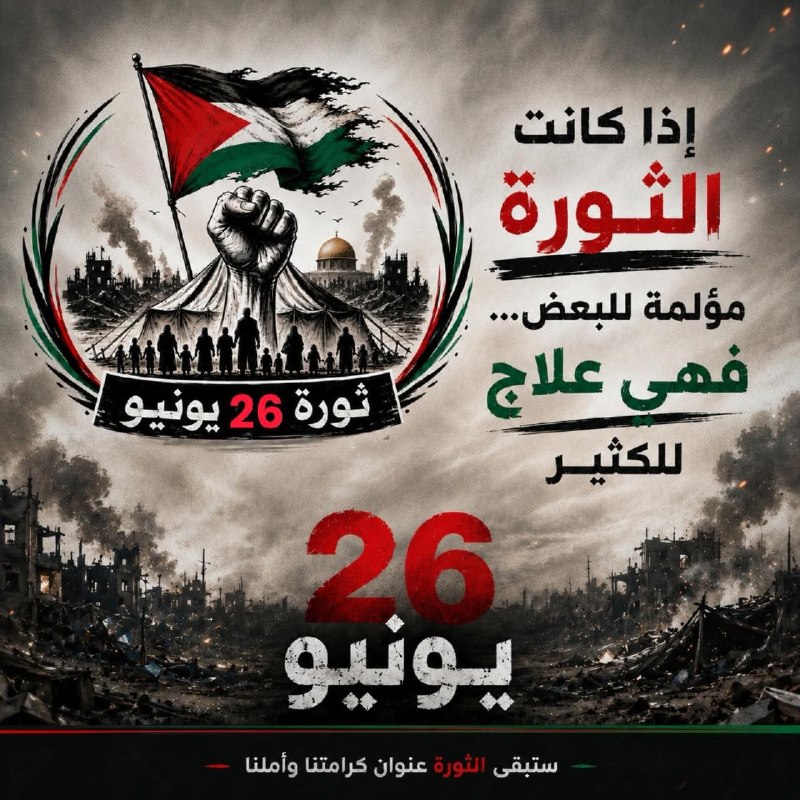
The rubble has not stopped accumulating. Eight months after Qatar and Egypt announced a ceasefire framework that was supposed to end the fighting in Gaza, a senior Hamas political bureau member told Arabic-language media on 2 May 2026 that there is no real ceasefire in the Strip — and that after nearly 200 days of an agreed pause, Israeli military activity has never truly ceased.
Bassem Naeem, a member of Hamas's political bureau, said the movement's forces had adhered to the terms of the agreement while Israeli violations continued unabated. "We cannot talk after 200 days about a ceasefire in Gaza due to Israeli violations," he said in remarks carried across multiple Arabic-language channels. A separate statement from another Hamas political bureau member, reported by Fars News International on the same date, emphasised that the Palestinian resistance had honoured its commitments — but declined to hand over its weapons, a condition repeatedly cited by Israeli negotiators as essential to any durable arrangement.
The statements land at an awkward moment for the diplomatic record. Egypt and Qatar have spent months publicly maintaining that the ceasefire framework is intact. The United States has cited it as evidence of progress toward a political horizon. On the ground, Gazan civilians and international aid organisations tell a different story — one of intermittent operations, displaced families, and a humanitarian architecture that has never fully restarted.
What the Agreement Actually Requires
To understand why Hamas officials are publicly stating what aid workers and residents have been saying privately for months, it helps to sketch the framework that Qatar and Egypt brokered — and the obligations each side claimed to accept.
Under the deal struck earlier in 2026, Israel was supposed to withdraw from key corridors, allow increased humanitarian access, and halt operations in areas designated as civilian zones. Hamas was supposed to consolidate its forces, stop launching projectiles, and — in a clause that has become a persistent sticking point — begin a process of weapons accounting that Western mediators framed as a precursor to broader disarmament.
That weapons provision has never been implemented. Hamas officials, including the political bureau member cited by Fars News, have consistently stated that the movement will not surrender its arms — a position grounded, they argue, in the logic that the ceasefire is temporary and resistance to occupation is a permanent fixture of Palestinian political identity.
Israeli officials, for their part, have maintained that operations in Gaza are defensive responses to threats posed by armed factions that have not disarmed. The Israeli military has described continued operations in northern Gaza and along the Philadelphi Corridor as necessary to prevent weapons reconstitution. Whether those operations constitute violations of a ceasefire or enforcement actions under its terms is a question the two sides answer differently — and one that the mediators have increasingly struggled to adjudicate.
The Diplomatic Record and the Ground Truth
Qatar's foreign ministry and Egypt's intelligence services, the two primary mediators, have been careful in their public statements. Doha issued a statement in late April calling the framework "operational" and expressing confidence in its continuation. Cairo has privately conveyed concern to Washington about the durability of the arrangement, according to diplomatic sources cited by regional media, while maintaining publicly that the ceasefire holds.
This careful diplomacy serves interests beyond the humanitarian. Qatar has invested considerable diplomatic capital in its role as a mediator acceptable to both sides, and its credibility as a neutral arbiter in Gulf and regional disputes rests partly on its ability to broker and sustain agreements. Egypt, which shares a border with Gaza and depends on stability in the Sinai, has similar structural incentives to portray the framework as functional — even when evidence on the ground complicates that narrative.
For the United States, which has used the ceasefire framework to deflect criticism of its support for Israel's military campaign and to maintain a political logic for continued diplomatic engagement, the incentive to treat the agreement as operative is obvious. Acknowledging that the ceasefire has not held in material terms would undermine the rationale for the administration's stance — and would force a harder reckoning with what sustained military operations in Gaza mean for regional stability, for American credibility as a mediator, and for the hostages who were released in the deal's first phase and whose remaining colleagues are still held.
The Weapons Question and the Logic of Resistance
The refusal to surrender weapons is not, from Hamas's perspective, a negotiating tactic. It is a statement of political identity. The movement was founded on the premise that armed resistance is the only language an occupying power understands, and that any ceasefire is a pause — not an end — to that struggle. This framing predates the current conflict by decades and has survived multiple rounds of diplomacy, warfare, and political transformation.
Western analysts have long argued that the weapons question is the irreducible obstacle to any durable settlement. The Israeli position, consistently articulated by its negotiating teams, holds that a Gaza without demilitarised armed factions is a prerequisite for security — a position backed by the United States in private and partially in public. Hamas's position, equally consistent, holds that disarmament under occupation is surrender by another name and that any agreement premised on it is a trap.
What is striking about the current moment is not the ideological position — that is well-established — but the degree to which the gap between the diplomatic record and the operational reality has narrowed to the point where both sides are now making the same factual claim from opposite directions. Hamas says the ceasefire exists but has been violated. Israel says operations continue because the ceasefire's conditions have not been met. Both, in effect, are describing a situation where the agreement has not produced peace — and where the framework designed to resolve the conflict has instead become a contested text whose meaning is disputed by each party.
Humanitarian Consequences and the Credibility of the Framework
For civilians in Gaza, the abstractions of ceasefire terminology translate into material conditions that are measurable and severe. United Nations agencies, the Red Cross, and international NGOs working inside the Strip have reported that humanitarian access remains inconsistent, that aid deliveries are subject to inspections and delays that make sustained reconstruction impossible, and that displaced populations have been unable to return to areas that have seen the most intense fighting.
The World Food Programme and UNRWA, the UN agency for Palestinian refugees, have both issued statements in recent weeks noting that funding shortfalls — partly a consequence of the political controversy surrounding the agencies' operations in Gaza — are limiting their capacity to provide even basic services. The ceasefire, in other words, has not produced the humanitarian respite that its architects promised.
This matters for the credibility of the mediation framework beyond Gaza. Egypt's role as a regional mediator depends partly on its ability to deliver outcomes. Qatar has built diplomatic influence across the region on the back of its mediation capacity — its relationships with Hamas, Hezbollah, the Taliban, and various factions in Libya and Yemen have given it a role that larger powers cannot replicate. If the Gaza ceasefire framework is revealed to have been more nominal than functional, both states lose a measure of the diplomatic capital they have invested in it.
What Comes Next
The statements from Hamas officials on 2 May 2026 are unlikely to collapse the mediation framework. Qatar and Egypt have too much invested in its preservation, and neither the United States nor Israel has signaled a desire to walk away from a diplomatic process that, however imperfect, provides political cover for all sides.
But the statements are significant in other ways. They represent a public acknowledgment, from a party to the conflict that has historically preferred operational ambiguity, that the ceasefire is not working — and an explicit assignment of responsibility for that failure to Israel. In doing so, they reframe the narrative from a negotiation that is ongoing to a negotiation that has stalled, and they force mediators to confront a question they have been deferring: what does it mean for a ceasefire to be declared when the fighting has not stopped?
The most likely near-term trajectory is continued ambiguity. Israel will continue operations it describes as defensive. Hamas will continue to observe a ceasefire in name while maintaining armed capacity. Mediators will continue to describe the framework as functional. And Gazan civilians will continue to live in a space where the language of peace and the reality of conflict are increasingly difficult to distinguish.
The alternative — a formal acknowledgement that the ceasefire has failed, followed by either a return to full hostilities or a renegotiation of terms — is possible but carries costs for every party. That asymmetry, between the costs of acknowledging failure and the costs of continuing a fiction, is what has kept the framework alive this long. It is also what makes its eventual collapse, when it comes, likely to be sudden rather than gradual.
This piece was written from Arabic-language wire reports and Hamas political bureau statements published on 2 May 2026. Monexus has sought comment from the Israeli military spokesperson and the Qatari foreign ministry; responses will be published as received.
Wire provenance
This editorial synthesis draws on the following public wire/social posts:
- https://t.me/FarsNewsInt
- https://t.me/JahanTasnim
- https://t.me/alalamarabic