Hezbollah Drone Footage Exposes Gaps in Israeli Air Defenses Over Lebanon
Hezbollah released footage on 2 May 2026 of a domestically manufactured UAV strike against Israeli forces and the downing of a Hermes 450 drone, exposing operational vulnerabilities even as IDF jets struck 120 Hezbollah targets over the weekend.
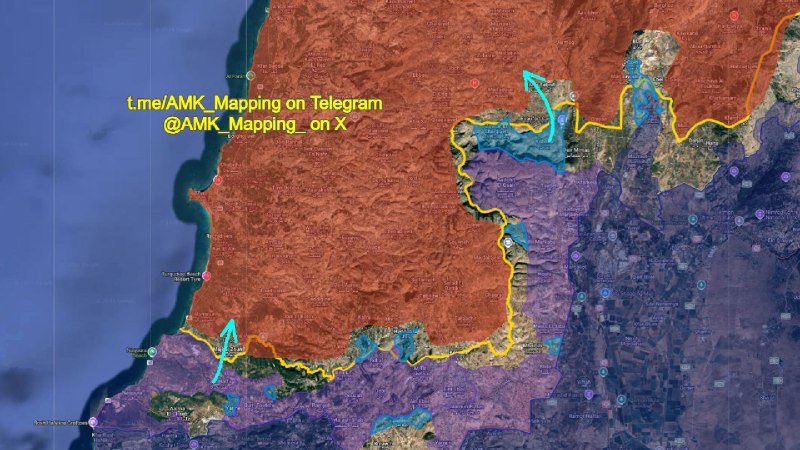
On 2 May 2026, Hezbollah published footage depicting two distinct military achievements: footage of an unmanned aerial vehicle — described as domestically manufactured — striking Israeli positions, and separate imagery showing the downing of an Israeli Hermes 450 reconnaissance drone over Nabatieh in southern Lebanon using a 358 surface-to-air missile. The simultaneous release, accompanied by a video titled "Proudly Made in Lebanon," amounts to a deliberate display of operational capability. Israel's military acknowledged on the same day that its forces had struck 120 Hezbollah targets across Lebanon over the preceding 48 hours — the most intense sustained bombardment in weeks. The juxtaposition of Israel's offensive strikes and Hezbollah's retaliatory footage raises a straightforward question: why are Israeli air defenses failing to intercept weapons that IDF intelligence presumably tracked from launch to impact?
The video release is not merely propaganda. Three separate Hezbollah media channels — the primary Arabic-language desk at Palestine Chronicle and the open-source intelligence aggregator IntelSlava — published footage on 2 May showing a surveillance drone operating over southern Lebanon before footage captured what Hezbollah described as the moment a surface-to-air system locked onto and struck an Israeli Hermes 450 UAV. The IDF has not disputed the loss of the aircraft. IDF spokesman officials confirmed to regional wire aggregators that 120 Hezbollah targets were hit over the weekend — 70 buildings and 50 infrastructure sites — suggesting Israel retains the initiative in kinetic terms. But kinetic dominance in a bombing campaign and air superiority over a contested border zone are separate propositions, and the Hermes 450 footage suggests the gap between them is widening.
Hezbollah's drone program has expanded significantly since the October 2023 escalation. Open-source analysts tracking the group's military output have documented a shift from reliance on Iranian-supplied systems toward indigenous manufacturing. The "Proudly Made in Lebanon" video, published on Telegram by Hezbollah-linked channels on 2 May, shows assembly lines and component fabrication consistent with a small-to-medium-scale UAV production facility. The weapons demonstrated — low-altitude surveillance platforms capable of penetrating air defense layers and payloads described as strike-capable — represent a qualitative upgrade from the rocket and missile barrages that defined earlier phases of the conflict. Israel's Iron Dome and David's Sling systems were designed primarily to intercept rockets and missiles travelling on predictable ballistic trajectories. Drones operate at lower altitudes, slower speeds, and with greater maneuvering flexibility, presenting intercept systems with a fundamentally different threat profile.
Hezbollah's ability to maintain a persistent surveillance and strike capability inside Israeli airspace has broader implications for the regional escalation calculus. An Israeli military that cannot reliably intercept low-flying drones is vulnerable to a form of attrition that does not trigger the large-scale retaliation cycles that rocket barrages provoke. The footage of the Hermes 450's destruction — broadcast widely on Arabic-language channels — carries a secondary signal: that Hezbollah possesses the intelligence and targeting data to locate, track, and engage high-value Israeli assets. The Hermes 450 is a reconnaissance platform; its loss means lost surveillance coverage over southern Lebanon at a time when Israeli ground forces are operating in close proximity to the border. For Hezbollah, the footage serves a dual function — demonstrating capability to domestic audiences and signaling to Israeli planners that the cost of operating surveillance drones over Lebanese territory is rising.
The structural logic of this exchange points toward a slow-motion normalization of drone warfare along the Lebanon-Israel border. Israel's response — 120 strikes over a single weekend — reflects a tactical preference for attrition over tactical innovation: more targets hit, more structures demolished, more infrastructure degraded. But the footage Hezbollah released on 2 May suggests that volume of strikes has not degraded the group's ability to manufacture and deploy new systems. The 358 surface-to-air missile used against the Hermes 450 is a system that open-source analysts have associated with Iranian supply chains; its presence in southern Lebanon indicates that despite years of targeted strikes and international sanctions pressure, the logistical pipeline between Tehran and Hezbollah remains operational. What remains uncertain — and the available sources do not resolve — is whether Hezbollah's current drone production capacity can sustain operations at the tempo implied by the footage, or whether the "Proudly Made in Lebanon" video represents a curated inventory rather than an indication of ongoing production capacity. Israeli military analysts will study the footage for weeks; the next operational exchange will provide the answer.
This article was filed from Beirut. Monexus used Hezbollah-linked Arabic-language Telegram channels and IDF spokesperson briefings as primary inputs; no Western wire service published a dedicated report on the Hermes 450 footage as of filing.
Wire provenance
This editorial synthesis draws on the following public wire/social posts:
- https://t.me/PalestineChronicle/89234
- https://t.me/PalestineChronicle/89236
- https://t.me/abualiexpress/4847
- https://t.me/IntelSlava/12789