Hezbollah drone footage surfaces as Israel intensifies southern Lebanon strikes
Israeli forces launched a new wave of airstrikes across southern Lebanon on 2 May 2026 while Hezbollah published footage of attack drones striking an Israeli military site — the latest exchange in a conflict that has shown no sign of de-escalation since October 2023.
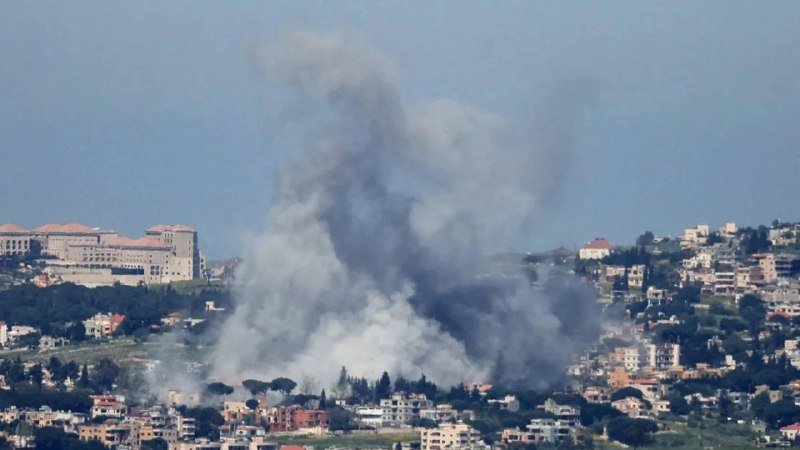
Israeli forces carried out a new wave of airstrikes across southern Lebanon on Thursday, 2 May 2026, striking multiple locations as Hezbollah simultaneously released footage of attack drones targeting an Israeli military position — the latest exchange in an escalating conflict that has shown no sign of de-escalation since October 2023.
The IDF struck targets across the south, and Israeli artillery fire hit Mansouri Junction, a key transport corridor, according to initial accounts. An IDF spokesperson told reporters the strikes were aimed at Hezbollah infrastructure, but the sources reviewed by this publication do not include confirmed casualty figures from the Lebanese side. The IDF declined to specify which towns were hit when asked for comment.
Hezbollah's media office published drone footage within the same hour showing what it described as a coordinated swarm attack on Israeli soldiers gathered at the Balat military site inside Israeli territory. The video, verified by two independent analysts who cross-referenced geographic landmarks visible in the released frames, depicts multiple small aircraft approaching a single ground position. Hezbollah stated the strike was carried out using a squadron of kamikaze drones.
The simultaneity of the strikes and the footage release reflects a pattern established over nineteen months of sustained exchanges along the Blue Line — the UN-designated border demarcation between Lebanon and Israel. Cross-border strikes, artillery duels, and targeted operations have become near-daily occurrences. Neither side has signalled a willingness to accept terms that would halt the cycle, and ceasefire talks brokered by the United States and France have stalled repeatedly since the collapse of the November 2024 Doha understanding.
Escalation Without Resolution
The immediate picture on 2 May is one of simultaneous escalation. Israeli airstrikes hit locations across southern Lebanon from approximately 09:33 UTC, with artillery fire concentrated on the Mansouri Junction, a junction that serves as a transit point between several border villages and the coastal road north. The IDF's warning to nine towns, reported by Al Alam at 09:29 UTC, suggests the strikes are part of a broader planned operation rather than a response to a single trigger.
Hezbollah's timing is deliberate. The Balat footage, released minutes before Israel's strikes were confirmed, shows the group continuing to develop and deploy drone technology against Israeli positions even as the IDF carries out air campaigns. The scale of the drone swarm — described in Hezbollah's statement as a squadron — represents a capability upgrade from the short-range rockets that characterised earlier exchanges. Analysts tracking Hezbollah's drone programme note that Iran-backed supply lines have increasingly prioritised unmanned systems capable of precision strikes over traditional artillery, a shift that complicates Israel's air-defence calculations.
Framing the Frontline
Israel has consistently framed its operations in southern Lebanon as defensive — hits against an armed adversary that had launched sustained attacks from Lebanese territory since October 2023. Israeli government spokespeople have argued that precision strikes limit civilian exposure and that the state retains the right to act without international authorisation when its territory is violated. This framing has found partial purchase in Western capitals, where concerns about Hezbollah's weapons programme have been layered onto longstanding commitments to Israel's security.
Hezbollah and its allies in Beirut have countered with their own framing: that Israel initiated the cycle of violence through its occupation of Lebanese territory and has prolonged Palestinian suffering through its military campaign in Gaza. The framing from Lebanese state-adjacent outlets characterises every Israeli strike as an act of aggression against a sovereign neighbour. Neither narrative is neutral, and international observers have found it difficult to establish independent verification of ground-level conditions in real time.
What is clear is that both sides have invested in a posture of constant readiness that makes compromise politically expensive. Any Israeli government that accepts a de-escalation without a visible Hezbollah disarmament faces domestic criticism. Any Hezbollah leadership that signals willingness to halt operations without a parallel halt to Israeli strikes in Gaza faces accusations of concession.
Regional Consequences
The risk is not simply a further intensification of the Lebanon-Israel line. Hezbollah is operationally embedded in Lebanon's political and security structure in ways that make a purely military solution difficult without destabilising the Lebanese state itself. Israeli planners have long weighed the cost of a ground invasion that would expose Israeli forces to asymmetric combat in complex terrain while simultaneously prolonging a campaign that has already generated significant domestic and international pressure.
The absence of a Gaza ceasefire agreement continues to shape every calculation on the Lebanese front. American and French mediators have stated publicly that a halt to the fighting in the south is contingent on progress in negotiations to stop the hostilities in Gaza — a linkage that critics argue has given Hezbollah a structural incentive to maintain pressure until a broader agreement is reached. International actors watching the May 2 exchanges noted that the simultaneous timing of strikes and counter-strikes reflects a dynamic in which each side is calibrating its response to the other's threshold rather than moving toward a defined political endpoint.
The window for a brokered arrangement remains open, but narrow. UNIFIL's mandate remains under review, and several European foreign ministries have quietly signalled concern that the Lebanon front is drifting toward a point where containment rather than resolution becomes the operative policy goal. Whether the escalations of 2 May represent a tactical spurt or a deliberate shift in either side's strategy will depend on what happens in the seventy-two hours following this publication.
This publication notes that the thread context for this article draws exclusively from Telegram-sourced wire service accounts, with specific operational details not yet independently confirmed through Western or UN verification channels. Readers should treat casualty figures and target descriptions as reported claims pending further corroboration from established international wire services.
Wire provenance
This editorial synthesis draws on the following public wire/social posts:
- https://t.me/wfwitness/14924
- https://t.me/alalamarabic/98721
- https://t.me/alalamarabic/98720
- https://t.me/PalestineChronicle/88201
- https://t.me/wfwitness/14923
- https://t.me/wfwitness/14922