Hezbollah's Drone Strike and the Information Battlefield
When an operation is announced simultaneously across three Telegram channels with identical timestamps, the message is as much about the messenger as the strike itself. What the May 1 drone attack on an Israeli military position reveals about how armed groups weaponise disclosure.
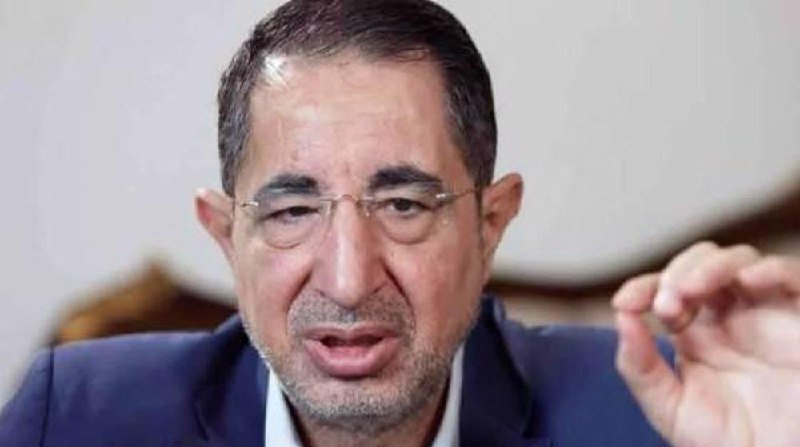
On Friday 1 May at 19:15 local time, Hezbollah announced it had struck a gathering of Israeli soldiers inside a house in the town of Al-Bayada in southern Lebanon using a dive drone. According to the group's own communiqués, a second strike targeted an Israeli military position at Al-Qantara in the same border area using missiles. Within minutes, Iranian state-adjacent Telegram channels and Arabic-language war correspondent networks distributed the announcements in near-identical form across multiple platforms simultaneously. No independent verification from Western or Israeli sources appears in the thread context at time of writing.
That synchrony is the story—not despite the operational detail but because of it.
The Choreography of Disclosure
Armed groups have always communicated selectively. What has changed is the tempo. Hezbollah's announcement of the Al-Bayada strike was not a retrospective report but a staged disclosure: packaged visuals, named time stamps, platform-native formatting, distributed within a compressed window. The effect is less battlefield communique than media product. Groups like Hezbollah and their regional counterparts have become adept at operating not merely as military organisations but as content operations with a kinetic arm.
The practical implication is straightforward: audiences in the Arab and Iranian-aligned world receive a fully-formed narrative before Western wire services can file independent reports. The strike is already framed, already visualised, already interpreted. By the time a reader in London or Washington encounters the incident, it arrives pre-packaged with its own editorial line.
Legitimate Operations and Their Framing
Israeli military positions in southern Lebanon sit opposite a border region where exchanges of fire have been ongoing since October 2023. The Israeli Defence Forces have conducted their own strikes in the area. Civilian populations on both sides of the frontier have borne consequences. These are first-order facts that do not require external validation—they are documented in UNIFIL reports, in statements from both governments, and in the accounts of displaced residents.
Hezbollah's strikes on military targets in a declared zone of hostilities are of a different character than attacks on civilian infrastructure, a distinction that matters for analysis but does not simplify it. The group operates within a political context—including unresolved questions about the group's weapons arsenal, Lebanese state sovereignty, and regional security architecture—that shapes what its operations mean and what responses they invite.
The information environment, however, does not treat these distinctions neutrally. Hezbollah-linked sources amplify strikes while minimising or omitting references to Israeli operations in the same corridor. That is not unusual behaviour for a party to a conflict; it is, however, worth naming plainly: the disclosure architecture is not designed to inform but to persuade.
What the Simultaneous Release Signals
Three Telegram channels distributed Hezbollah's operational claims within a narrow time window on 2 May 2026. Whether this reflects deliberate coordination or simply the incentive structure of a networked information environment—where channels covering the same beat race to post identical material—is not recoverable from the thread context alone. What is observable is the effect: the story achieved saturation within a specific audience ecosystem before any counter-narrative could form.
This is not propaganda in the pejorative sense, if by propaganda we mean simply false claims. The operational details—location, weapon type, time—may be accurate. The issue is not accuracy but selectivity and sequencing. A fully accurate account of an event can still be a managed account. The question for any consumer of such disclosures is not whether the facts are true but which facts are being offered, in what order, to produce which conclusion.
Stakes and Forward View
The tactical dimension is contained within a wider pattern. Hezbollah's demonstrated ability to deploy dive drones and precision-guided munitions against military positions is significant for anyone tracking the group's evolving capability set. That evolution has consequences for border security calculations in Israel, for UNIFIL's operational environment, and for the diplomatic efforts—currently stalled, per multiple wire reports over recent months—to negotiate a framework governing the cessation of hostilities across the Lebanon-Israel frontier.
The informational dimension carries its own stakes. As armed groups master the mechanics of disclosure—the curated image, the timestamped communique, the synchronized broadcast—the media environment in which conflicts are understood becomes harder to navigate for audiences without direct access to both sides' reporting. This does not require a grand conspiracy. It requires only that actors with an interest in shaping perception optimise their communications infrastructure accordingly. The evidence suggests they have.
The most durable accountability mechanism remains the tedious work of independent verification across multiple source ecosystems. For readers encountering a claim in one information environment, the relevant question is not whether the source believes itself accurate but whether the same event appears in reporting that operates under different editorial constraints. On that basis, the May 1 drone strike in Al-Bayada remains—as of this writing—an announced claim awaiting independent corroboration. The choreography around it, however, is already complete.
Hezbollah-linked Telegram channels distributed operational claims regarding strikes in southern Lebanon on 1–2 May 2026. Western wire services had not confirmed details at time of publication.
Wire provenance
This editorial synthesis draws on the following public wire/social posts:
- https://t.me/wfwitness
- https://t.me/JahanTasnim
- https://t.me/JahanTasnim