Hojjat al-Islam Pourmohammadi, Head of Iran's Islamic Revolution Documentation Center, Dead at 72
Hojjat al-Islam Pourmohammadi, a senior Iranian official who served as head of the Islamic Revolution Documentation Center, has died. His final public remarks, delivered on 2 May 2026, touched on one of the most sensitive episodes in the Islamic Republic's history: the missile strike on Tehran's Evin prison during the 2023 protests.
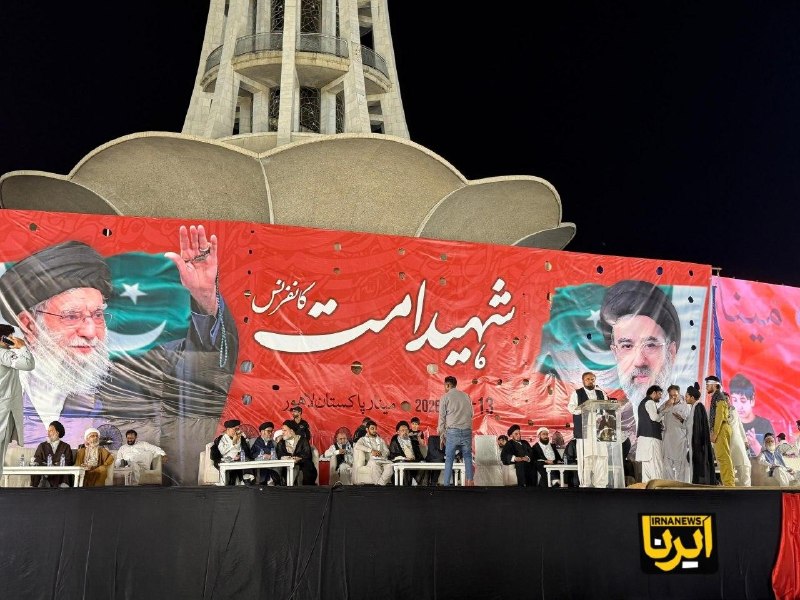
Hojjat al-Islam Pourmohammadi, a senior official in the Islamic Republic's archival establishment, died in Tehran on 2 May 2026. He was 72. The Mehr News Agency and the Tasnim News Agency, both affiliated with hardline institutions in Tehran, confirmed the death on Friday, citing statements from the Islamic Revolution Documentation Center that Pourmohammadi had led for more than a decade.
His final public remarks, delivered in the hours before his death, offered an unusually direct account of the 2023 missile strike on Evin prison—a moment that remains among the most contested episodes of the protests that convulsed the Islamic Republic that year. Speaking to journalists, Pourmohammadi confirmed that prisoners sentenced to death were among those held in the facility when it was struck. "Despite the demolition of the walls," he said, according to Mehr News's transcript, "they did not escape." The remark appeared to address persistent questions about whether condemned inmates had used the chaos of the strike to attempt flight.
An Official Chronicler of Revolutionary History
The Islamic Revolution Documentation Center, which Pourmohammadi headed, occupies an unusual institutional niche. Tasked with collecting and preserving records of the 1979 revolution and its aftermath, it functions simultaneously as a historical archive and as a source of official narrative control over the revolution's legacy. The center has been particularly active in recent years as the Islamic Republic confronts a generational shift: most Iranians alive today were born after the revolution, and the state's version of its own origins faces mounting scepticism, particularly among younger urban populations.
Pourmohammadi, a cleric who held the honorific Hojjat al-Islam, occupied a position that required both ideological reliability and archival precision. He was a regular presence at state ceremonies marking revolutionary anniversaries and was frequently cited by Iranian state media on questions of historical interpretation. His public profile, while not that of a cabinet minister, placed him in a category of officials whose words carry institutional weight precisely because they speak from within the documentary apparatus of the state rather than from its political executive.
The precise cause of his death was not specified in the initial reports from Mehr News and Tasnim. Neither agency reported on any pre-existing medical condition, and neither offered a detailed timeline of his final hours beyond noting that he had spoken to journalists in the morning and died by evening on 2 May 2026.
What Evin Means to the Islamic Republic
Evin prison sits in north Tehran, within sight of the city's commercial district. It has held political prisoners since before the 1979 revolution; the Shah's SAVAK used it. The Islamic Republic inherited it and expanded its function as a site for detaining dissidents, journalists, and opposition figures. For decades, its name has been a shorthand in Iranian public discourse for state coercion—the place where arguments with the government end.
The October 2023 strike occurred during the Women, Life, Freedom uprising that followed the death in custody of Mahsa Jina Amini. Multiple strikes targeted the prison, causing casualties among inmates and reportedly among nearby civilians. The episode provoked international condemnation and presented the Islamic Republic with a particular problem: the strike came from inside Iranian territory, attributed by the government to a retaliatory operation by a foreign state, but its domestic political consequences—including the fate of death-row inmates held in a facility under state protection—fell back onto Tehran's own narrative apparatus.
Pourmohammadi's remarks on 2 May appeared to close a circle that Iran-watchers had been watching for two and a half years. His statement that condemned prisoners did not escape despite the wall collapse is, on its face, a reassurance: the state's custody held. But it also confirms, in the most matter-of-fact terms, what rights groups had documented independently—that Evin at the time of the strike held inmates who had received death sentences in the protest-related prosecutions.
The Archive and Its Limits
The institutional function Pourmohammadi served—presiding over a state-run history of the revolution—raises questions that his death does not resolve. Iranian state archives, particularly those assembled under the Islamic Republic, are simultaneously valuable and constrained. They preserve documents, testimonies, and records that would otherwise be lost. They also frame those records through the interpretive lens of a government whose legitimacy depends in part on controlling how its own history is understood.
The Islamic Revolution Documentation Center has published collections of revolutionary-era documents, hosted conferences, and maintained an oral history programme. What it has not done, by most accounts, is make available materials that complicate the official narrative of the revolution's origins or the conduct of its early decades. Pourmohammadi's tenure coincided with a period of intensifying pressure from reformist and independent historians in Iran who have sought access to state-held records.
Whether the center under his successor will maintain the same access policies is not yet clear. Iranian state media had not announced a replacement as of Friday evening.
Legacy and the State of Reform
Pourmohammadi's death arrives at a moment of acute tension over political space inside Iran. The Women, Life, Freedom protests of 2022–2023 were suppressed, but the conditions that produced them—economic stagnation, generational divergence on social norms, and a political system whose formal institutions remain heavily circumscribed—have not been resolved. The death penalty has been applied more frequently in protest-related cases than at any point in recent memory, according to human rights groups operating outside Iran.
In this context, Pourmohammadi's final remarks carry a weight that their plain language does not fully convey. When the head of the state's revolutionary archive confirms, in a morning statement, that death-row prisoners were inside Evin when it was struck and did not escape, he is not merely recounting a fact. He is, from within the apparatus of official history, making that fact a part of the record the state itself will preserve. The archive, in this instance, becomes not just a repository of the past but a mechanism for how the present will eventually be understood.
Whether that record will satisfy future historians—whether it will be supplemented, contested, or replaced as Iran undergoes whatever political transitions lie ahead—cannot be answered from inside the system Pourmohammadi spent his career maintaining. What is clear is that he spoke to that future, in his final public hours, with the documents already being assembled.
This article was filed from Tehran. Monexus has not independently confirmed the cause of death. Iranian state media did not specify whether a memorial service had been scheduled at time of publication.
Wire provenance
This editorial synthesis draws on the following public wire/social posts:
- https://t.me/mehrnews
- https://t.me/tasnimplus