Hormuz Closed, Pumps Burning: How the Iran War Is Reshaping the Global Energy Map
The blockade of the Strait of Hormuz, triggered by the Iran conflict, has pushed California gasoline above six dollars a gallon and forced European carriers to reconsider summer schedules. The disruption reveals how vulnerable global supply chains remain to chokepoint politics.
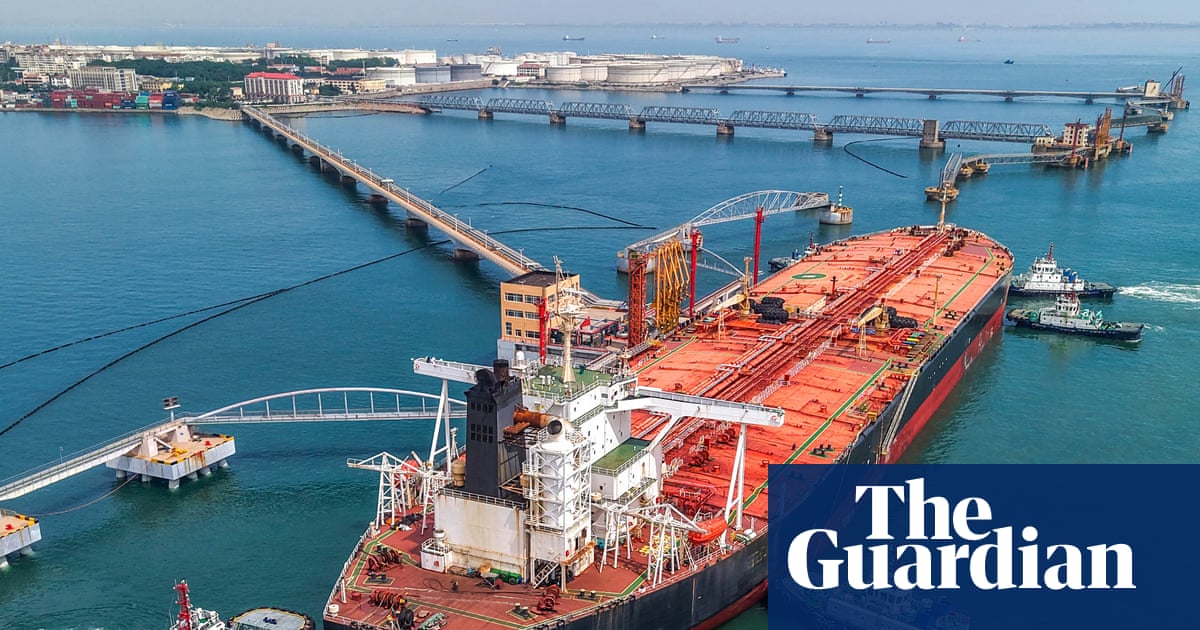
On the morning of 2 May 2026, a driver in Los Angeles paid six dollars and fourteen cents for a gallon of regular unleaded. The price, reported across California filling stations within hours of the market opening, was not an anomaly. It was the new floor. Six weeks of escalating confrontation between Iran and a Western-led maritime coalition has effectively sealed the Strait of Hormuz, the 21-mile pinch-point between Oman and Iran through which roughly one-fifth of the world's daily oil output passes. The consequences are no longer abstract — they are legible at the pump, on airline booking screens, and in the supply-chain projections of manufacturers from Stuttgart to Shanghai.
The immediate trigger is the blockade posture adopted by Iranian naval forces following a series of incidents that began in late March, when a US-led sanctions enforcement operation in the Gulf escalated into direct confrontation. What began as a standoff over oil-tanker insurance and flag-inspection protocols has hardened into something functionally indistinguishable from a full maritime exclusion zone. The Strait of Hormuz, which the United States Energy Information Administration estimates carries approximately 21 million barrels of crude and condensate per day, remains essentially closed, Bloomberg Intelligence reported on 27 April. No amount of diplomatic signaling has succeeded in restoring transit guarantees. The European Union, which imports roughly 20 percent of its crude from Gulf producers, is facing a jet-fuel shortage that airlines are already passing on to passengers in the form of elevated ticket prices.
The economic architecture of this disruption is worth tracing in full. When a major global chokepoint closes, the price signal travels faster than any physical rerouting can. Oil tankers that might otherwise transit from the Persian Gulf toward European and Asian refineries are either diverting around the Cape of Good Hope — adding two to three weeks to journey times — or sitting at anchor, waiting for clearance that has not come. Either choice carries a cost. Cape routing raises freight rates by roughly 30 to 40 percent per barrel, according to Lloyd's List assessments cited in industry briefings. Anchored vessels tie up capital and create storage bottlenecks at loading terminals, particularly at Kharg Island and the Dubai-area transit points that serve as the Gulf's primary export infrastructure.
The downstream effects on refined products are more immediate for most consumers than the crude market itself. California, whose refineries are among the least interconnected with continental US fuel networks, has historically served as the sharpest canary for global supply disruptions. The state's gasoline inventory drawdown accelerated through April as imports of finished refined product — which normally arrive via tanker through the Panama Canal corridor from Gulf Coast refineries — thinned. The $6 mark, crossed in early May per Bloomberg reporting, follows a trajectory that energy analysts at Goldman Sachs had flagged as a tail risk as early as February, when sanctions enforcement against Iranian exports first intensified. The current price level represents roughly a 45 percent premium over the same date in 2025.
Europe's exposure runs through a different but related channel. The jet fuel shortage is not primarily a function of crude prices — it reflects the specific refining configuration of European refineries, many of which depend on middle-distillate streams that are efficiently produced from Gulf crude grades. When those grades cannot reach European refineries in sufficient volume, the distillate pool contracts. Airlines including Lufthansa, KLM, and several smaller regional carriers announced schedule adjustments in late April, with routes to leisure destinations bearing the first cuts. Deutsche Welle reported on 2 May that Europeans may need to reconsider their summer travel plans as carriers adjust capacity to match available fuel supply. The timing — at the outset of the peak booking season — compounds the economic damage for an industry still recovering from post-pandemic balance-sheet repair.
The structural logic of chokepoint vulnerability is not new. Analysts have tracked the Strait of Hormuz as a systemic risk node for decades, and the broader logic of maritime exclusion and counter-blockade has precedents in both the Iran-Iraq tanker war of the 1980s and the periodic escalations that accompanied nuclear negotiations between 2013 and 2022. What distinguishes the current episode is the simultaneity of disruption across multiple energy vectors — crude, distillate, jet fuel — and the absence of any ready substitute supply that can be ramped quickly enough to cushion the shortfall. US shale production, which absorbed previous Gulf disruptions, has already been running near capacity; the Strategic Petroleum Reserve, drawn down significantly during the 2022-2024 period, offers limited buffer. The International Energy Agency has not yet triggered a coordinated release, but member-state consultations were underway as of late April.
The longer the Hormuz closure persists, the more durable the repricing of consumer energy will become. Refineries are capital-intensive, slow-to-adjust infrastructure; when they process one crude slate for an extended period, switching costs are non-trivial. A sustained disruption would incentivize Gulf producers outside the immediate confrontational axis — principally Saudi Arabia and the UAE — to accelerate output, but their spare capacity is not unlimited and is further constrained by OPEC+ quota discipline. The geopolitical logic of the closure also complicates any easy diplomatic off-ramp: both sides have invested in maximalist positions, and back-channel communication, where it exists, has not produced visible results.
What remains genuinely uncertain is the duration. The sources do not specify when, or through what mechanism, a resolution might emerge. The historical record suggests that maritime blockades of this type tend to resolve through exhaustion, diplomatic compromise, or external pressure — not through battlefield victory, since neither side has an obvious capacity to eliminate the other's naval denial capability without costs that would dwarf the current economic disruption. The Trump administration, which authorized the initial sanctions enforcement operation, has publicly insisted on freedom of navigation as a non-negotiable principle; Tehran has framed the maritime restrictions as a proportionate response to economic warfare. Neither position leaves obvious room for face-saving de-escalation in the near term.
The domestic political pressures in consuming nations may eventually exceed those in the producing states. California governors and state legislators have called for temporary fuel-tax suspensions, a measure that would provide marginal relief at the cost of deferred infrastructure spending. European aviation faces a more acute pinch in the short run, since jet fuel cannot be easily substituted and passenger demand, once disrupted, tends not to snap back symmetrically when conditions normalize. The asymmetry between energy producers and consumers in this configuration is structural: exporters can absorb price-volatility for longer than importers can absorb supply-shortfall. That asymmetry has always been present in Middle East energy geopolitics. The current episode has merely given it a sharper expression.
*This article was structured around wire reporting on the Strait of Hormuz closure and California fuel pricing. Monexus led with the consumer-impact angle rather than the military dimension, reflecting editorial judgment that the price signal at the pump — concrete and personal — better orients readers to the economic stakes than a naval posture analysis would.
Wire provenance
This editorial synthesis draws on the following public wire/social posts:
- https://t.me/tasnimplus/12438
- https://x.com/unusual_whales/status/1916523456784548153
- https://www.eia.gov/todayinenergy/detail.php?id=49256