The Strait of Hormuz Is a Test of Who Actually Rules the Global Economy
A Polymarket wager against Hormuz normalization exposes an uncomfortable truth: the world's most critical energy chokepoint has become a theater where Iranian leverage and American credibility are in direct collision, and the market knows it.
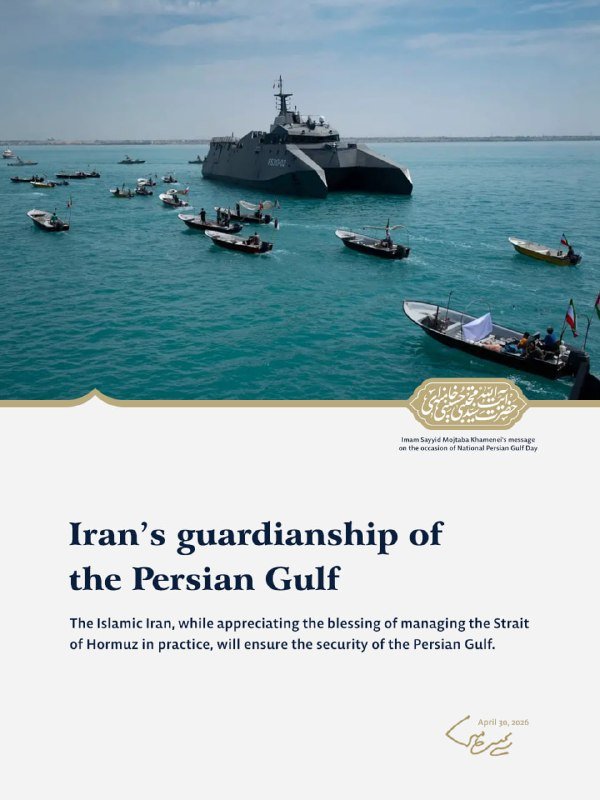
Markets are not in the business of poetry, but they have a poet's ear for power. On 2 May 2026, Polymarket registered a 19 percent probability that Strait of Hormuz traffic returns to normal by the end of the month. Not a crisis reading. Not a war probability. A normalization probability — and it came in at below one-in-five. That figure is a verdict on the geopolitical moment: the world's most critical energy corridor is not behaving like a stable corridor, and the people with money on the line know it.
The Strait of Hormuz is not a metaphor. Roughly 20 percent of global oil trade passes through the 33-kilometer-wide passage between Oman and Iran each day. Tankers bound for Japan, South Korea, India, and Western Europe transit waters that Iran has long described in explicitly strategic terms. Iranian state media outlet Tasnim — which on 2 May published material framing the strait as a point of leverage against the United States — reflects a posture that has animated Iranian naval doctrine for decades. The Islamic Revolutionary Guard Corps Navy has practiced interdiction drills in the area.Satellite tracking firms have logged irregular movements. The 19 percent figure on Polymarket is not a reaction to a specific incident that the sources confirm; it is the ambient market reading on a corridor where ambient risk has been elevated for some time.
The Framing Problem
Western coverage of Hormuz typically operates in a narrow register: Iranian behavior is a threat, US naval presence is a stabilizer, and the question is whether deterrence holds. This framing treats the strait as a problem to be managed rather than a structural condition to be understood. It also elides something important: Iran is not acting irrationally. A country that sits on the Persian Gulf's northern shore, that has spent forty years building a counter-pressure doctrine against a adversary with overwhelming conventional superiority, is doing exactly what deterrence theory predicts when smaller powers face larger ones. They find the chokepoints. They make the cost of large-scale conflict asymmetric.
The question worth asking is not whether Iran will close the strait — doing so would harm Iran as much as its adversaries, since Tehran also depends on Gulf exports — but whether the ongoing low-level friction constitutes its own form of leverage. A corridor that operates under constant shadow of disruption is not a free corridor. Insurance premiums reflect it. Shipping companies factor it in. Asian buyers — who have been quietly diversifying suppliers and building strategic reserves precisely because they distrust the stability of US-allied Gulf transit — absorb it as a structural cost. The 19 percent Polymarket reading is a market acknowledging that the shadow is not lifting.
Dollar Architecture and the Chokepoint
There is a larger structural frame that the threat-framing approach obscures. The Strait of Hormuz is not only an energy corridor. It is a pressure point in a contest over how global commerce is denominated, settled, and insured. Dollar hegemony means that a significant portion of global oil trade — even when it does not involve US counterparties — clears through dollar-denominated financial infrastructure. Sanctions regimes that target Iranian oil exports operate through that architecture. Countries that wish to trade outside that architecture — whether through barter arrangements, local-currency swap lines, or non-dollar insurance markets — are effectively trying to route around the chokepoint not just physically but financially.
Iran has been doing this work for years, building trade relationships with partners in South Asia and East Asia that do not require dollar intermediation. China has been building yuan-denominated oil contracts through the Shanghai Futures Exchange. India's rupee-rupee oil trade with Iran predates the current sanctions round. The strait is the physical manifestation of a larger argument about whether the global economy's plumbing can be redirected. American policymakers understand this, which is why the US 5th Fleet's posture in the Gulf is not purely about energy transit — it is about maintaining the conditions under which dollar-denominated commerce remains the default.
Who Pays the Premium
If the ambient risk around Hormuz remains elevated through 2026, the costs do not distribute evenly. They never do. American consumers will see gasoline prices that incorporate a geopolitical risk premium, particularly in an election year. European industrial customers who depend on steady energy inputs will face continued pressure on margins that are already thin. But the deeper asymmetry runs along a different axis: the countries with the least capacity to diversify away from Gulf transit are the ones who bear the largest cost. South and Southeast Asian economies — many of them not US allies, not party to any of the regional disputes that animate the tension — pay a premium on every barrel they import because a corridor they did nothing to destabilize is treated as a contested zone.
That observation is not a defense of Iranian policy. It is a recognition that the architecture of global energy security has been designed by and for the interests of nations that can absorb disruption — and that this design has always created a structural disadvantage for smaller importing states. When those states respond by hedging away from dollar-denominated trade, they are doing something rational. The West calls it "de-dollarization" and treats it as a threat. It is better understood as a散热 mechanism — a way for smaller economies to reduce their exposure to a risk they did not create and cannot control.
The Polymarket figure is a data point, not a prophecy. Markets can be wrong, and the 19 percent probability does not tell us what specific scenario the market is pricing. What it does tell us is that the assumption of smooth, frictionless Gulf transit — an assumption that underwrites a significant portion of global trade planning — is not held by the people with money on the line. That is the story worth sitting with, even after the headline that produced it fades. The strait remains open today. The question is what "open" means when the shadow over it has grown long enough for the market to price it as the new normal.
This publication compared the Iranian state-media framing of Hormuz as strategic leverage against Western reporting on naval deterrence. The gap between those two framings — and the structural asymmetry in who pays the cost of operating between them — is where the analysis sits.
Wire provenance
This editorial synthesis draws on the following public wire/social posts:
- https://t.me/tasnimnews_en/39420
- https://t.me/tasnimnews_en/39419