The IDF's Drone Concession and What It Tells Us About the New Battlefield
An Israeli military admission that there is no quick fix for Hezbollah's drone threat reveals something larger than a tactical problem — it exposes a structural shift in how non-state actors are reshaping the equations of conventional deterrence.
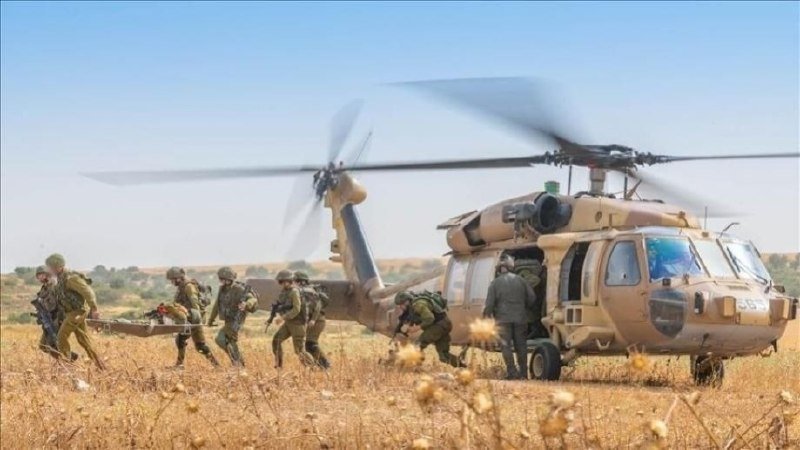
On 2 May 2026, Hebrew-language outlets including the Jerusalem Post carried a notably candid assessment from within the Israeli military establishment: there is no "magic solution" to stop Hezbollah's drone strikes. The admission did not arrive via a diplomatic back-channel or a background briefing to analysts. It surfaced in the Hebrew press, attributed to the army's own operational assessments, and it has not been retracted.
That matters. Public concessions of this kind are rare in a security apparatus built on the credible projection of overwhelming capability. The phrasing is also significant — not "no solution yet," but "no magic solution," which reads as an admission of fundamental rather than incremental limits. This is not a problem that the next procurement cycle or the next Iron Dome battery will fix.
Hezbollah has spent years methodically building an uncrewed aerial capability that has moved from nuisance to serious operational threat. The drones Hezbollah flies are not exclusively the high-end models supplied by Iran — they include adapted commercial platforms carrying payloads that can conduct reconnaissance, deliver munitions, and stress test air defence grids simultaneously. The combination of volume, diversity, and low unit cost means that for every drone shot down, several more are already in the air. The mathematics have turned against the defender.
What the IDF's own admission exposes is a structural mismatch between a conventional military apparatus built around air superiority and an adversary that has learned to exploit the seams in that architecture. Israel's air force and missile defence layers were designed with state-on-state scenarios in mind — high-value targets, predictable flight paths, limited salvo sizes. Hezbollah's drone operations operate differently: low altitude, commercial off-the-shelf components, swarm-style saturation tactics that are hard to distinguish from civilian aviation traffic in real time. Electronic warfare programmes, counter-UAV squadrons, and Iron Dome interceptors have each been tested against this profile and each has run into the same ceiling.
There is a deeper irony in the source problem. The drone capability that most challenges Israeli air defence did not arrive as a weapons transfer in a shipping container — it was built incrementally from commercially available components, open-source navigation software, and Iranian technical support layered on top of a supply chain that is difficult to police at the component level. This is the commercial-drone normalisation problem made concrete: when the same technology that delivers packages in the United States can be converted into a precision strike platform in southern Lebanon, traditional arms-control frameworks built around export-licensing finished systems become largely irrelevant. The defence industrial base, which Israel has cultivated as a strategic asset for decades, was not designed to counter this.
The political fallout from the admission is still unfolding. Israeli leadership has historically avoided public acknowledgements of capability gaps, preferring to frame setbacks as temporary or to characterise threats as contained. An open acknowledgment that the drone problem has no quick fix changes the public political calculus — it puts pressure on two fronts simultaneously. Internally, it invites scrutiny of procurement decisions and force planning. Externally, it potentially signals to Hezbollah that the clock is not running in Israel's favour, which could alter calculation on both sides as the ceasefire arrangement governing southern Lebanon continues to erode.
That erosion is where the stakes crystallise most sharply. The current arrangement along the Lebanon-Israel boundary was never stable — it was a pause, not a resolution. As Hezbollah's drone capability has matured, the asymmetry along that border has shifted in a direction that the ceasefire terms were not designed to address. If Israel cannot neutralise drone threats from a position of conventional superiority, the deterrence logic that keeps the arrangement functional loses its foundation. The IDF's own admission, published in Hebrew and circulated through military-affiliated Telegram channels on 2 May, is not a tactical signal. It is a structural one.
The question is not whether Israel can find a better counter-drone system — it will try, and eventually it will field something more effective. The question is whether the strategic window in which the absence of that solution becomes exploitable will close before the capability arrives. Hezbollah's leadership is watching. So, presumably, are the actors in Tehran who have invested significantly in the programme.
This publication compared its own framing of the IDF admission against wire reporting from the Jerusalem Post and regional Telegram channels. Where those sources converged was on the bluntness of the "no magic solution" language — a choice of phrase that would not survive internal communications in a more guarded security apparatus. The structural reading — that this is a symptom of a deeper capability gap rather than a discrete tactical failure — reflects this publication's own assessment of the evidence, not a consensus position in the available sources.
Wire provenance
This editorial synthesis draws on the following public wire/social posts:
- https://t.me/JahanTasnim/48291
- https://t.me/alalamarabic/38412