Iran Submits 14-Point Peace Proposal to Pakistan, Proposing Hormuz Management Deal
Iran has submitted a 14-point counter-proposal to a US peace framework via Pakistani intermediaries, according to reporting from the Fars News Agency and Tasnim News agency on 2 May 2026. The proposal, described by Tasnim sources as a comprehensive response to a nine-point US framework, covers a ceasefire across all regional fronts, a new mechanism for managing the Strait of Hormuz — the world's most critical oil transit chokepoint — and a set of economic demands that would unwind the sanctions architecture built over the past eight years.
Tasnim, the semi-official Iranian news agency whose reporting is consistently cited by regional governments and international analysts tracking Tehran's positions, outlined two tranches of the proposal on the same evening. The first addresses the Hormuz mechanism: a structured arrangement for commercial shipping through the strait, whose passage has been contested as part of the broader escalation between Iran and US-aligned Gulf states. The second covers the economic demands — lifting the naval blockade that has constrained Iranian oil exports, releasing approximately $100 billion in frozen central bank assets, and paying compensation for sanctions-period economic damage. A simultaneous report from Al Alam Arabic cited additional sourcing noting the proposal covers Lebanon and an end to operations across all regional fronts simultaneously.
The timing matters. Fars reported that the 14-point document was prepared specifically in reaction to a nine-point US proposal delivered through the same Pakistani channel, suggesting both sides have moved beyond preliminary signal to the harder work of drafting actual terms. The Pakistani mediation line — which has been a low-profile but persistent back-channel throughout the escalation — suggests a degree of bilateral seriousness that public posturing from either side has not conveyed.
The Hormuz dimension
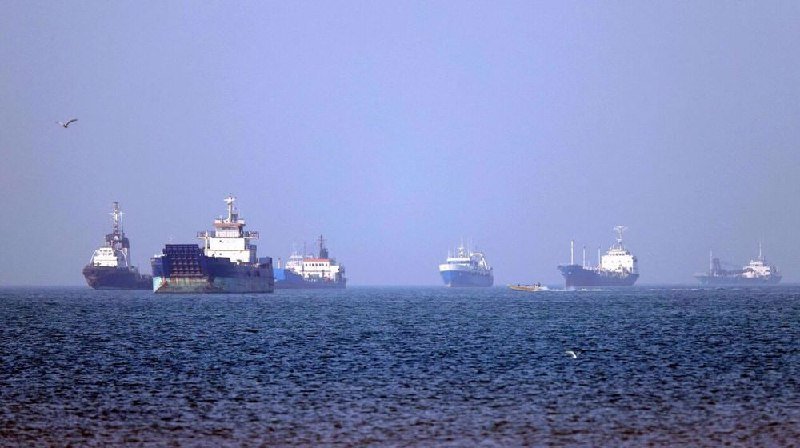
The Strait of Hormuz processes roughly 20 percent of global oil trade and 30 percent of liquefied natural gas flows. It is not a metaphor. Its functional closure — or even credible threat of closure — ripples through energy futures, shipping insurance rates, and the fiscal calculations of every major economy. The Atlantic Journal, in reporting carried via Telegram on 2 May, described the Hormuz pressure as producing "a tsunami in the world economy" and stated that "the consequences of the Iran war have just begun."
An Iranian army spokesman, quoted by Tasnim Plus on the same day, offered a parallel signal to the diplomatic track: "The Strait of Hormuz is narrowing and no ship, friend or enemy, can pass through it without our permission." The phrasing is a reminder that Hormuz is simultaneously a negotiating card and a military fact. Tehran controls the eastern bank. The strait's narrowest point lies in Iranian territorial waters. Whatever the diplomats agree on, the military maintains the underlying capacity — and increasingly, the stated intention — to use it.
The proposal's framing of a "new mechanism" for Hormuz management suggests Tehran wants to codify the strait's status in any final agreement. This is not simply a bargaining chip; it reflects a structural interest in converting the current ambiguous contest into a managed arrangement with recognized rules and verification. Whether that satisfies the US and its Gulf partners depends on how the mechanism is defined — a question the sources reviewed do not yet answer.
The compensation and sanctions architecture
The economic demands are substantial and designed to address the central grievance of Tehran's negotiating posture: that maximum-pressure sanctions caused structural damage that cannot be repaired by simply removing restrictions on oil exports. Frozen assets at Iran's central bank, accumulated before the 2018 withdrawal from the JCPOA, represent a specific figure Tehran has referenced in previous negotiating rounds — though the sources reviewed do not confirm the current figure being demanded. Compensation claims are harder to quantify and have historically been a sticking point in US-Iran talks, because Washington treats them as a political concession rather than a legal obligation.
The naval blockade demand targets a specific mechanism: the US-enforced cap on Iranian oil sales that has constrained government revenue and forced Tehran into creative workarounds — sanctions evasion through third-country intermediaries, ship-to-ship transfers, and dark-fleet operations. Lifting that cap would restore a significant portion of oil revenue without requiring a broader sanctions unwind. Whether the US is willing to decouple the oil cap from the broader sanctions framework — effectively giving Tehran a partial economic reprieve in exchange for Hormuz stability — is the undisclosed question at the centre of the current exchange.
The geopolitical context
Iran's proposal arrives against a backdrop of sustained regional pressure. Eight years of maximum-pressure sanctions, the assassination of Quds Force commander Qasem Soleimani, and the sustained destruction of Iranian-aligned infrastructure in Syria and Iraq have been accompanied by a simultaneous US commitment to negotiating a replacement for the 2015 nuclear deal — a process that stalled repeatedly and produced no formal agreement. The current escalation, which the Atlantic Journal frames as an active "Iran war" with already-manifesting global consequences, is the context in which Tehran is now presenting terms.
Fars's reporting that the 14-point proposal was prepared specifically in reaction to the US nine-point framework suggests Washington's formulation contained enough that Tehran felt a substantive response was warranted. The Pakistani channel, maintained quietly through the most recent period of bilateral hostility, appears to have preserved enough continuity for both sides to transmit documents rather than simply statements. That is a meaningful change from the posture of eighteen months ago, when direct communication channels were severed and messages travelled through four or five intermediaries.
The gap between a negotiating text and a signed agreement runs through implementation details, verification mechanisms, and the willingness of multiple parties to accept losses they cannot recover. The sources reviewed contain no information about the specific US response, the disposition of the nuclear question within the framework, or the posture of Israel and Gulf states who have equities in any Hormuz arrangement. For now, the proposal represents the most substantive diplomatic opening in recent memory. The world awaits Washington's response.
This publication tracked Iranian state-aligned reporting across Tasnim, Fars, and Al Alam alongside the Atlantic Journal's economic impact analysis. The sources do not include direct US administration comment, which — if and when it arrives — will be necessary to assess whether Washington is prepared to accept the asset解冻 and compensation elements that Tehran has consistently framed as preconditions rather than incentives.
Wire provenance
This editorial synthesis draws on the following public wire/social posts:
- https://t.me/alalamarabic
- https://t.me/tasnimplus
- https://t.me/tasnimplus
- https://t.me/tasnimplus
- https://t.me/wfwitness