Iran's 14-point road map and the gap in Western framing
Tehran's transmission of a 14-item framework through a Pakistani back-channel on May 2 deserves scrutiny on its own terms — not just through the lens of threat assessment that typically greets Iranian overtures.
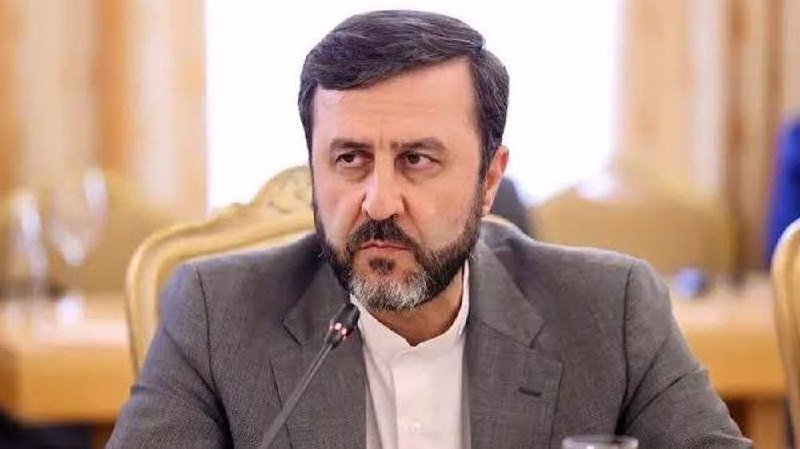
On May 2, 2026, Iranian state media reported that Tehran had delivered a 14-item response to an unnamed party via a Pakistani intermediary — a document described as a "road map" to end what Iran terms "the imposed war." The transmission, confirmed by sources identified as belonging to Iran's diplomatic apparatus for the first time in a formal back-channel exchange, comes after weeks of regional escalation. The question is not whether the document exists. It does — reported by multiple Iranian outlets simultaneously, with institutional framing that signals internal consensus. The question is how it will be covered.
Western wire services will publish the story. They will frame it around the familiar question: is this genuine diplomacy or tactical delay? That question is not unreasonable on its face. But it is asked with a predictability that reveals its own bias. When a Western government transmits a proposal, the framing leads with the proposal. When an Iranian government does the same, the framing leads with the doubt. That asymmetry is not journalism. It is inherited posture dressed as editorial judgment.
The language Tehran chose
The phrase "imposed war" is doing significant work in the Iranian framing, and it deserves unpacking rather than dismissal. Tehran is not simply describing a conflict — it is placing responsibility for the conflict's existence on external actors. This is a political position, not a neutral fact. But it is also a negotiating position: by framing the war as imposed, Iran positions itself as the party responding to pressure rather than the party initiating it. That framing shapes the subsequent 13 items. A party that did not start a war has different obligations in ending one than a party that did. Tehran knows this. The document's structure is not accidental.
The sources reporting this item describe it as a road map — a phrase with specific diplomatic weight. Road maps imply phases, benchmarks, and off-ramps. Iran is not presenting a take-it-or-leave-it ultimatum. It is presenting a sequenced framework. Whether that sequencing is serious or performative is a separate question from whether it deserves the label "road map." The Western framing often collapses those two questions into one, using the uncertainty about intent to deny the substance of the offer.
Why the Pakistani channel matters
The choice of a Pakistani intermediary is notable in ways that are rarely explored in Western coverage. Pakistan has maintained a complex, often contradictory relationship with both Tehran and Washington over the past decade — hosting US intelligence operations, accommodating Iranian diplomatic interests, and managing its own internal pressures from Sunni militancy and economic instability simultaneously. For Iran to trust a Pakistani channel with a 14-item response to what Tehran frames as an existential conflict suggests either significant Pakistani diplomatic investment or a calculation that a credible intermediary is worth the complexity.
Neither possibility is simple. Pakistan's engagement here is not neutral — but it may be genuinely constructive in the narrow sense that it provides a place for negotiations to happen without direct face-to-face contact between parties with no formal diplomatic relations. That function has value. It is not the same as endorsement of Iran's terms. But it is also not nothing, and the coverage that treats it as nothing is performing a kind of diplomatic defeatism that serves no one except the maximalist factions on all sides.
What the silence around verification conceals
A structural feature of how this story will be reported is worth naming directly: the verification gap. Western outlets cannot independently confirm the contents of a back-channel transmission delivered through a third party. Iranian state media can report it — and did, on May 2 — but those reports come from the party whose position they describe. The standard practice in this situation is to note the Iranian claim and seek response from the other parties. That is appropriate. But it is not the same as treating the Iranian claim as presumptively unreliable. The way the verification problem is deployed matters. When it is used to frame Iranian diplomatic initiatives as suspect by default, it functions as a filter — one that does not apply symmetrically to other states' diplomatic proposals.
The sources reporting this story — including Fars Agency, Iran's semi-official news service — describe the document as containing "broad lines" Tehran sees as a path to ending the conflict. They do not publish the full text. They do not claim to. What they claim is that the document exists and that it was transmitted. Those claims, from multiple Iranian outlets on the same day, with institutional framing, are not trivial. They are the primary source material. To dismiss them as propaganda is itself a framing choice — one that says more about the reader than the source.
Stakes
If there is a genuine diplomatic opening here — and the evidence, while not conclusive, is more substantial than the reflexive framing suggests — the implications extend well beyond the Iran-US relationship. A managed de-escalation would alter the regional architecture that has constrained Chinese energy policy, complicated Pakistani economic planning, and given Russia's influence in the Gulf a utility it has not fully exploited. It would also, not incidentally, reduce the pressure on global oil markets that has destabilised governments from Nairobi to Buenos Aires. The actors who benefit most from continued maximum-pressure may not be the ones most exposed to the consequences of sustained conflict.
That does not mean Iran is right. It does not mean the 14-item road map is serious. It means the question of whether it is serious deserves to be asked with something approaching the same seriousness that would be applied to a proposal transmitted by an ally. Right now, that standard is not being met. The gap between how this story is treated and how it would be treated if the roles were reversed is not a matter of editorial nuance — it is a structural distortion in how certain states' diplomatic agency is assessed. That distortion has consequences. It makes diplomatic off-ramps harder to find. And it makes the parties who most benefit from stalemate look more reasonable by comparison.
That comparison is not a compliment to anyone.
Wire provenance
This editorial synthesis draws on the following public wire/social posts:
- https://t.me/alalamarabic/78942
- https://t.me/alalamarabic/78941
- https://t.me/alalamarabic/78940