Iran Condemns Damascus Shrine Bombing, Demands Syrian Government Accountability
Iran's Foreign Ministry has issued a sharp condemnation of a car bomb attack that killed the Friday preacher of the Hazrat Zainab shrine in Damascus, holding the Syrian transitional government responsible for security and demanding the perpetrators be brought to justice.
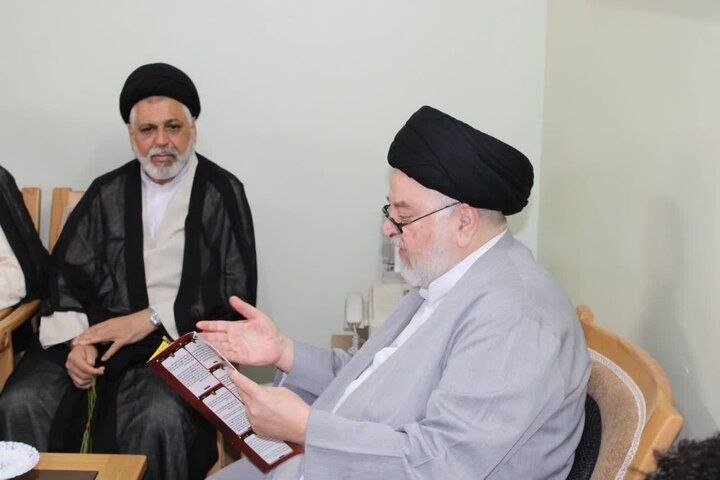
A car bomb killed the Friday preacher of Damascus's most significant Shia pilgrimage site on the morning of 2 May 2026, setting off a diplomatic confrontation between Iran and the Syrian transitional government over who bears responsibility for the security of worshippers in a country still searching for stability after years of civil war.
Farhan Mansour, the designated imam of the Hazrat Zainab shrine — one of Shia Islam's holiest sites outside Iran — died when an explosive device detonated in his vehicle, according to initial reports carried by Iranian state news agencies on 2 May 2026. Iranian state media identified the victim as the shrine's Friday prayer leader, a role that carries both religious and political weight in communities organised around the shrine's pilgrimage economy and institutional networks. Iran's Foreign Ministry moved quickly to condemn the attack as terrorism and to demand that the new Syrian administration account for the failure.
Iran's Foreign Ministry Spokesman Ismail Baqaei issued the first official condemnation within hours of the bombing, according to statements carried by Iranian wire services. The ministry's position, conveyed through multiple channels on 2 May 2026, was unambiguous: the Syrian transitional government must bear responsibility for providing security to civilians of all faiths and sects. The statement called for the identification and punishment of both the perpetrators and their organisers, and urged collective international cooperation against what Tehran described as a terrorist conspiracy.
The Hazrat Zainab shrine has long occupied a sensitive position in the political geography of the Levant. Located south of Damascus, it draws hundreds of thousands of pilgrims annually, many from Iran and Iraq, and sustains a dense web of religious infrastructure, charitable networks, and institutional presence that has historically operated with a degree of autonomy from the Syrian state. During the years of President Bashar al-Assad's rule, the shrine's ecosystem operated with the blessing and support of both the Syrian government and Tehran's network of regional allies. The transitional government now governing Damascus, having displaced the Assad dynasty in late 2024, faces a fundamentally different calculation: how to assert sovereignty over territory that has long functioned with parallel structures of authority.
The attack complicates that task immediately. By striking a figurehead of the shrine's clerical establishment on the first Friday of May, the bombers demonstrated that the transitional government's security apparatus remains incomplete at best and permeable at worst. Iran's demand that Damascus bear responsibility is also, in structural terms, a pressure tactic — a reminder that Tehran retains interests and networks inside Syria that the new government cannot simply wish away. Whether the bombing was the work of extremist cells hostile to any Shia presence in Syria, a deliberate provocation designed to inflame sectarian tensions, or something else entirely remains unclear from the sources available as of this writing. What is clear is that the attack landed in a political environment already charged with questions about the post-Assad order's relationship to the various armed and institutional actors that have shaped Syria for the past decade.
The Syrian transitional government, which took power following the collapse of the al-Assad dynasty in late 2024, has yet to issue a formal response to Iran's specific charges as of the publication of this article. The available sources do not include a statement from Damascus officials addressing the bombing directly, and the identity and affiliation of the perpetrators have not been independently confirmed. Iranian state media, which carried the Foreign Ministry's condemnation at 10:32 UTC on 2 May 2026, did not attribute the attack to any named group.
The diplomatic stakes are considerable and extend beyond the immediate question of the shrine's security. Tehran has invested heavily in maintaining a network of Shia religious and paramilitary influence across Iraq, Syria, and Lebanon. An attack on a high-profile figure associated with that network — even in a country Tehran no longer controls directly — carries implications for how Iran calibrates its posture toward the new Syrian leadership. A cooperative relationship with Damascus is possible but not guaranteed; the bombing introduces a grievance into that relationship that Iran can choose to exploit or contain, depending on broader strategic calculations. For the Syrian government, the incident is a test of its capacity to govern rather than merely administer, and of its ability to prevent Syria's territory from becoming a arena for other powers' unresolved disputes.
What remains uncertain from the current source material is the exact sequence of events — whether the bomber struck while Mansour was in the vehicle or whether the device was planted — and whether the attack marks a new escalation in systematic targeting of Shia religious figures in Syria or was a singular incident. Iranian state media framed the bombing in the language of broader sectarian warfare; other regional outlets have yet to publish independent confirmation of the casualty details. Those gaps matter, because the way this incident is framed in its first news cycle will shape how Tehran, Damascus, and external audiences understand it going forward.
This publication's coverage of the Damascus bombing leads with Iranian official sourcing, consistent with our practice of grounding initial reporting in the most immediately verifiable institutional account available while noting where corroboration is still pending.
Wire provenance
This editorial synthesis draws on the following public wire/social posts:
- https://t.me/FarsNewsInt
- https://t.me/alalamarabic
- https://t.me/alalamarabic
- https://t.me/JahanTasnim
- https://t.me/alalamarabic