Iranian Cultural Council's 'Crushing Blow' Rhetoric Reveals Hardliner Strategy in Frozen Nuclear Talks
A senior Iranian cultural official's call to 'deal a crushing blow to the enemy' exposes a fault line in Tehran's internal politics as nuclear talks remain deadlocked — and raises questions about what concession space actually remains for any future diplomatic window.
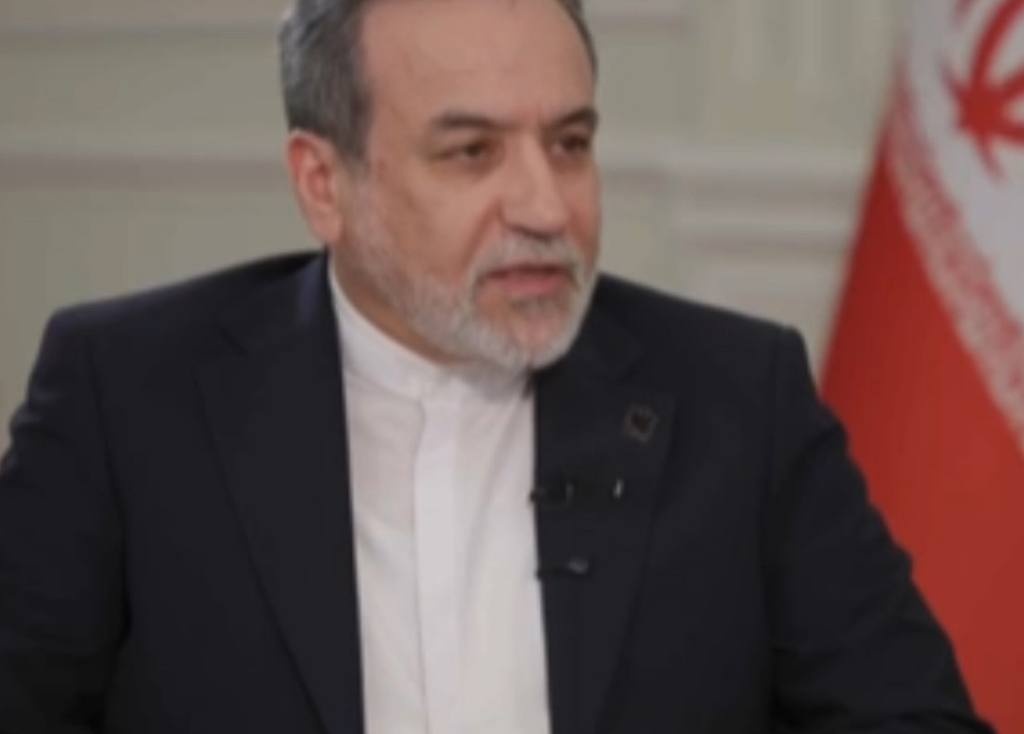
On 1 May 2026, a senior official inside Tehran's most powerful cultural body described the current moment with language that leaves little diplomatic room. Rahimpour Azghadi, a member of Iran's Supreme Council of Cultural Revolution, stated publicly that until Iran deals "a crushing blow to the enemy," the country will remain in a state of ongoing conflict or what he called "neither war nor peace." The remark surfaced via the Telegram channel sprinterpress and was cited by regional wire services tracking Iranian institutional messaging.
The statement is notable not for its aggression — hardline rhetoric from Tehran is routine — but for its source. The Supreme Council of Cultural Revolution sits at the intersection of ideology and state policy, responsible for setting the cultural and educational direction of the Islamic Republic. When one of its members frames diplomatic stasis as inherently intolerable, the message is less a policy paper than a political signal: within Tehran's internal debates, the faction arguing for sustained pressure is not merely refusing to move, it is actively shaping the terms of the conversation.
The Nuclear Talks That Stopped
Negotiations between Iran and the United States over Iran's nuclear programme reached a practical impasse in early April 2026, according to multiple wire reports from the region. The talks — mediated by Oman and involving indirect US-Iran contact — produced no framework acceptable to both sides on uranium enrichment limits, sanctions relief, and monitoring provisions. Three rounds were held in Muscat between February and March. By April, both sides had publicly acknowledged a pause, though neither used the word "failure."
That pause created a vacuum. For hardliners inside Tehran's institutions, a vacuum is not a breathing space — it is a staging ground. The framing of diplomatic failure as weakness, and weakness as an invitation for further pressure from Washington and its partners, runs through years of Iranian conservative discourse. Azghadi's statement fits that pattern: the enemy is not merely external, it is an interlocutor that must be made to understand that Iran will not be squeezed into concessions by economic duress or diplomatic isolation.
What 'Neither War Nor Peace' Actually Means
The phrase "neither war nor peace" has circulated in Iranian political commentary for years, typically describing a condition of undeclared but sustained hostility — a state in which conflict is continuous but not categorised as war, and in which negotiation is ongoing but not categorised as peace. For observers of Iranian foreign policy, the condition is familiar: it describes how Iran has managed its relationship with the United States for decades, including during periods when direct military confrontation was avoided but proxy conflicts, cyber operations, and economic pressure were continuously applied.
What Azghadi's statement does is collapse that ambiguity into an explicit demand. If neither war nor peace is acceptable, and the alternative is a "crushing blow," the logical conclusion is that the current deadlock is not a resting point but a threshold — one that must be crossed in a direction that punishes the opposing side. Whether that means accelerating the nuclear programme, escalating proxy actions in Iraq, Syria, or Yemen, or simply refusing to engage in any future talks on terms Washington can accept, the official's language pushes toward a harder equilibrium than the current one.
Hardliners and the Cultural State
The Supreme Council of Cultural Revolution has influence that extends well beyond ceremonial oversight. It sets standards for university curricula, media content, and international cultural exchange agreements. A member who frames diplomacy in martial terms is not operating outside his brief — he is applying the council's ideological architecture to foreign policy, suggesting that cultural resistance and military pressure are two expressions of the same imperatives.
This matters because it narrows the space available to Iran's more moderate diplomatic officials, including those who participated in the Muscat rounds. Any future negotiation will now face a vocal institutional faction arguing that engagement has already been tried and found insufficient — and that the conclusion of that failure is not compromise but a show of strength. Whether that faction can actually force escalation or is simply managing internal political competition is a separate question. But its public statements shape what foreign governments expect from Tehran, and what Tehran's own bureaucracy understands its red lines to be.
Stakes Beyond the Nuclear File
The immediate consequence of Azghadi's statement is rhetorical: it adds weight to those inside Iran who argue that any deal with the United States is a trap, and that the only credible position is one of sustained confrontation. That argument has practical effects on negotiating dynamics. Washington and its European partners, who have spent months trying to construct a stopgap arrangement that slows Iranian enrichment while allowing sanctions relief to continue, will now factor in the possibility that any agreement they reach faces active opposition from within Iran's cultural and ideological establishment — not merely from elected hardliners, but from the institutional apparatus that shapes Iranian civil society and education.
The longer-term risk is that the "neither war nor peace" condition, which has historically allowed Iran to maintain strategic depth through proxy networks and regional pressure without triggering direct conflict with the United States, begins to tip toward its more unstable end. When an official of Azghadi's standing declares that condition insufficient, the next escalation step — whatever form it takes — becomes easier to justify inside the Iranian system. That does not guarantee action. But it shifts the internal balance of calculation in a direction that makes sustained diplomatic freezing harder to maintain.
What remains genuinely uncertain is whether Azghadi's statement reflects a coordinated factional position or an individual expression that will generate internal pushback. The Supreme Council of Cultural Revolution is not a foreign policy body per se, and its members do not always speak for the entirety of Iran's leadership. The fact that the statement was posted publicly and spread through Telegram channels suggests it was intended to be heard — by domestic audiences, by rivals inside the Iranian system, and by foreign governments watching for signals. Whether it represents a consensus, a test, or a factional pressure tactic is not yet clear from the sources available. Monexus will continue tracking Iranian institutional statements as the nuclear pause extends into its third month.
Wire provenance
This editorial synthesis draws on the following public wire/social posts:
- https://t.me/sprinterpress/8471