Iranian Foreign Minister Conducts Diplomatic Outreach to France, Japan, Italy on Same Day
Iran's Foreign Minister Seyed Abbas Araghchi held a series of telephone consultations with counterparts in France, Japan, and Italy on May 2, 2026, in what Iranian state media described as routine diplomatic exchange on regional and international developments.
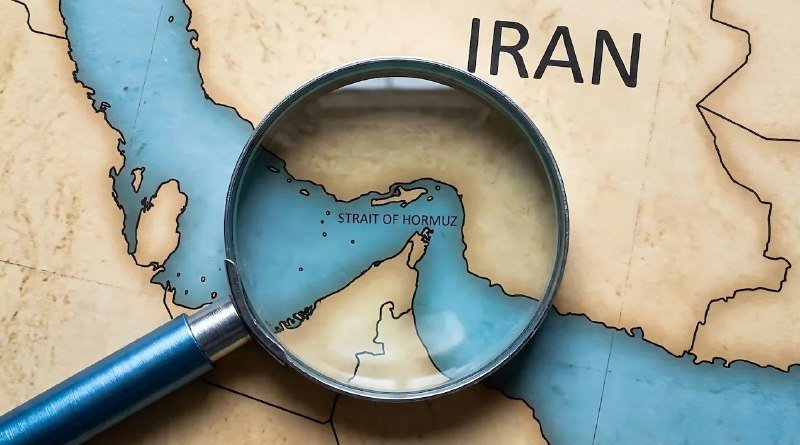
Iran's foreign minister held separate telephone consultations with his counterparts in France, Japan, and Italy on Saturday, according to reports from Iranian state-linked news agencies, in what Tehran described as routine diplomatic exchange on regional and international developments.
Seyed Abbas Araghchi, who has led Iran's nuclear diplomacy with Western powers over the past eighteen months, spoke by telephone with the French, Japanese, and Italian foreign ministers within a roughly ninety-minute window on the afternoon of May 2, 2026, according to JahanTasnim, Mehr News, and Fars News International. The Iranian foreign ministry described the conversations as covering "regional and international issues of mutual interest" but released no official readout of specific commitments or proposals. France's foreign ministry had not issued a public statement by the time of this report.
The Diplomatic Rhythm of a Delegation Under Pressure
The back-to-back calls are consistent with a pattern Araghchi has maintained since Iran's nuclear talks with the United States entered a renewed phase of intensive shuttle diplomacy in early 2026. Iranian officials and state media have described the talks as proceeding in "an atmosphere of mutual respect," though Western capitals have been more measured, noting progress on uranium enrichment limits but persistent disagreement over sanctions relief and verification mechanisms.
The simultaneous outreach to European governments and Japan reflects Tehran's broader diplomatic strategy: maintaining active channels with countries that hold varying degrees of leverage over the sanctions architecture. France, as a permanent member of the UN Security Council and a signatory to the 2015 nuclear agreement, occupies a particular role in any future sanctions-removal discussion. Italy, which holds EU presidency rotating leadership status in the second half of 2026, is a less prominent but still structurally relevant interlocutor. Japan, which has its own energy-security concerns and has historically sought to maintain pragmatic trade ties with Tehran, occupies a different lane entirely — one that is commercial rather than security-focused.
What is notable is not the content — the sources offer no specifics — but the choreography. Conducting three bilateral calls within a single afternoon is a deliberate signal of diplomatic activity, whatever the underlying substance. It is the kind of image management that Iran's foreign policy apparatus deploys when it wants external audiences to perceive engagement and normalcy rather than crisis.
What Western Capitals Are Making of It
European governments have publicly welcomed Iranian diplomatic activity while privately expressing caution about Tehran's willingness to accept the kind of verification framework that Washington has insisted upon. A senior EU official, speaking to journalists in Brussels last month on condition of anonymity, described the talks as "moving in the right direction" but warned that "the gap on monitoring remains significant."
The United States has taken a characteristically cautious public posture. State Department spokespersons have acknowledged that indirect talks with Iran continue through intermediaries but have declined to characterise the current state of negotiations beyond "productive and ongoing." American officials have made clear that any final agreement would require not only caps on enrichment but intrusive international inspections and the elimination of a civilian nuclear programme that Iran insists is entirely peaceful.
The Structural Picture: Why This Moment Matters
Iran's diplomacy operates within a specific structural context. The Islamic Republic faces a combination of sweeping American sanctions — many reimposed after the 2018 withdrawal from the JCPOA — and a domestic economy that has partially adapted but remains structurally constrained by restricted access to the global financial system. Every round of talks carries implied stakes: for Tehran, the possibility of sanctions relief sufficient to unlock oil revenue and attract foreign investment; for Washington, the prospect of verifiable limits on a nuclear programme that it estimates could produce weapons-grade material within weeks if the political decision were made.
The broader configuration of powers complicates the picture. China, which remains Iran's largest trading partner and a steady purchaser of Iranian oil under a separate sanctions waiver framework, has not been a party to the recent nuclear discussions. Russia, which has deepened its strategic partnership with Tehran since 2022, has at times played a supporting role in diplomatic forums while simultaneously pursuing its own separate negotiations with Western powers over Ukraine. European countries find themselves navigating between American pressure to keep the sanctions regime intact and their own interest in stabilising the Middle East and reducing energy price volatility.
Japan's presence in Araghchi's calls is the least politically charged of the three but not insignificant. Tokyo has historically maintained a careful balance with Tehran — it imported Iranian oil until recently and has sought to preserve a diplomatic channel independent of the US framework. Whether Araghchi raised the nuclear question with Tokyo or confined the discussion to bilateral trade and regional affairs is not clear from the available sources.
Stakes and What Comes Next
The immediate stakes are contained to the diplomatic calendar. Another round of nuclear talks is expected to take place in a third-country location — Oman and Qatar have served this function before — within the next several weeks. If the pattern of recent months holds, the next session will be followed by a public statement from Tehran framing the talks positively while Western officials offer more qualified assessments.
What the sources do not establish — and what remains the central unanswered question — is whether Araghchi's weekend calls with three separate governments represent a coordinated diplomatic effort to build international support for a specific Iranian proposal, or whether they reflect routine diplomatic housekeeping as the two sides approach a decision point. The choreography looks deliberate. The substance, for now, remains opaque.
This article draws on reporting from Iranian state-linked news agencies JahanTasnim, Mehr News, and Fars News International. Western government responses are cited as they appeared in international wire coverage. The article does not claim to document the content of the diplomatic conversations referenced.
Wire provenance
This editorial synthesis draws on the following public wire/social posts:
- https://t.me/JahanTasnim/18423
- https://t.me/JahanTasnim/18422
- https://t.me/mehrnews/89241
- https://t.me/FarsNewsInt/15189