Iran's Hormuz Bill Is a Sovereignty Claim Wrapped in War Logic
A draft law before the Iranian parliament would require permits for all non-Israeli vessels crossing the Strait of Hormuz, and ban Israeli ships outright. The framing is sovereignty; the logic is escalation by other means.
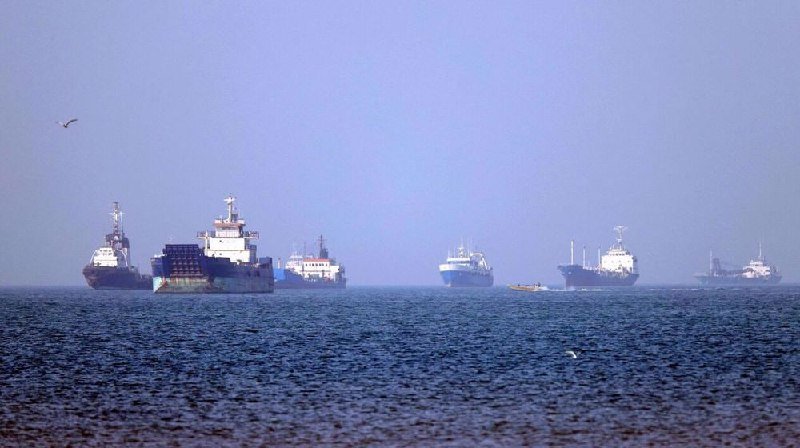
On 2 May 2026, the Iranian parliament advanced a draft law that, if enacted, would fundamentally reshape the legal regime governing the Strait of Hormuz. The legislation — described by the deputy speaker of parliament in statements carried by Iranian state media — would require all non-Israeli vessels to obtain Iranian approval before transiting the strait, ban Israeli ships outright, and prevent vessels from "enemy countries" from crossing unless they pay compensation for what Tehran defines as wartime conduct. The strait handles roughly a fifth of the world's oil shipments. This is not a negotiating posture. It is a legislative claim to control a global chokepoint.
The framing from Tehran is sovereignty: Iran is asserting jurisdiction over waters it considers subject to its legal authority, and punishing states it deems hostile. That framing has internal coherence. States routinely legislate maritime jurisdiction, impose port access conditions, and require prior notification for vessel passage. Iran is doing all three — just at the most consequential maritime corridor on earth, and against the explicit objection of the United States and its regional allies. What changes everything is context. This law does not exist in a legal vacuum; it exists in a war. And wartime sovereignty claims are not the same as peacetime regulatory authority. They are instruments of pressure, leverage, and coercive signaling.
The Legal Argument Tehran Is Making
Iranian officials insist the draft law operates "taking into account international laws and the rights of neighboring countries." That formulation is deliberate. Tehran is not claiming the strait is Iranian territorial waters — a position no serious international jurist would support, given that the Strait of Hormuz lies partially in Omani territory and its status is governed by the 1982 UN Convention on the Law of the Sea, which Iran has signed. Instead, Iran appears to be arguing a right of "non-suspendable innocent passage" combined with conditional transit rights that it alone determines. The gap between that interpretation and the consensus position of maritime law is large. But Iran has consistently operated on the premise that great-power enforcement, not legal norms, determines what international law actually means in practice. The law is an assertion of that premise in legislative form.
The deputy speaker was direct about intent: "ship movement in the Strait of Hormuz will not return to what it was before the war." That is a statement about political reality, not legal principle. Tehran appears to be moving from tacit control — demonstrated through the Islamic Revolutionary Guard Corps Navy's harassment operations and its asymmetric naval doctrine — toward formal legal architecture that codifies Iranian authority. Maritime data cited by PressTV on 2 May showing that 81 Iranian or Iran-linked vessels had passed through the strait despite US claims of a naval blockade reinforces the practical dimension: Iran already moves ships through; the law would give that practice a legal veneer.
The Counterargument the West Is Already Making
Washington's response to any Hormuz control legislation will be predictable: freedom of navigation is a bedrock international principle, the strait is an international waterway, and any attempt to condition or restrict transit violates established law. That is the correct legal position. US naval doctrine treats freedom of navigation operations as a core strategic interest precisely because the alternative — allowing any single coastal state to impose conditions on one of the world's busiest shipping lanes — would destabilize the entire global trade architecture. The US Fifth Fleet's presence in the Gulf is partly about deterrence, partly about signaling that this legal position is backed by force.
But legal correctness and operational reality are not the same thing. The US naval presence in the Gulf is significant but not omniscient. It cannot physically escort every commercial vessel through the strait. A law requiring prior Iranian approval creates a bureaucratic and legal obstacle that will deter some shipowners — particularly those whose insurance, flag registration, or corporate structure makes them vulnerable to secondary sanctions or Iranian legal retaliation. The shipping industry has form for self-deterring when legal ambiguity rises, even without shots fired. That is the pressure Iran is trying to manufacture.
What This Tells Us About Tehran's Strategic Logic
The Hormuz bill is best understood not as a military escalation but as a legal-institutional escalation. Iran is converting the practical leverage it has already demonstrated — its ability to operate in the strait, to harass vessels it designates as hostile, and to impose costs on commercial shipping — into a legislative framework that normalizes that leverage and makes it harder to roll back. The ban on Israeli vessels is maximalist and non-negotiable in its stated form; the permit requirement for all other ships gives Iran a selective tool it can use to pressure specific countries or companies without triggering an immediate military response. The "enemy country" compensation provision is a framing device that allows Tehran to condition access on political demands entirely unrelated to shipping safety.
This is coherent strategy: institutionalize coercive capacity, then use it as leverage in any future negotiation. It also reveals something about how Tehran reads the current battlefield. The deputy speaker's claim that the strait "will not return to what it was before the war" suggests Iranian leadership has concluded that the pre-war status quo — in which US naval dominance effectively guaranteed free transit for allcomers — is gone permanently. The law is a bet that formalizing Iranian control while that window is open is worth the international friction it will generate.
The Stakes Nobody in the West Is Talking About
The immediate risk is miscalculation. A permit system means Iranian authorities will have to process applications, approve or deny them, and respond to rejections. That is a bureaucracy with a geopolitical agenda operating in real time against ships carrying crude oil, LNG, and commercial cargo worth billions of dollars daily. Every denied permit, every delayed approval, every Iranian coast guard interaction with a commercial vessel becomes a potential flashpoint. The US has made clear it does not recognize Iranian authority over strait transits; a US warship escorting a denied vessel into the strait would force a confrontation that no party has explicitly chosen but that the legal architecture makes increasingly likely.
The deeper risk is economic. Insurance markets, shipping companies, and commodity traders have limited tolerance for legal ambiguity in high-value transit corridors. If the Hormuz law creates genuine uncertainty — even without a single shot being fired — the market response could include rerouting, premium increases, or voluntary withdrawal of coverage that effectively achieves what an Iranian blockade would without the military consequences. That outcome would spike global energy prices, punish consuming nations across Asia and Europe, and hand Iran a strategic victory through commercial pressure rather than naval combat.
The law's passage is not inevitable; Iranian legislation moves through contested parliamentary process, and the final text may differ substantially from current formulations. But the fact that this language is on the table, on 2 May 2026, tells us that Tehran has decided the costs of international friction are worth bearing if they produce durable control over one of the world's most critical maritime chokepoints. The West's options are to match that commitment with sustained naval and diplomatic pressure, to negotiate from a position that acknowledges Iranian interests in the strait, or to accept that the era of unchallenged freedom of navigation through Hormuz may be ending quietly, through legislation, rather than loudly through conflict.
This desk noted that Western wire coverage of the Hormuz legislation focused primarily on the Israeli ship ban as a regional security story. The structural dimension — what a permit-and-compensation framework would mean for global energy logistics and the legal architecture of international waterways — received substantially less attention in initial reporting.
Wire provenance
This editorial synthesis draws on the following public wire/social posts:
- https://t.me/alalamarabic/
- https://t.me/alalamarabic/
- https://t.me/alalamarabic/
- https://t.me/presstv/