Iran's State Media Revives 'National Unity' Narrative as Regional Tensions Escalate
As Iran navigates a mounting pressure campaign from Western powers, the Islamic Republic's official news agency has amplified a message of domestic cohesion — a pattern that observers say serves both genuine cultural sentiment and political purpose.
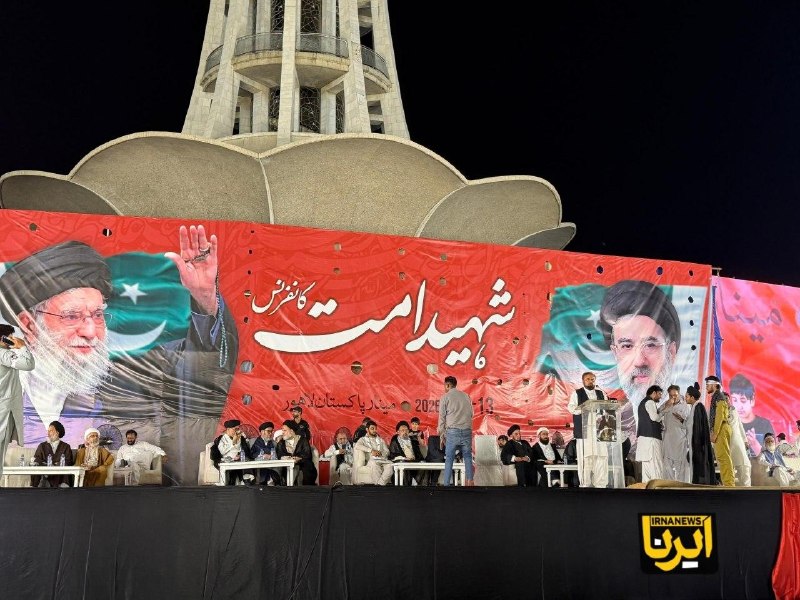
On 2 May 2026, the managing director of the Islamic Republic News Agency told an audience in Yazd that national unity and solidarity constitute a "defining trait" of the Iranian people. The statement, distributed by IRNA's Persian and English-language wire services, landed at a moment when Iran is managing simultaneous pressures: continued sanctions under the maximum-pressure architecture first consolidated by the United States in 2018, an active nuclear programme that Western capitals describe as approaching weapons capability, and a series of regional confrontations that have drawn in allied proxy networks across Iraq, Syria, Yemen, and Lebanon.
State-backed Iranian media has handled such moments before. The language of national cohesion — unity, resilience, collective resolve — functions as a reliable instrument in the Islamic Republic's communications toolkit. It surfaces in official statements during periods of external confrontation; it gets amplified through state television, parliamentary speeches, and Friday prayer sermons. The content is not new. What is worth examining is the frequency and the institutional framing.
IRNA's Yazd address fits a pattern. In recent months, state media outlets have increased coverage of civilian-scale cohesion narratives — community charity drives, inter-generational cultural programming, regional festivals framed as expressions of Iranian identity rather than sectarian or religious affiliation. The shift coincides with a deliberate move, documented in Iranian domestic policy discourse, to broaden the regime's cultural appeal beyond its clerical base without abandoning the ideological architecture that underpins it.
The Islamic Republic is not unique in this. Governments across the Middle East — and beyond — have learned that cultural solidarity narratives are more durable than purely transactional appeals during periods of economic stress. When the Iranian rial weakened through 2024 and early 2025, state media coverage did not emphasise currency stabilisation statistics. Instead, it highlighted neighbourhood-level mutual-aid networks, a register that positions hardship as a test of collective character rather than a governance failure. The effect is to shift the question of legitimacy from economic performance to cultural continuity.
That is not a neutral move. The underlying claim — that Iran's form of national cohesion is qualitatively different from, and more authentic than, Western liberal individualism — is a contested one. Western policy analysts routinely argue that the Islamic Republic's unity narratives mask structural fractures: between reformist and hardline factions within the political class, between an urban professional class with global Aspirations and a rural and working-class base more closely tied to clerical institutions, between Persian cultural identity and the multi-ethnic reality of a country that includes large Azeri, Kurdish, Baloch, and Arab populations. Those fractures are real. They do not, however, mean the solidarity narrative is purely instrumental or entirely hollow.
Iranian civil society — what survives and functions under conditions of systematic state surveillance and restricted civic space — has produced genuine expressions of collective identity that predate the 1979 revolution and cannot be reduced to regime propaganda. The Nowruz new year holiday, the poetry culture anchored to Hafez and Rumi, the cinema tradition that produced Abbas Kiarostami and Asghar Farhadi — these are not invented by IRNA. They are real cultural assets that the state has learned to embed in its messaging precisely because they carry genuine resonance. The propaganda is more effective when it borrows from authentic cultural material, and the Islamic Republic's communications apparatus has always understood that.
What is less ambiguous is the strategic function. IRNA's articulation of national solidarity comes as negotiations over Iran's nuclear programme remain deadlocked, with the United States and European parties maintaining a dual-track approach of sanctions intensification and diplomatic back-channels that have produced no binding agreement. Israeli officials have publicly discussed military options against Iranian nuclear facilities, and the Islamic Republic has responded with its own escalatory rhetoric while simultaneously deepening its relationship with Russia, which has supplied advanced air defence systems and expanded economic cooperation through trade agreements denominated in non-dollar currencies. The pressure is real. And under real pressure, governments of every ideological stripe reach for the cultural lever.
The question for outside observers is not whether Iran faces genuine external threats — it does, and many of them are generated by policies designed in Washington, Tel Aviv, and European capitals. The question is whether the narrative of national unity is primarily a vehicle for authoritarian consolidation or a genuine expression of a population navigating external aggression with limited diplomatic recourse. The answer, most likely, is both — and the balance shifts depending on which segment of Iranian society you examine, which city you visit, and which economic stratum you analyse. State media amplifies one register of that complexity. It does not constitute the whole picture, and treating it as such produces both underestimation and overestimation of the Islamic Republic's actual durability.
IRNA's Yazd statement is brief and formulaic. It is also, in its formulaic quality, revealing. The language of national solidarity works precisely because it is repeatable, transportable across mediums, and recognisable to audiences across a geographically and culturally diverse country. That efficiency is a feature, not a bug, of the communications architecture the Islamic Republic has built over forty-six years. Whether the coherence it projects reflects underlying social reality or engineered perception is a question that only Iranian citizens — operating under conditions that make honest public survey work effectively impossible — can answer. Everything else is inference.
Wire provenance
This editorial synthesis draws on the following public wire/social posts:
- https://t.me/Irna_en/28457
- https://en.wikipedia.org/wiki/Islamic_Republic_of_Iran