Iran's Pakistan-Brokered Peace Proposal Tests Washington's Resolve in Shadow of Gaza War
Tehran has handed Islamabad a proposal for ending the war it says was imposed on Palestine, framing Washington as the pivotal decision-maker. The signal from Iranian Deputy Foreign Minister Kazem Gharibabadi is unmistakable: Iran will not deal directly with the United States, but it wants American behaviour to change.
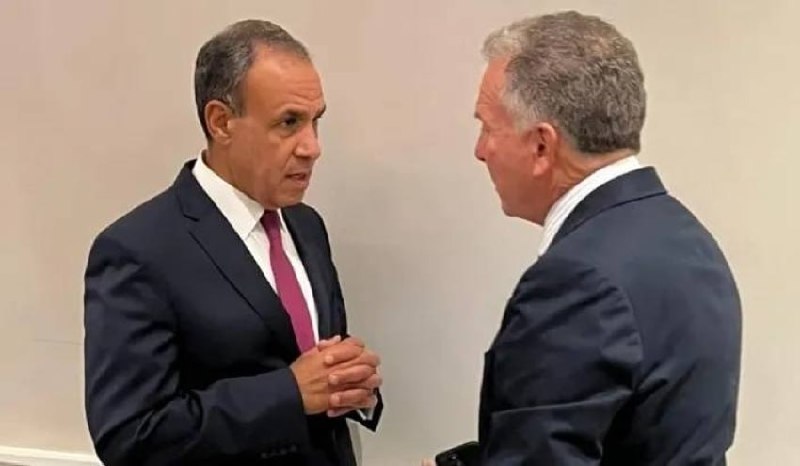
On the afternoon of 2 May 2026, Iranian Deputy Foreign Minister Kazem Gharibabadi sat across from a group of foreign ambassadors in Tehran and delivered a message he wanted transmitted to Washington. According to reports from Iranian state media, Gharibabadi said Iran had presented Pakistan with a proposal aimed at permanently ending the war it describes as imposed on Palestine. The ball, he said, was now in America's court. He added a note of pointed pessimism: Iran would remain, he warned, distrustful of American integrity in any diplomatic process.
The timing of the announcement matters. It arrives as the Gaza conflict has entered its nineteenth month, as ceasefire negotiations have repeatedly stalled, and as American diplomats have privately acknowledged to reporters that the prospects for a durable agreement remain uncertain. Gharibabadi's intervention is not a direct offer to Washington — Iran has not engaged in formal bilateral talks with the United States since the collapse of the 2015 nuclear accord — but it is an indirect signal, routed through a regional partner with whom Iran has maintained a complicated but functional relationship. What Tehran is asking for, in substance, is not yet fully detailed in the public record. What it is signalling is clearer: it wants the United States to demonstrate a different approach to the conflict's resolution, and it is using Pakistan as a communication channel because a direct American-Iranian dialogue remains politically untenable for both sides.
The Offer and Its Framing
Gharibabadi's statement, as reported by Mehr News on 2 May, framed the proposal explicitly around ending a war that Iran characterises as imposed rather than chosen. The language reflects a consistent Iranian positioning throughout the conflict: Tehran presents itself as a party responding to aggression rather than originating it, and frames the Palestinian cause as a matter of principle rather than strategic calculation. According to Fars News International, Gharibabadi told assembled ambassadors that Iran had given its plan to Pakistan, making clear that Islamabad was the intermediary rather than a party to the proposal itself.
What the proposal actually contains — what specific demands or concessions it articulates — is not yet in the public domain. The Telegram channels reporting the statement describe the initiative in general terms: a plan to end the war permanently, delivered through Pakistan. Independent confirmation of the proposal's substance is not yet available from non-Iranian sources. That does not mean the initiative is manufactured; diplomatic back-channels routinely produce documents that surface publicly only in paraphrase or not at all. But a reader treating this report with appropriate caution would want to know what Iran is actually proposing, what it is asking the United States to do, and what it is offering in return. Those details are not yet available.
The Alalam Arabic service, which serves as a Persian-language outlet with a regional Arab audience, framed the story as an urgent development — a signal to Washington that the diplomatic window remains open but that Tehran's patience is finite. Jahan Tasnim, a news outlet associated with the Islamic Revolutionary Guard Corps cultural apparatus, ran the meeting as a substantive diplomatic event, noting Gharibabadi's direct engagement with heads of foreign missions resident in Tehran.
Washington's Position
The United States has not publicly responded to the Iranian statement as of publication. American officials have consistently describedIran's regional behaviour — its support for armed groups, its nuclear programme advances, its aligned rhetoric — as the core obstacle to normalised relations. Secretary of State Marco Rubio, in remarks to reporters over the preceding weeks, had described any Iranian diplomatic overture as requiring先去 (先去, a Chinese diplomatic term meaning preconditions) — concrete steps on enrichment and regional behaviour before engagement could be considered meaningful.
Washington's position on the Gaza conflict itself has been shaped by the dual imperative of supporting Israel's right to self-defence and managing the political costs of sustained civilian casualties. American officials have privately told wire reporters that the humanitarian situation in Gaza remains a serious concern and that an endgame must be found. But the mechanisms for achieving it — a ceasefire, a hostage release, a political transition — have repeatedly collapsed in negotiations mediated by Qatar and Egypt, with American involvement at the senior diplomatic level.
Iran's decision to route its proposal through Pakistan rather than through any of the established mediation frameworks is itself notable. Islamabad has maintained a relationship with Tehran that has survived considerable strain, including periodic episodes of cross-border militant activity that both sides have attributed to non-state actors. Pakistan's willingness to serve as a communication channel reflects its own interest in regional de-escalation and, perhaps, in demonstrating utility as a diplomatic interlocutor at a moment when its influence in other regional contexts has come under pressure.
The Structural Logic of Indirect Communication
What is happening here fits a broader pattern in Iranian diplomacy under pressure. Tehran has not engaged directly with Washington in years. The political conditions in both capitals make bilateral talks toxic: the American side faces domestic constituencies that view any direct engagement with Iran as appeasement, and the Iranian side frames direct talks with the United States as an acceptance of coercion. The result is a persistent reliance on intermediaries — Oman, Qatar, Iraq, now Pakistan — to carry messages and, occasionally, proposals.
This architecture of indirect communication is not unique to the current moment. Iran used Omani channels to communicate with the George W. Bush administration in the mid-2000s. Qatar played a similar role during negotiations that produced the 2015 Joint Comprehensive Plan of Action. The mechanism works when both sides want a channel but cannot afford the political optics of using one. What is different now is that the specific issue — the Gaza war — involves not just US-Iranian bilateral dynamics but a third party, Israel, whose own government has exhibited limited interest in the kind of political settlement that would satisfy Tehran's stated requirements.
Iran's proposal, whatever its specific content, is predicated on an assumption that American pressure on Israel could produce a different outcome. That assumption is not unreasonable as a matter of diplomatic logic — Washington remains the primary external actor with leverage over Israel's conduct of the war — but it is an assumption that has not been validated by the evidence of the past nineteen months. American leverage over Israel's military decisions has repeatedly proven to be softer than critics of US policy assume, and the conditions under which Washington would apply that leverage in the direction Iran is seeking remain unspecified in the public record.
Historical Precedent and Diplomatic Patience
Iran's framing of itself as a party to a war imposed on it rather than a party exercising agency is not new. Tehran framed its response to the US assassination of General Qasem Soleimani in 2020 in similar terms — a retaliation that was itself a response, calculated to avoid escalation while signalling resolve. It has framed its nuclear programme consistently as a response to security threats, not a bid for weapons. The rhetorical structure matters because it locates Iranian agency as reactive rather than initiating, a posture designed for international audiences that remain skeptical of Iranian intentions.
Pakistan's role as intermediary is also not without precedent. Islamabad has played a quiet diplomatic function in Persian Gulf politics for decades, maintaining relationships with both Saudi Arabia and Iran in ways that other regional actors cannot. Its willingness to carry a message from Tehran to Washington reflects this positioning, though it also raises questions about what Pakistan itself believes it is achieving by doing so. Pakistani officials have not commented publicly on the content of the proposal or on their own assessment of its prospects.
The pessimism Gharibabadi expressed — Iran will remain distrustful of American integrity — is itself a communication about the limits of this initiative. It signals that Tehran does not expect the proposal to be received favourably, that it is going through the motions of diplomatic engagement while maintaining a posture of justified suspicion. Whether that pessimism is genuine or performative — a way of managing domestic political expectations while keeping a back-channel open — is not determinable from the public record. But it means the proposal arrives wrapped in low expectations, which may itself be a strategic choice.
What This Means Going Forward
The proposal is, at minimum, a data point in a larger picture of diplomatic activity around the Gaza conflict. Multiple tracks are active simultaneously: the Qatari-Egyptian mediation track that has produced the most public negotiations, the American diplomatic engagement with both parties, and now an Iranian back-channel routed through Pakistan. The fact that these tracks exist in parallel rather than in coordination is itself significant — it suggests that the major external actors have not agreed on a shared framework for ending the conflict and are therefore operating through separate channels that may be pursuing incompatible objectives.
The stakes of this dynamic are not abstract. If the proposals on each track are mutually exclusive — if what Iran is asking for is incompatible with what Israel is willing to accept, which is what the United States is willing to endorse — then the existence of multiple tracks may produce the appearance of diplomatic activity without the substance of progress. The risk is not that diplomacy is failing but that it is succeeding in the wrong direction: producing agreements in principle that collapse in practice, extending the conflict while creating the impression of momentum.
The sources do not specify what Iran is demanding or offering, which makes it difficult to assess whether this proposal represents a substantive contribution to ending the war or a rhetorical exercise designed to position Iran as the party seeking peace while its adversaries are portrayed as blocking it. The diplomatic record suggests the answer may be both simultaneously — an initiative that is genuinely intended to influence American behaviour but also structured to serve a domestic and regional communications purpose that has little to do with the proposal's actual content.
What is clear is that on 2 May 2026, Iran put a proposal in Pakistan's hands and asked Washington to respond. Whether anyone in Washington will respond in a way that keeps the channel open is the question that remains unanswered. The pessimism Tehran expressed may yet prove to be justified. But the door, for now, remains ajar.
This publication approached the reporting of the Iranian initiative by leading with the statement as reported by Iranian state media — Mehr News, Fars News International, Alalam, and Jahan Tasnim — while contextualising it against the established American and Western-wire framing of the conflict. The counter-narrative — that Iran's proposal may serve a communications function as much as a diplomatic one — is addressed directly in the body. The gap between what Iran is reported to have proposed and what the proposal actually contains is flagged explicitly, as is the absence of a public American response.
Wire provenance
This editorial synthesis draws on the following public wire/social posts:
- https://t.me/mehrnews
- https://t.me/alalamarabic
- https://t.me/alalamarabic
- https://t.me/FarsNewsInt
- https://t.me/JahanTasnim