Iran's cultural establishment reclaims Larijani's legacy six months after death
Deputy Culture Minister Arbab Soleimani and former Culture Minister Hosseini used a Tehran memorial on 2 May to position the late parliament speaker as a symbol of ethical governance and intellectual depth, a signal the current administration is still working to manage his political inheritance.
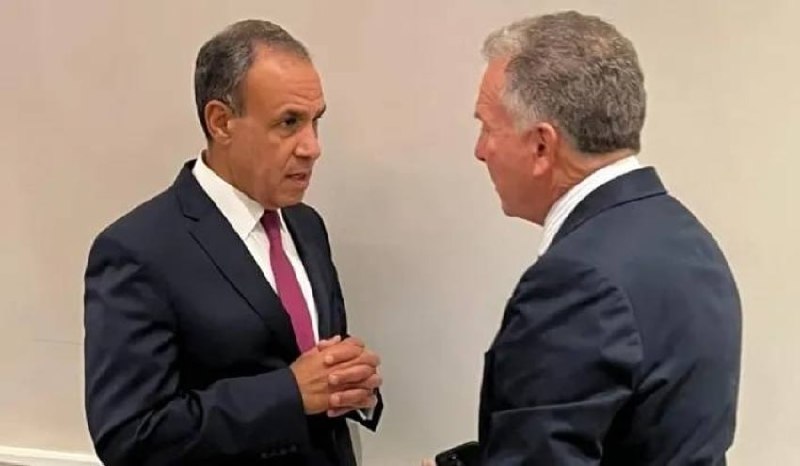
At a memorial in Tehran on 2 May 2026, Deputy Culture Minister Arbab Soleimani delivered an address that placed the late Ayatollah Ali Larijani squarely inside the Islamic Republic's current cultural policy vocabulary. According to Mehr News, Soleimani framed Larijani — described in official Iranian discourse as "Martyr Larijani" — around three themes: creativity, innovation and ethics. "Martyr Larijani has been remembered" was the formulation Soleimani used in remarks carried by the state news agency's Telegram channel on the day of the ceremony.
The ceremony brought together figures from across the Iranian political spectrum. Also present was Ali Hosseini, a former Minister of Culture and Islamic Guidance who served under three administrations, who spoke separately at the same event. Mehr News reported that Hosseini described the late parliament speaker as accomplished both in philosophical discourse — Larijani's formal field of study — and in other domains, including education. The dual emphasis on intellectual rigour and practical governance ran through both tributes.
Larijani, who served as Speaker of Iran's Islamic Consultative Assembly from 2004 to 2020, died in late October 2025 at the age of 83. Before his parliamentary speakership he headed the Islamic Republic of Iran Broadcasting corporation, the state media monopoly, and held advisory roles under multiple presidents. He occupied a distinctive position in Iranian political life: trained in Western philosophy, fluent in its conceptual vocabulary, yet associated with the hardline Principlist faction. That combination made him a figure who could be invoked by different currents within the Islamic Republic's governing coalition, and the memorial ceremony six months on from his death suggests the current administration is still working out what version of his legacy serves its purposes.
Political inheritance and the post-Raisi landscape
The timing of the memorial is not neutral. Larijani died roughly six months before Soleimani's address, in a period that saw significant upheaval in Iranian political life, including the deaths of President Ebrahim Raisi and several other senior officials in a helicopter crash in May 2025. The reshuffle that followed altered the distribution of power within the conservative coalition that has dominated Iranian governance since 2021. Commemorations of figures like Larijani function as occasions for signalling within that coalition — the themes a senior official chooses to emphasise, the phrases they borrow from a deceased figure's own vocabulary, are read carefully by other players within the system.
Soleimani, speaking as the current administration's representative on cultural affairs, had reason to reach for language around innovation. That term carries policy implications — it is the vocabulary of economic modernisation and institutional reform — and by attaching it to Larijani's legacy, the deputy minister implies the current government is the legitimate custodian of that agenda. Hosseini, a figure with reformist-adjacent credentials who served under administrations that sometimes clashed with the hardline establishment, offered a different signal: that Larijani's appeal extends beyond any single faction.
The Mehr News coverage placed both officials' remarks in the same Telegram posts, presenting the tributes as part of a unified official narrative rather than competing readings of the same figure. That editorial choice itself is meaningful. State media framing in Iran typically aims to resolve ambiguity, not preserve it, and the seamless presentation of Soleimani and Hosseini's remarks suggests the apparatus is oriented toward consolidating a single reading of Larijani's place in Iranian political culture.
What the emphasis reveals
The themes Soleimani selected — creativity, innovation, ethics — are not random. They correspond to policy priorities the current Iranian administration has signalled across several ministries since the changes following the May 2025 helicopter crash. The emphasis on ethics in particular is a recurring motif in statements from cultural officials, often deployed to distinguish the current government's approach from what is characterised as the corruption and mismanagement of predecessor administrations.
By invoking Larijani in this register, Soleimani was doing something more than commemorating a dead figure. He was claiming that Larijani's intellectual profile — the philosophical depth, the engagement with ideas — pointed in the direction the current government claims to be moving. The cultural apparatus of the state is doing what cultural apparatuses do: selecting from the available past to serve the needs of the present.
The philosophical dimension Hosseini highlighted serves a different purpose. Larijani's training meant he could engage with concepts from outside the Islamic Republic's native intellectual tradition without being dismissed by the hardliners who often view such engagement with suspicion. For Hosseini to describe that capacity as central to Larijani's significance is to make an implicit argument about what kind of thinking deserves a place in Iranian public life. It is a quiet assertion of intellectual pluralism, or at least of the legitimacy of a certain kind of intellectual seriousness, within an official ceremony.
International context and the limits of the moment
The memorial is primarily a domestic political signal. But in a country where foreign policy and domestic legitimacy are deeply entangled, it is difficult to separate the two. Iran is navigating a period of renewed engagement with Western powers over its nuclear programme, with negotiations at various stages of intensity. How the cultural establishment frames national identity and intellectual heritage during this period matters for how Iran presents itself at the negotiating table — and for how different constituencies within Iran interpret what any nuclear agreement would mean for the country's direction.
The emphasis on innovation and ethics in Soleimani's remarks can be read as part of a broader effort to present Iran as a country capable of modernising its institutions — a point of relevance to any international interlocutors assessing whether a deal would change Iranian behaviour in ways that go beyond the nuclear file. The philosophical seriousness Hosseini invoked speaks to a different audience: domestic critics who worry that engagement with the West will come at the cost of intellectual independence.
The sources consulted for this article do not specify the venue of the 2 May memorial or identify other officials present beyond Soleimani and Hosseini. The Mehr News Telegram posts describe the themes each official emphasised but provide limited detail on the specific language used beyond the formulations cited. The broader political context — including Larijani's dates of service, his age at death, and the approximate timing of his passing in late October 2025 — is drawn from publicly available reporting. What the primary sources confirm is the content of the two officials' remarks and the official framing of the event.
What the memorial makes clear is that Larijani remains a useful figure for multiple constituencies within Iran's governing structure. Six months after his death, the argument over what he represented — and what he points toward — is still being conducted, partly through the medium of ceremonies like this one. The cultural establishment's choices at events like the 2 May memorial are not ceremonial in any simple sense. They are part of the ongoing work of defining what Iranian political culture is, and who gets to claim ownership of its legacy.
Wire provenance
This editorial synthesis draws on the following public wire/social posts:
- https://t.me/mehrnews
- https://t.me/mehrnews