Iran's Strait of Hormuz Draft Law Is Not a Bluff
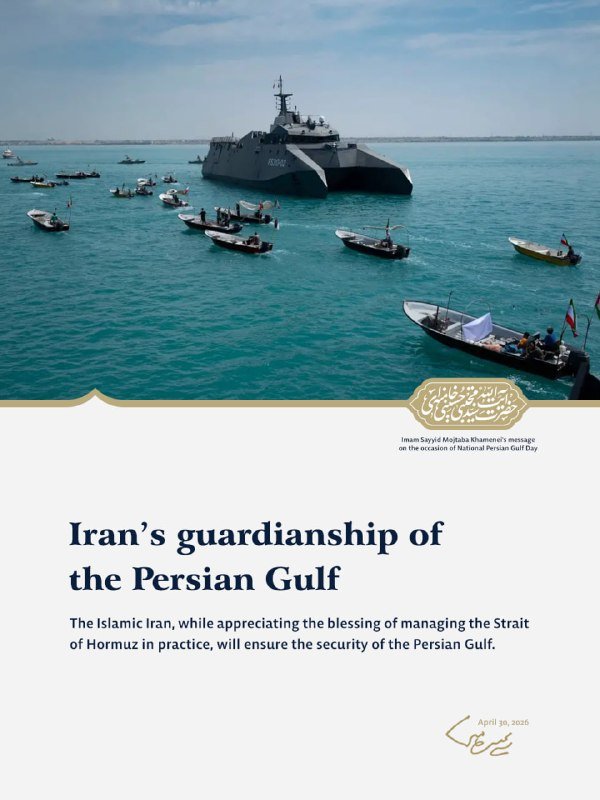
On 2 May 2026, the Deputy Speaker of the Iranian parliament introduced a draft law that would establish a formal permitting regime for all vessels transiting the Strait of Hormuz. Ships from countries Iran designates as enemies — including, explicitly, Israel — would be barred from passage unless they paid compensation for the war. All other vessels would require Iranian approval. The revenues, by the terms of the bill, would be partly recycled into military infrastructure. It is a piece of legislation with the specificity of intent that separates declaration from design.
The standard reading in Western capitals is that Tehran is leveraging Hormuz rhetoric to extract concessions in the ongoing nuclear negotiations. There is likely an element of that. But the draft law's detail — the permitting architecture, the fee schedule, the exemptions for adversary states conditioned on financial settlement — is not the language of a bluff. It is the language of legislation intended to be implemented.
What the bill actually proposes
The Deputy Speaker's summary makes the framework concrete. Vessels from non-adversary states would be permitted to transit only after obtaining approval through a new Iranian vetting process. Ships from adversary nations would be excluded outright unless they first paid reparations for the conflict — a clause that functions simultaneously as a legal stick and a negotiating hook. Israeli-flagged or Israeli-linked vessels would be barred entirely, with no compensation pathway.
A separate statement from Parliamentarian Rezaei, carried by Iranian state media on the same day, reinforced the political weight behind the push. "Exercising management over the Strait of Hormuz is a demand of the Iranian people and we will not give up this right," he said. That framing — as popular mandate rather than executive discretion — signals that the proposal has domestic political backing beyond the immediate nuclear calculus.
Rezaei also outlined that 30 percent of transit fees collected under the management framework would be allocated to strengthening military infrastructure. That is a funding mechanism, not a slogan. It means the enforcement architecture would have its own revenue stream, reducing the bill's implementation cost to Tehran and creating a structural incentive to enforce it rather than tolerate circumvention.
Why this is more than theatre
Western analysts have historically treated Iranian Hormuz threats as bargaining posture — the periodic reminder that control of a transit corridor can be made inconvenient for anyone who disagrees. That assessment is not wrong about the intent. But it may be wrong about the method.
The critical distinction is between a threat and a law. When Iranian officials said in previous years that they could close the strait, the response from markets and governments was calibrated against the likelihood of actual execution. A formal legal framework changes the probability assessment. It moves the question from "would Tehran act?" to "what does the law require?" That shift matters because it changes who within the Iranian system carries the political obligation to act.
Separately, Bloomberg data cited by Iranian state media on 2 May indicates that a large tanker carrying Iraqi crude crossed the strait in recent days — a signal that commercial flows are being monitored closely and that the enforcement environment is being actively assessed. The bill's introduction on the same day is not coincidental.
The structural context
The strait handles roughly one-fifth of global oil trade. Any disruption to transit — even temporary — sends a sharp signal through commodity markets and forces a response from every major economy with maritime exposure. The United States has long maintained a naval presence in the Persian Gulf specifically to deter interference with freedom of navigation through Hormuz. That deterrence has been effective; Iranian enforcement has historically stopped short of direct confrontation with US naval assets.
But a permitting regime operates differently from a blockade. It does not require closing the strait. It requires inspecting, registering, and conditionally clearing vessels. That is administratively executable without the escalated confrontation a blockade would invite. The question is whether Iran would sustain it under diplomatic and military pressure — and the bill's revenue mechanism suggests the system would be designed to be self-sustaining rather than dependent on goodwill.
The timing of the draft law's introduction, amid ongoing indirect negotiations between the United States and Iran over the nuclear file, places the Hormuz question squarely on the table as a negotiating lever. Tehran has now given that lever a statutory form.
What remains uncertain
The sources do not establish whether the draft law has cleared parliamentary committee review or when a full floor vote might occur. Implementation of a permitting regime would face immediate practical questions: would Iranian naval assets actually board and inspect vessels? How would the United States respond if a US-linked commercial tanker were detained? Would China, Iran's largest oil customer, accept a fee-and-permit structure on its imports?
These questions are not rhetorical. They determine whether the bill becomes a live instrument or remains a legal reserve deployed only when the diplomatic context demands it. But the act of passing the legislation itself — regardless of when or how it is enforced — reshapes the framework within which all future strait transit is negotiated.
Western capitals have a choice. They can treat the draft law as a negotiating signal and wait for the diplomatic context to resolve it. Or they can recognise that Tehran has moved from rhetorical threat to legislative architecture, and that the window to shape what that architecture becomes is narrower than the dismissal implies.
This publication framed the story through the parliamentary statements as reported by Iranian state media on 2 May, supplemented by commercial shipping data. Western government responses to the draft law had not been published in the sources reviewed at time of writing.
Wire provenance
This editorial synthesis draws on the following public wire/social posts:
- https://t.me/alalamarabic
- https://t.me/alalamarabic
- https://t.me/alalamarabic
- https://t.me/alalamarabic
- https://t.me/alalamarabic