Civilian destruction in southern Lebanon marks a dangerous shift in Israel's rules of engagement
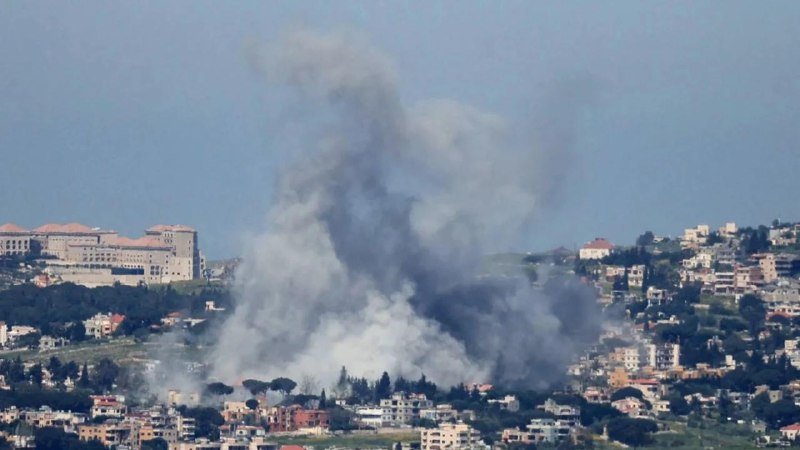
Israeli aircraft struck the southern Lebanese towns of Kfar Joz and Shoukin on 2 May 2026, destroying residential buildings according to footage shared by journalists and monitoring accounts. Civilian structures bore the brunt of the destruction. No credible figure for casualties had emerged from verified sources at time of publication.
The strikes raise an uncomfortable question about Israeli calculations: has the country formally recalibrated its threshold for force against Hezbollah, moving from calibrated retaliation to something more explicitly expansive? The pattern—civilian infrastructure, large-scale destruction, strikes announced within hours of each other—suggests an operation designed to impose cost rather than simply signal response.
An operation designed to impose cost
Israel's recent strikes on southern Lebanon represent a qualitative shift from the more limited, often symbolic, responses that have characterised the post-2006 framework. Residential buildings in Kfar Joz and Shoukin were hit, according to video evidence verified by regional reporting outlets. The scale of physical destruction is inconsistent with the precision-strike model Israel has publicly committed to in statements over the past eighteen months.
Israeli military officials have indicated in background briefings that the rules of engagement have evolved. The conflict in Gaza has been cited internally as a structural precedent rather than an isolated parallel. What this means in practice is a willingness to accept the diplomatic and reputational consequences of striking civilian-adjacent infrastructure, something Israel had historically tried to avoid for fear of triggering precisely the kind of escalation it is now courting.
The targeting of residential buildings rather than apparent military positions is difficult to explain as incidental. The international condemnation that follows each such strike is not unknown to Israeli military planners. The fact that operations continue suggests a calculation that the cost is worth paying.
A framework running on empty
The rules-based architecture governing the Israel-Hezbollah frontier has never been a peace agreement. It is a pressure-release mechanism, an arrangement that both sides have exploited for nearly two decades. Israel has treated it as a ceiling on Hezbollah activity; Hezbollah has treated it as a floor for what it can conduct without triggering a major response. Both interpretations are technically compatible with the text. Neither side has had reason to test the outer limits because the arrangement, however imperfect, served both parties' interests in minimising unwanted escalation.
That equilibrium is fraying. Israel appears to be operating from a revised assumption about what the rules permit. Hezbollah has not crossed unambiguous red lines—missile stockpiles and verified military installations have remained largely untouched in ways that would trigger a US-backed full-scale response—but the framework itself is becoming secondary to a new set of operational ambitions.
The ambiguity that held the previous arrangement together was sustainable only as long as neither side wanted a wider war. Israel, watching the Gaza campaign wind toward an uncertain conclusion, is making a strategic bet that northern escalation can be managed within acceptable parameters. Hezbollah is calculating that its regional position—hardened by the past eighteen months—gives it leverage that did not previously exist. Both calculations cannot be correct simultaneously.
What Washington decides next
The trajectory is not inevitable, but it is more fragile than at any point since 2006. The deciding variable is not what Hezbollah does next but what the United States signals about its willingness to constrain Israel's operational latitude.
If the US military and diplomatic apparatus pushes back—making clear that there are still meaningful limits on what Israeli operations it will support—the escalation logic loses one of its key accelerants. If the default position remains strategic patience, or active encouragement of a more assertive Israeli posture, the framework that has contained the northern front for almost two decades will effectively be defunct. The strikes on Kfar Joz and Shoukin are not a breach of that framework in any legal sense. They are a statement that the framework no longer governs the conversation.
The regional picture is shifting. Iran's regional position remains constrained but not static. Syria's structural collapse has created new variables. Lebanon's state capacity continues to deteriorate. Gaza remains unresolved. Trump administration officials have signalled impatience with the existing architecture of containment. Israel appears to be moving before the window closes—or to be testing whether the window is already gone.
What happens next will determine whether the northern front stays a managed crisis or becomes the next open wound. The strikes on 2 May are the clearest signal yet that Israel has decided the managed-crisis option no longer serves its interests—and that it is prepared to absorb the cost of finding out what comes after.
Wire provenance
This editorial synthesis draws on the following public wire/social posts:
- https://t.me/presstv/94789
- https://t.me/TheCradleMedia/11827
- https://t.me/TheCradleMedia/11822
- https://t.me/wfwitness/48921