Israeli Air Activity Over Suweida Raises Questions About Shifting Syrian Front Lines
Reports of Israeli fighter jets operating over Suweida City in southern Syria on May 2 mark a notable expansion of air activity into a governorate that has largely stayed quiet since the Assad regime's collapse — raising questions about what Israeli commanders believe they are securing and what intelligence gaps remain.
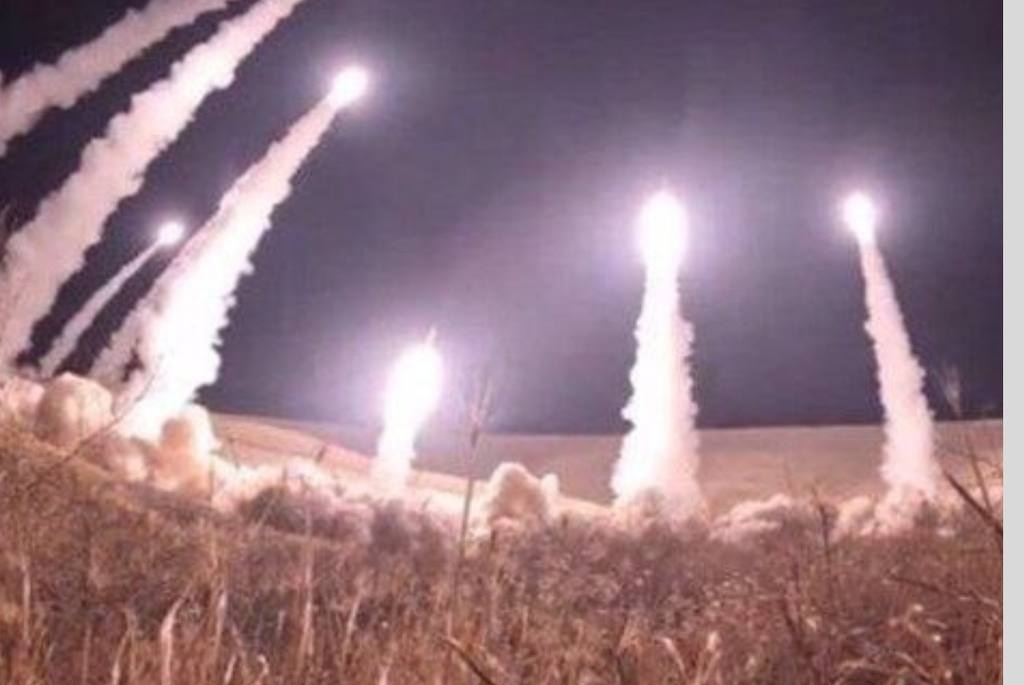
Multiple open-source monitoring channels reported intensive Israeli fighter jet activity over Suweida Governorate in southern Syria on May 2, 2026. The reports, confirmed by both AMK_Mapping and War Front Witness, described sustained overflights of Suweida City — a provincial capital that sits roughly 120 kilometres from the Syrian-Israeli ceasefire line on the Golan Heights and far south of the regime-held centres that Israeli operations have historically targeted.
The pattern is not new. Israel has maintained an active air campaign inside Syrian territory since the Hamas-led assault of October 7, 2023, striking what its military describes as weapons depots, command nodes, and supply corridors belonging to Iran-aligned militias. What is notable about the May 2 reporting is the geographical reach: Suweida, a predominantly Druze province, has experienced relatively little direct Israeli military contact since the Assad regime's authority fractured in late 2024. That Israeli commanders are now projecting air power that far east suggests their definition of what constitutes a threat corridor has expanded — or that their intelligence on militia positioning inside Syria has become more granular.
What Israeli Operations Have Historically Targeted
Israeli military statements and Western intelligence assessments have, since 2023, consistently framed air strikes inside Syria as responses to specific and imminent threats from Lebanese Hezbollah and other Iranian proxy networks. The targets have centred on the Damascus metropolitan area, the Homs corridor, the Latakia port complex, and points along the Lebanese border. IDF spokesperson briefings have described these operations as precautionary — strikes designed to disrupt weapons transfers and prevent the entrenchment of militia infrastructure before it matures into a direct threat to Israeli territory.
Suweida complicates that tidy framing. The governorate sits geographically between the Hawran plateau and the eastern Badia desert. It is not a logical transhipment point for weapons flowing from Lebanon into Syria — that route runs north through the Bekaa Valley toward Homs. It is not a known Iranian proxy command hub. Israeli targeting doctrine, as publicly described, does not obviously account for an F-16i patrol over a Druze provincial capital with no documented weapons cache.
That raises two possibilities: either Israeli intelligence has identified a specific threat node inside Suweida that has not been publicly disclosed, or the air activity is part of a broader pattern of saturation operations designed to project the boundaries of Israeli control across all Syrian airspace — regardless of whether individual sorties hit a target.
The Druze Community and External Security Arrangements
Suweida's population adds a political dimension that cannot be ignored. The Druze of southern Syria have historically maintained a degree of communal autonomy and have shown limited enthusiasm for integration into post-regime governance structures dominated by either Sunni Islamist factions or the various armed groups now operating across Syrian territory. Israeli officials, when they have spoken publicly about Druze communities in the Golan Heights, have done so with explicit reference to their protection — a framing that carries clear implications for Israeli interests in the broader Druze population inside Syria.
Whether Israeli commanders view a sustained air presence over Suweida City as a form of deterrence — signalling to armed factions that the province will not be ignored — or as a precursor to more direct engagement remains unclear from the available reporting. Neither AMK_Mapping nor War Front Witness described strikes emanating from the overflights. The question of whether the jets were conducting surveillance, positioning for a strike, or simply establishing a visible air cover zone over a province that Israel believes is drifting out of any effective governance structure is one the sources do not resolve.
Structural Pattern: Air Power as Boundary-Setting
What the May 2 reporting fits is a broader structural tendency visible since the Syrian regime's collapse. Israel has used air operations not merely as a tool for suppressing specific threats but as an instrument for redrawing the operational map of Syrian territory. The Golan Heights buffer zone, originally established under a 1974 ceasefire agreement, has long since been supplemented by a de facto Israeli air defence zone that extends well beyond the demarcated line. Russian air operations in western Syria, conducted under a separate tacit arrangement with Damascus, have occupied a parallel but distinct layer of the same airspace. The result is a Syrian aerial environment that is segmented by competing great-power and regional understandings — one in which a lone fighter patrol over Suweida is both a tactical event and a statement about whose authority is recognised.
This dynamic has accelerated since the regime change. With Assad gone and no coherent central government controlling Syrian military assets, the question of who grants — or withholds — permission for foreign air operations over Syrian territory has become effectively moot. Israeli commanders appear to have drawn the conclusion that the absence of a sovereign counterparty means the scope for unilateral operations can expand without the diplomatic constraints that previously applied.
What Remains Unknown
The sources reporting the May 2 activity do not confirm what prompted the overflights, whether any strikes were conducted, or how local actors in Suweida responded. Israeli military spokespeople had not issued a public statement by the time of reporting. The Druze community's own institutional voice — whether through local councils, tribal leadership, or any emerging governance structure — has not been cited in the available open-source material. Without those inputs, the episode sits in a zone of ambiguity that is useful neither to those who want a clear deterrent signal nor to those who want evidence of proportionality.
The Monexus desk will continue to monitor reporting from Israeli, Syrian, and regional sources as the episode develops. What is already clear is that Israeli commanders are not treating the eastern and southern boundaries of Syrian territory as settled ground — and that the collapse of central Syrian authority has created operational space that air power is filling.
Wire provenance
This editorial synthesis draws on the following public wire/social posts:
- https://t.me/AMK_Mapping/1247
- https://t.me/wfwitness/891
- https://en.wikipedia.org/wiki/Suweida_Governorate
- https://en.wikipedia.org/wiki/Syrian_Arab_Air_Force