Israeli Airstrikes Hit Southern Lebanon as Ceasefire Framework Comes Under Strain
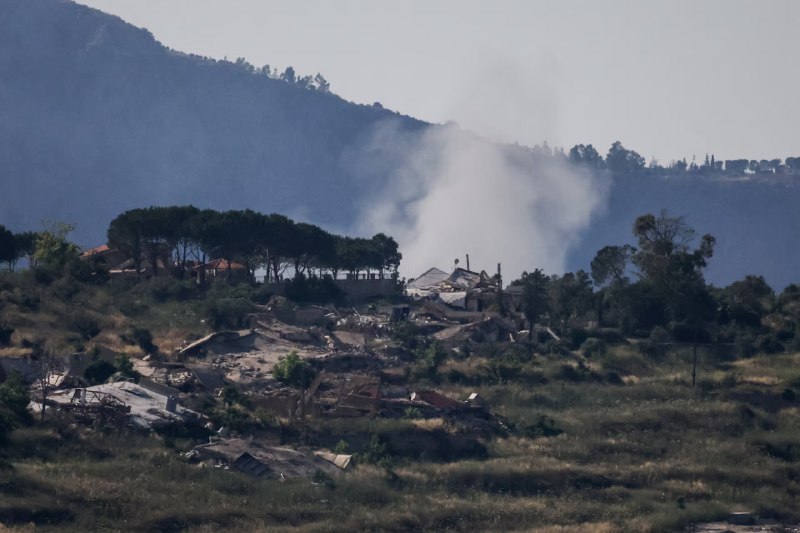
The town of Qalawayh sits roughly 15 kilometres north of the Blue Line — the UN-mapped boundary separating southern Lebanon from Israel — in terrain that has been contested for decades. On the morning of 2 May 2026, Israeli warplanes struck it. Within hours, the pattern repeated across a string of villages: Al Adaisseh, Mafeidoun, Al Adisa. A vehicle was hit in Mafeidoun. Civilians were killed, according to multiple accounts filed from the area. The Israeli military described the operations as targeted responses to what it characterised as threats emanating from Lebanese territory. Lebanese state media and regional news organisations reported civilian casualties and widespread displacement among families who had only months earlier returned to villages they had fled.
The strikes landed during what is formally the lifecycle of the November 2024 ceasefire understanding — a framework brokered under international mediation that paused major hostilities between Israel and Hezbollah after a grinding 14-month exchange of fire. The agreement was never airtight. It established a cessation of hostilities and a monitored buffer zone, but enforcement mechanisms were left ambiguous. What was clear at the time was that both governments faced domestic pressure to demonstrate that the arrangement served their respective security interests, and that neither had fully disarmed or depoliticised the underlying dispute.
A framework under pressure
The November 2024 ceasefire grew out of a period when cross-border exchanges had escalated from occasional skirmishes into sustained bombardment. Israel's northern communities had been largely evacuated for over a year; Lebanese infrastructure — particularly in the south — sustained significant damage. The political calculus in both capitals pointed toward a pause, but the terms were structured as a temporary arrangement pending further negotiation rather than a permanent settlement.
Under the understanding, Hezbollah units were meant to withdraw north of the Litani River, roughly 30 kilometres from the border, and Israeli forces were to pull back to their side of the Blue Line. A monitoring mechanism involving UN peacekeepers and international observers was established to track compliance. Neither party was required to formally recognise the other's sovereignty or to disarm. Both retained what each described as the right to respond to verified threats.
Since then, incidents along the frontier have been logged regularly. UN observers and Western diplomatic sources have for months described an atmosphere of managed tension — not active war, but not peace either. The incidents typically involved alleged weapons movements, observation drone overflights, or small-arms exchanges that each side would attribute to the other's provocation. The framework held, barely.
The strikes on Qalawayh and the surrounding villages on 2 May mark a qualitative shift in the pattern. Multiple towns hit within a single hour. Civilian casualties reported from more than one location. The Israeli military confirmed the operations without providing granular detail on targets or legal justification. The Lebanese Army issued a statement calling the strikes a grave violation. Hezbollah's media apparatus, which had maintained a relatively low public profile since the ceasefire, issued a terse acknowledgment that would ordinarily accompany a calibrated response.
What each side says
Israel's framing, as conveyed through military spokesperson briefings and backed by statements from the security cabinet, was that the strikes targeted infrastructure linked to Hezbollah's residual presence in the southern zone. The specific language used — describing the operations as preventive, proportionate, and targeted — is familiar from previous cycles of escalation. Israeli officials have for months maintained that the November 2024 terms left the IDF with insufficient guarantees that Hezbollah would not reconstitute its military footprint in populated border areas.
Lebanese authorities and Hezbollah-affiliated communicators dispute the characterisation. Their counter-narrative is straightforward: the towns struck are civilian communities, not military installations, and the people killed were not fighters. The argument — that Israel is using the cover of anti-terrorism operations to depopulate zones it might eventually seek to control — is one that has circulated in Lebanese political discourse since before the November 2024 agreement. It does not require a coherent conspiracy to be politically potent; it requires only that the pattern of strikes continues to land on villages where the people living there have no clear military function.
The sources do not provide independent casualty figures that can be cross-referenced with confidence. Multiple organisations have reported civilian deaths, but the specific count and the identities of those killed have not been independently verified by international organisations as of the time of filing.
Western governments with diplomatic exposure to the file — the United States, France, and Qatar have all played roles in past mediation — have issued measured statements urging de-escalation. None have directly attributed fault in public. This posture is consistent with the approach taken throughout the post-ceasefire period: private pressure, public neutrality, an assumption that managed instability is preferable to a full breakdown.
The regional arithmetic
The timing of the strikes is not random. Israel has been engaged on multiple security fronts simultaneously. The military campaigns in Gaza, whatever their current phase, have consumed resources and bandwidth. The Iranian الملف — the question of whether and how Tehran's nuclear programme advances and whether proxies across the region are being restocked or reinforced — sits behind every calculation Jerusalem makes about Hezbollah's posture.
From the Lebanese side, the political context is equally complicated. The caretaker government in Beirut faces an institutional crisis that predates the 2 May strikes. Hezbollah remains the most cohesive political and military organisation in the country, which means that even in the absence of an open declaration, its preferences carry weight in how Lebanon engages with Israel diplomatically. The strikes on villages whose residents are predominantly Shia — a community with deep connections to Hezbollah's social base — are not happening in a political vacuum.
Iran's posture matters here, if indirectly. Tehran has a formal alliance with Hezbollah and has historically provided the bulk of its material and financial support. Any calculation about whether Hezbollah has the capacity and willingness to resume sustained hostilities depends substantially on what Tehran signals. Iranian state media, in the weeks leading up to 2 May, had been carrying commentary on Israeli operations across the region with an editorial tone that stopped well short of direct threats but was unmistakably adversarial. That tone, in the context of ongoing Iranian nuclear negotiations with Western powers, adds a layer of complexity that neither Washington nor Jerusalem can easily discount.
What this means for the ceasefire and for civilians
The immediate practical question is whether the 2 May strikes constitute a breach sufficient to collapse the ceasefire framework, or whether they are instead a pressure tactic — aggressive, destabilising, lethal — that remains within the tolerance band that international mediators have set for themselves.
The distinction matters enormously for the roughly 100,000 civilians who returned to their homes in southern Lebanon after the November 2024 agreement and who now face the prospect of a second displacement. Aid organisations operating in the south have been documenting conditions in the returning villages: damaged infrastructure, limited services, a civilian population that is economically marginalised and politically vulnerable. A new cycle of bombardment does not merely threaten lives directly; it threatens the viability of a reconstruction process that was always underfunded.
The international monitoring architecture — the UN peacekeepers, the liaison mechanisms, the diplomatic back-channels — remains functional in the narrow sense that it is still logging incidents and transmitting communications. Whether it is functional in the broader sense of being able to arrest an escalation is a question the 2 May strikes are now pressing.
The sources do not indicate that either side is preparing for a full resumption of the 2023-2024 intensity of conflict. The military and political costs of that episode were steep for both parties. But the strikes of 2 May make clear that the November 2024 framework was built on assumptions about restraint that both parties have now publicly tested. Whether the framework can absorb that test without fracturing depends on diplomatic responses that had not yet fully materialised at time of writing.
For the families of those killed in Qalawayh and Al Adaisseh, and for the communities still displaced from the villages struck, the question of diplomatic architecture is secondary. The strikes happened. The ceasefire — whatever its terms — was insufficient to prevent them. That fact, more than any diplomatic communiqué, is what will shape the local calculation of whether return is safe, whether the agreement is worth honouring, and whether the international system that endorsed it has the will to enforce it.
This publication's wire feed on 2 May drew primarily on Telegram-sourced reports from Arabic-language and regional outlets, supplemented by available UN and open-source documentation on the November 2024 ceasefire architecture. Coverage in English-language wire services was limited at time of filing.
Wire provenance
This editorial synthesis draws on the following public wire/social posts:
- https://t.me/alalamarabic
- https://t.me/alalamarabic
- https://t.me/wfwitness
- https://t.me/wfwitness
- https://t.me/wfwitness
- https://en.wikipedia.org/wiki/UN_Security_Council_Resolution_1701
- https://en.wikipedia.org/wiki/Blue_Line_(Lebanon)